
Trump’s Iran address prompted a simple rebuttal: where is the exit plan?
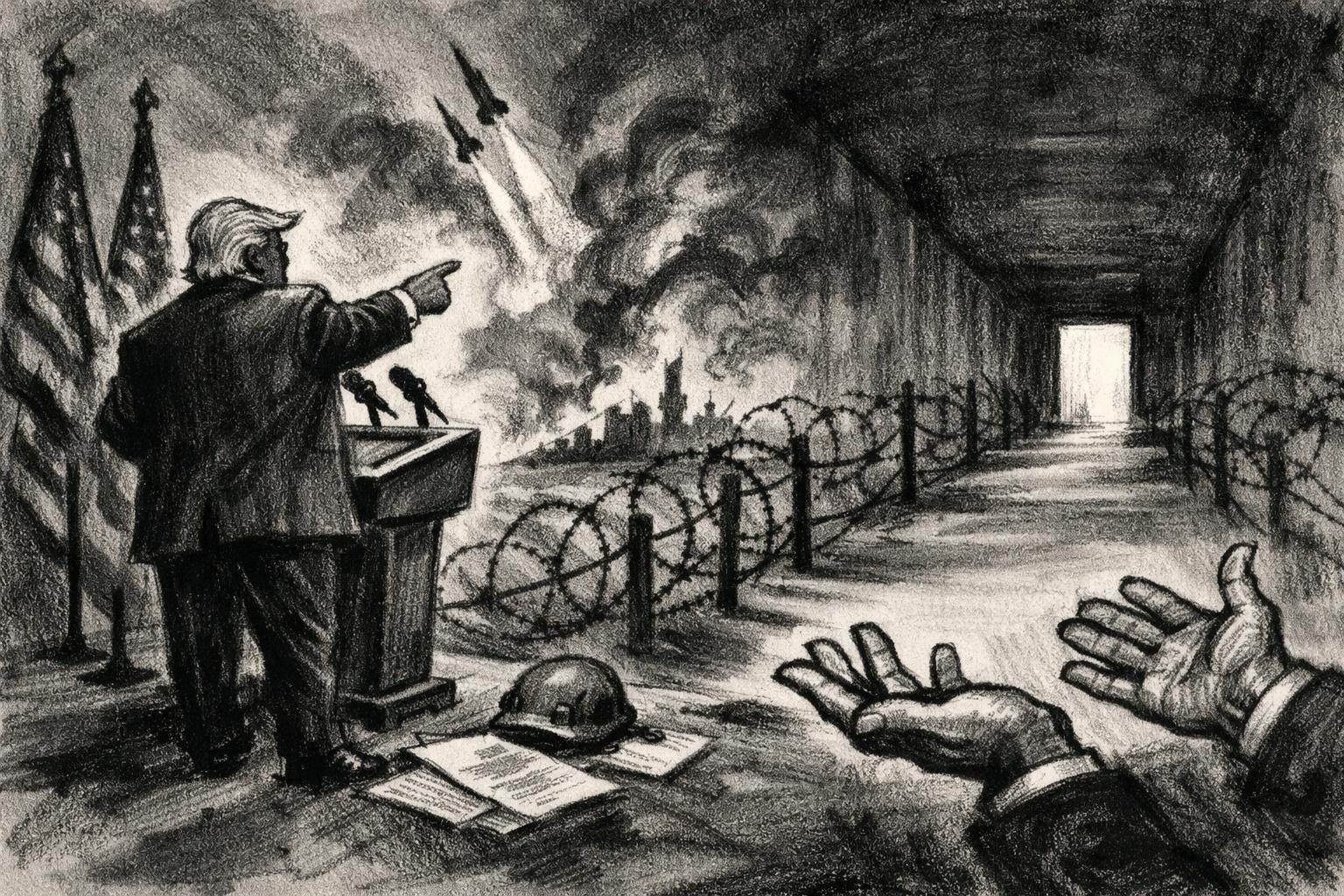
President Trump used his April 1 address to sell the Iran campaign as a mission with defined military goals and a clear sense of momentum. The White House said the operation was aimed at eliminating Iran’s short-range missile threat, destroying its navy, cutting off support for terrorist proxies and ensuring Iran could not obtain a nuclear weapon. It cast those objectives as fixed and said the campaign was producing decisive results. ([whitehouse.gov](https://www.whitehouse.gov/releases/2026/04/president-trumps-clear-and-unchanging-objectives-drive-decisive-success-against-iranian-regime/?utm_source=openai))
But the speech left critics focused on a different question: what happens after the strikes? In a statement issued the same day, Rep. Gregory Meeks of New York, the ranking Democrat on the House Foreign Affairs Committee, said Trump had chosen war without showing that it was necessary. Meeks said the administration was not facing an imminent threat that required rushing into another Middle East conflict without fuller consultation with Congress or the public. ([democrats-foreignaffairs.house.gov](https://democrats-foreignaffairs.house.gov/2026/4/meeks-issues-statement-following-trump-s-national-address-on-iran?utm_source=openai))
Meeks’ statement also pushed the harder point that follows any military escalation: whether the White House has a real plan for what comes next. He warned that the conflict could leave Iran weaker but more desperate and volatile, and argued that the public had not been shown a credible political strategy for winding the war down. That criticism fits the record more closely than the broader claim that Trump’s address was built around an undefined end state. The speech was about objectives; the complaint was about the absence of a publicly explained exit. ([democrats-foreignaffairs.house.gov](https://democrats-foreignaffairs.house.gov/2026/4/meeks-issues-statement-following-trump-s-national-address-on-iran?utm_source=openai))
The gap matters because an operation can have a declared target and still lack a finish line that the public can evaluate. The White House statement emphasized force, timing and success. It did not spell out a post-conflict diplomatic architecture in the material released that day. Meeks seized on that silence and turned it into the central political argument: if the administration wants Congress and the country to accept the costs of war, it needs to explain how the war ends, how escalation is contained and what protects Americans and allies if the conflict widens. ([whitehouse.gov](https://www.whitehouse.gov/releases/2026/04/president-trumps-clear-and-unchanging-objectives-drive-decisive-success-against-iranian-regime/?utm_source=openai))
That is the fight underneath the rhetoric. The administration says its objectives are clear. Its critics say clarity on targets is not the same as clarity on an endgame. On April 1, both sides made their case in public. The White House described the strike campaign as decisive. Meeks answered that a war effort without a publicly stated exit plan is still a war effort without a finish. ([whitehouse.gov](https://www.whitehouse.gov/releases/2026/04/president-trumps-clear-and-unchanging-objectives-drive-decisive-success-against-iranian-regime/?utm_source=openai))
Comments
Threaded replies, voting, and reports are live. New users still go through screening on their first approved comments.
Log in to comment
No comments yet. Be the first reasonably on-topic person here.