
Trump’s college sports order still looks huge on camera and murky in court
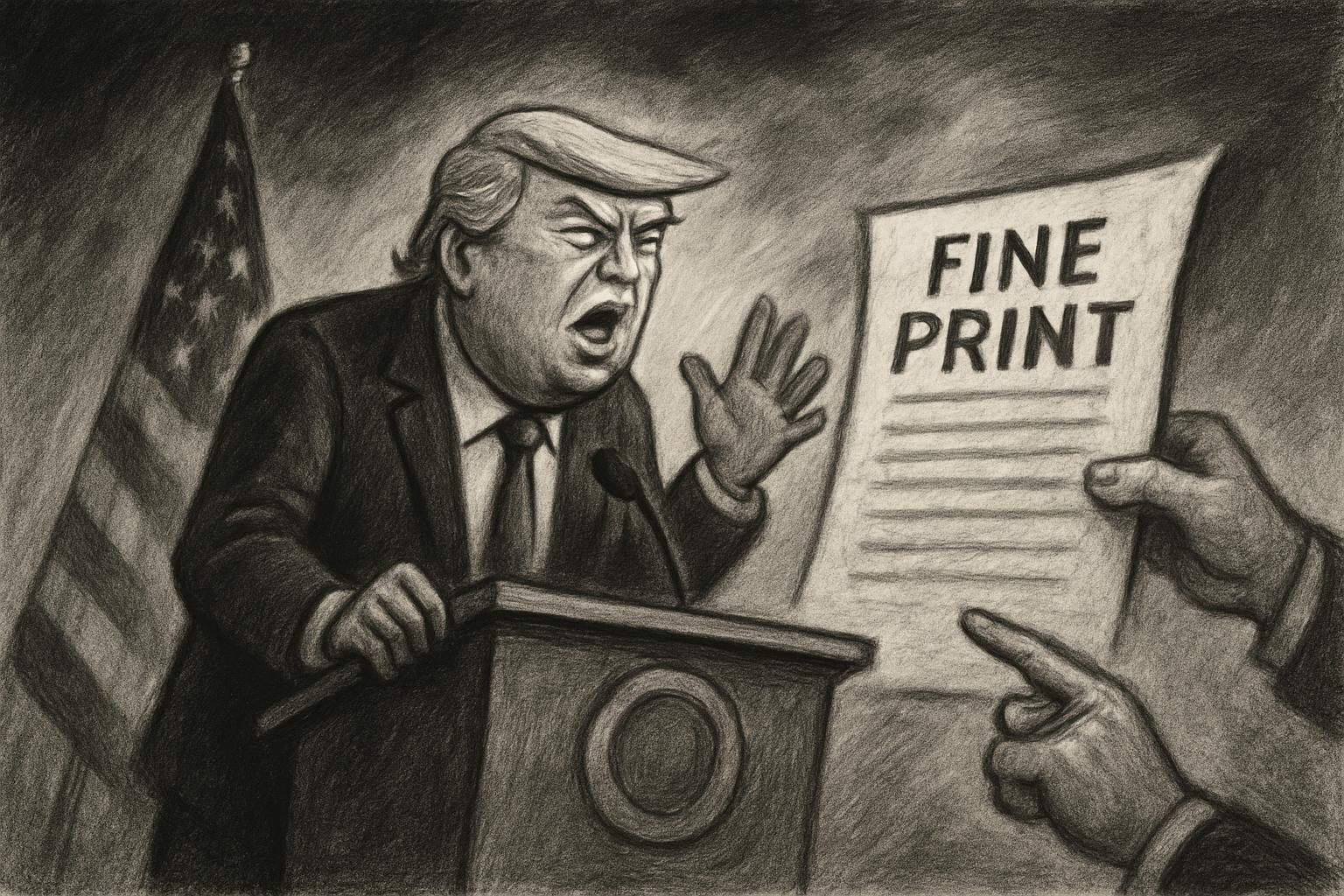
President Donald Trump’s April 3 executive order on college sports was built to project urgency. The White House said the action was meant to protect scholarships, women’s and Olympic sports, and the financial footing of universities that depend on athletics. But the document’s own language shows a much narrower mechanism: it leans on federal agencies, invites further rulemaking, and presses the NCAA to change course only within the limits of law and existing court orders. ([whitehouse.gov](https://www.whitehouse.gov/presidential-actions/2026/04/urgent-national-action-to-save-college-sports/))
The order does not create a new federal statute or a finished regulatory regime for college sports. Instead, it sets out a policy argument that the mix of athlete compensation, transfers, eligibility rules, and state legislation has produced what the White House calls a financial arms race. It then tells agencies to begin work so that “appropriate regulatory or policymaking measures” can be in place by August 1, 2026, and says implementation must stay consistent with applicable law and available appropriations. The order also says it does not create any enforceable right or benefit against the government or its agencies. ([whitehouse.gov](https://www.whitehouse.gov/presidential-actions/2026/04/urgent-national-action-to-save-college-sports/))
The most concrete pressure point is federal leverage. The order says the Secretary of Education should consider action, including rulemaking if needed, to require regular reporting by schools on roster spots and money spent on athletic aid and other payments. It also directs the attorney general to take appropriate measures in support of meritorious actions challenging state laws that conflict with athletic-governing-body rules and federal law, and it tells the Federal Trade Commission to act against student-athlete agents and related entities where its authority applies. None of that is an instant funding cutoff. It is an attempt to push institutions through administrative pressure and litigation support rather than through a new congressional command. ([whitehouse.gov](https://www.whitehouse.gov/presidential-actions/2026/04/urgent-national-action-to-save-college-sports/))
The order’s language on the NCAA is equally contingent. It says the governing body should, in consultation with student-athletes and in its discretion, update or clarify its rules by August 1, 2026, to the extent permitted by law and applicable court orders. That is a significant qualifier. The White House is not writing the rules itself, and it is acknowledging that ongoing legal constraints still matter. The same order says White House components and executive agencies are only encouraged, as appropriate and consistent with law, to gather input from college-sports leaders and other experts. ([whitehouse.gov](https://www.whitehouse.gov/presidential-actions/2026/04/urgent-national-action-to-save-college-sports/))
That is why the politics are cleaner than the policy. Trump can claim he is moving to protect non-revenue sports and scholarship opportunities, and the White House can present the order as a rescue plan for a system it says has become unstable. But the actual machinery is slower and more conditional. Agencies have to decide how far they can go. Courts can narrow the result. Universities, the NCAA, and the litigants already shaping college athletics will still do much of the real work. AP’s reporting on the order likewise described it as an attempt to stabilize college sports while threatening the loss of federal funding, underscoring that the administration is relying on leverage rather than a self-executing fix. ([apnews.com](https://apnews.com/article/561ca318fb9f2e5f147083c736dab308))
So the order is not nothing. It is a real attempt to use federal power to steer college sports. But it is also a reminder of how much of that power depends on follow-through. On the page, the White House can promise order. In practice, the document is full of contingencies, references to existing law, and instructions for other actors to do the hard part later. That makes it a forceful political statement and a limited governing instrument at the same time. ([whitehouse.gov](https://www.whitehouse.gov/presidential-actions/2026/04/urgent-national-action-to-save-college-sports/))
Comments
Threaded replies, voting, and reports are live. New users still go through screening on their first approved comments.
Log in to comment
No comments yet. Be the first reasonably on-topic person here.