
White House Economics Report Treats Culture-War Priorities Like Macro Policy
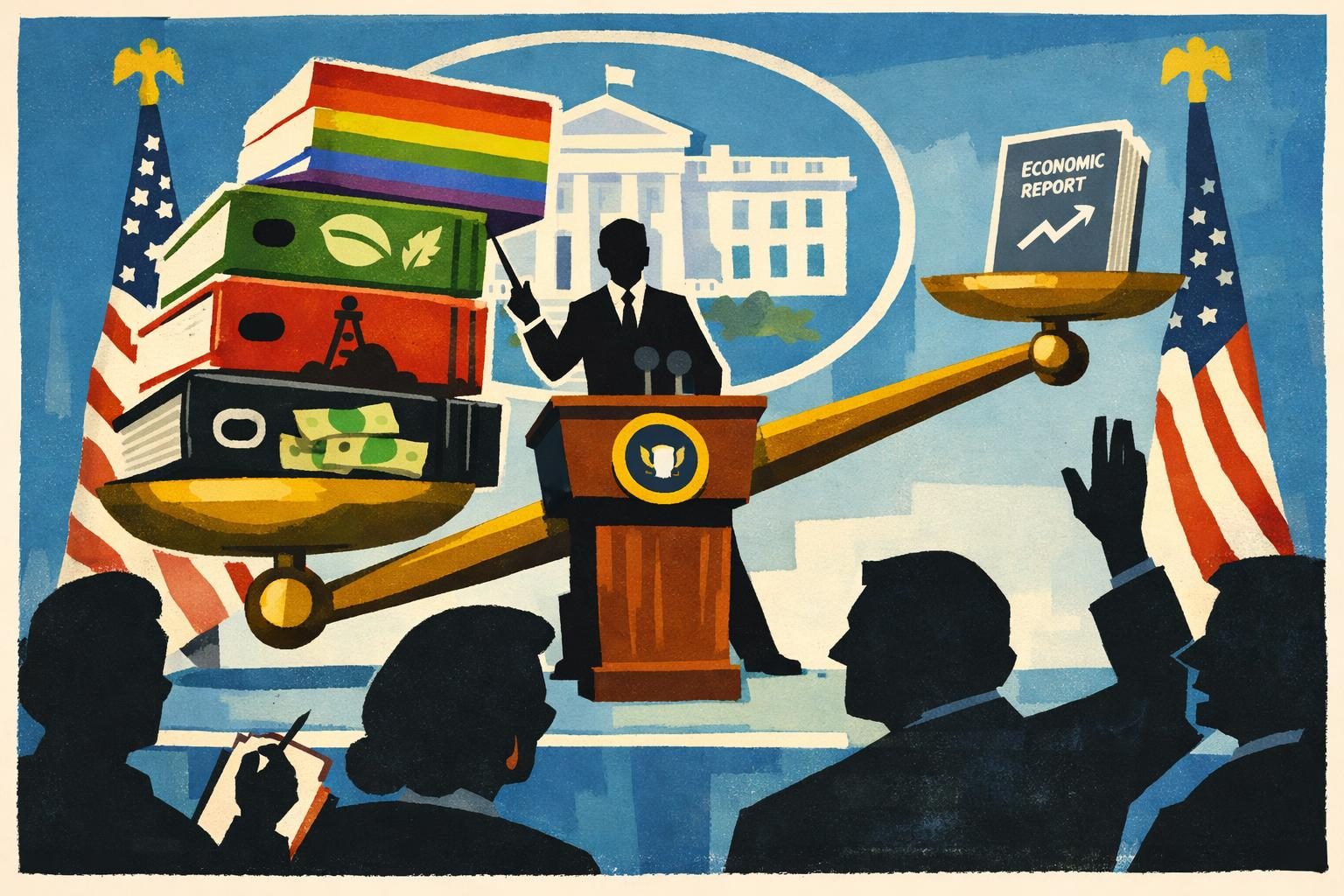
The White House’s 2026 Economic Report of the President arrived on April 13 with all the usual trappings of an official annual economic document: a polished presentation, a sweeping subject range, and the implied authority of the presidency behind it. But the table of contents makes clear that this is not being offered as a neutral technocratic survey of prices, labor markets, investment, and growth. Instead, the administration has packed the report with chapter headings that read like a compact version of its political program, including sections on the economic “benefits” of the One Big Beautiful Bill Act, the supposed “costs” of DEI hiring, attacks on ESG investing, and an argument for broader private equity access in retirement plans. The document also gestures toward issues the White House likes to frame as core to its economic agenda, including energy dominance, supply chains, housing supply, labor, and artificial intelligence. None of those topics are frivolous on their own. The problem is the way the report presents them: not as open questions for analysis, but as ideological conclusions dressed up as macroeconomic thinking. That makes the publication feel less like an economic report and more like an index of administration priorities looking for a data set to support them.
That choice matters because presidential economic reports are usually supposed to do a delicate job. They are written for lawmakers, investors, journalists, researchers, and the broader public, and they carry an expectation of seriousness even when they are clearly written from a partisan perspective. A White House can argue that its policy agenda will boost productivity, expand opportunity, or strengthen growth. It can even use a presidential report to defend controversial proposals and make the case for a broader economic worldview. But there is a difference between advocacy and overt branding, and this report seems to have erased it. By foregrounding culture-war language such as DEI and ESG in the chapter structure itself, the administration is effectively advertising which fights it wants the reader to see as economically decisive. That may play well with a political base that already views those terms as shorthand for elite overreach. It is a tougher sell in a document that is meant to have the appearance, if not always the reality, of institutional distance. The more the report reads like a campaign memo, the more likely readers are to treat its numbers and conclusions as curated rather than analytical.
The ideological framing is especially notable because the White House appears eager to cast real economic policy questions in moral terms. Private equity in retirement accounts, for example, is a legitimate policy debate, but it comes with obvious tradeoffs involving fees, risk, diversification, and fiduciary protections. Energy policy involves genuine tension between affordability, reliability, domestic production, and long-term transition planning. Housing supply is a real constraint with tangible effects on rent, homeownership, and labor mobility. Artificial intelligence raises questions about productivity, competitiveness, labor displacement, and regulation. Those are all worthy subjects for an economic report, and an administration can reasonably argue that its own approach is the best way to handle them. What makes this report stand out is the apparent confidence that the political framing is itself the economic truth. In that sense, the document is not just promoting policies. It is trying to redefine what counts as common-sense economics inside the Trump-era worldview, where loyalty to the administration’s preferred categories seems to determine the shape of the analysis. That is a powerful rhetorical move, but it is also one that invites skepticism from anyone who expects the report to leave its assumptions at least partially exposed.
The White House would likely argue that this is exactly what an administration should do: present its preferred reading of the economy, defend its legislative agenda, and explain how its priorities fit together. The report is not pretending to be a university seminar paper, and no serious observer should mistake it for one. Yet there is still a meaningful standard for credibility, and the more a government publication signals that its conclusions were selected before the evidence was assembled, the less trust it earns. That is the central problem here. By leaning so heavily into grievances about DEI, ESG, and other ideological targets, the administration seems to be using a formal economic report as a vehicle for political reinforcement rather than policy explanation. If the goal is to persuade skeptical readers that the White House’s economic program is grounded in facts, this is a strange way to begin. It gives opponents an easy opening to argue that the report is more about message discipline than macroeconomic seriousness. It also raises the odds that even legitimate findings elsewhere in the document will be read through a partisan lens. In practical terms, that is a self-inflicted credibility problem. The administration may have wanted a glossy summary of its economic worldview. What it produced instead is a document that risks convincing outsiders that the worldview came first and the economics were arranged around it afterward.
Comments
Threaded replies, voting, and reports are live. New users still go through screening on their first approved comments.
Log in to comment
No comments yet. Be the first reasonably on-topic person here.