
Court keeps White House ballroom above-ground construction on hold
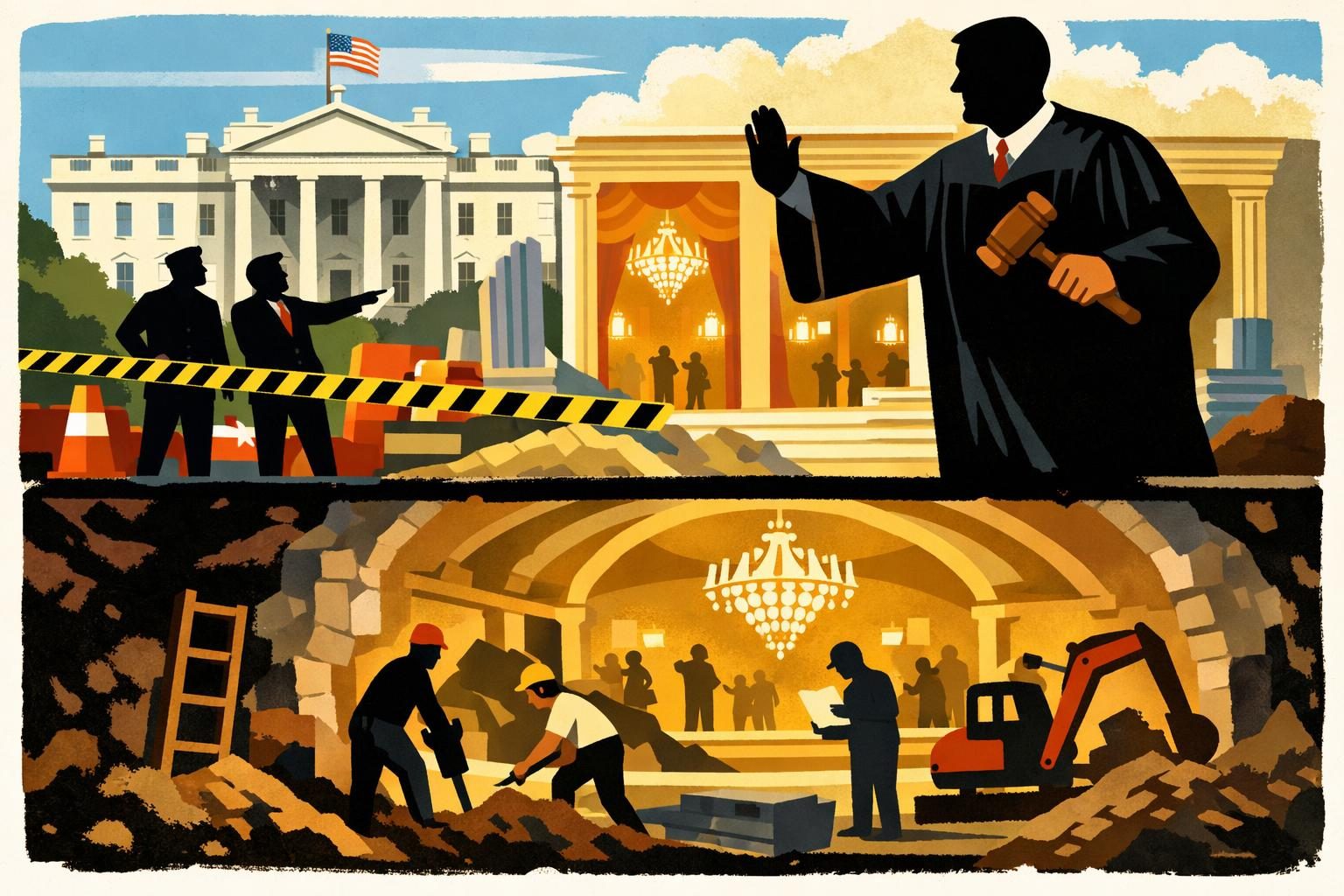
A federal judge has drawn a sharper line around the White House ballroom project: below-ground national-security work may continue, but the administration cannot move ahead with above-ground ballroom construction while the case is pending. In an April 16 clarification of an earlier injunction, U.S. District Judge Beryl Howell said the order does not bar underground construction tied to security needs, and it allows limited above-ground work strictly necessary to cover, secure, and protect those underground facilities. The ruling came after the D.C. Circuit, in an April 11 order, sent the case back for clarification on how the injunction should apply.
The judge’s clarification matters because the administration had argued that the project should be treated as one integrated security undertaking. Howell rejected that reading. Her opinion says the injunction stops construction of the above-ground ballroom, but does not stop underground facilities such as bunkers, bomb shelters, protective partitioning, military installations, and hospital and medical spaces. She also said the order permits the narrow above-ground work needed to protect that underground construction while the litigation continues.
That leaves the White House with an awkward split-screen result. The project is not frozen in every respect, but its signature feature — the ballroom itself — remains on hold. The administration can still point to the fact that some work is allowed, yet the ruling blocks the part of the plan that would most visibly reshape the White House complex. Howell also wrote that national security is not a blank check for otherwise unlawful activity, and said the government’s late-stage argument that the ballroom is inseparable from the security work was not enough to reopen the injunction.
The court fight is about more than a construction schedule. The underlying lawsuit challenges the demolition of the East Wing and the move to replace it with a privately funded ballroom. In the D.C. Circuit’s April 11 order, the panel noted that the district court had already exempted actions strictly necessary for safety and security at the White House grounds, but said the record still left factual questions about how the exception should work. Howell’s April 16 clarification answered that question by confirming the distinction the government itself had previously drawn between below-ground work and the above-ground ballroom.
For now, that means the administration can keep pressing ahead with underground security-related construction, but not with the ballroom above it. The legal dispute is still alive, but the court has now said plainly where the line runs. The project may continue in pieces. The ballroom itself cannot.
Comments
Threaded replies, voting, and reports are live. New users still go through screening on their first approved comments.
Log in to comment
No comments yet. Be the first reasonably on-topic person here.