Story · April 24, 2026

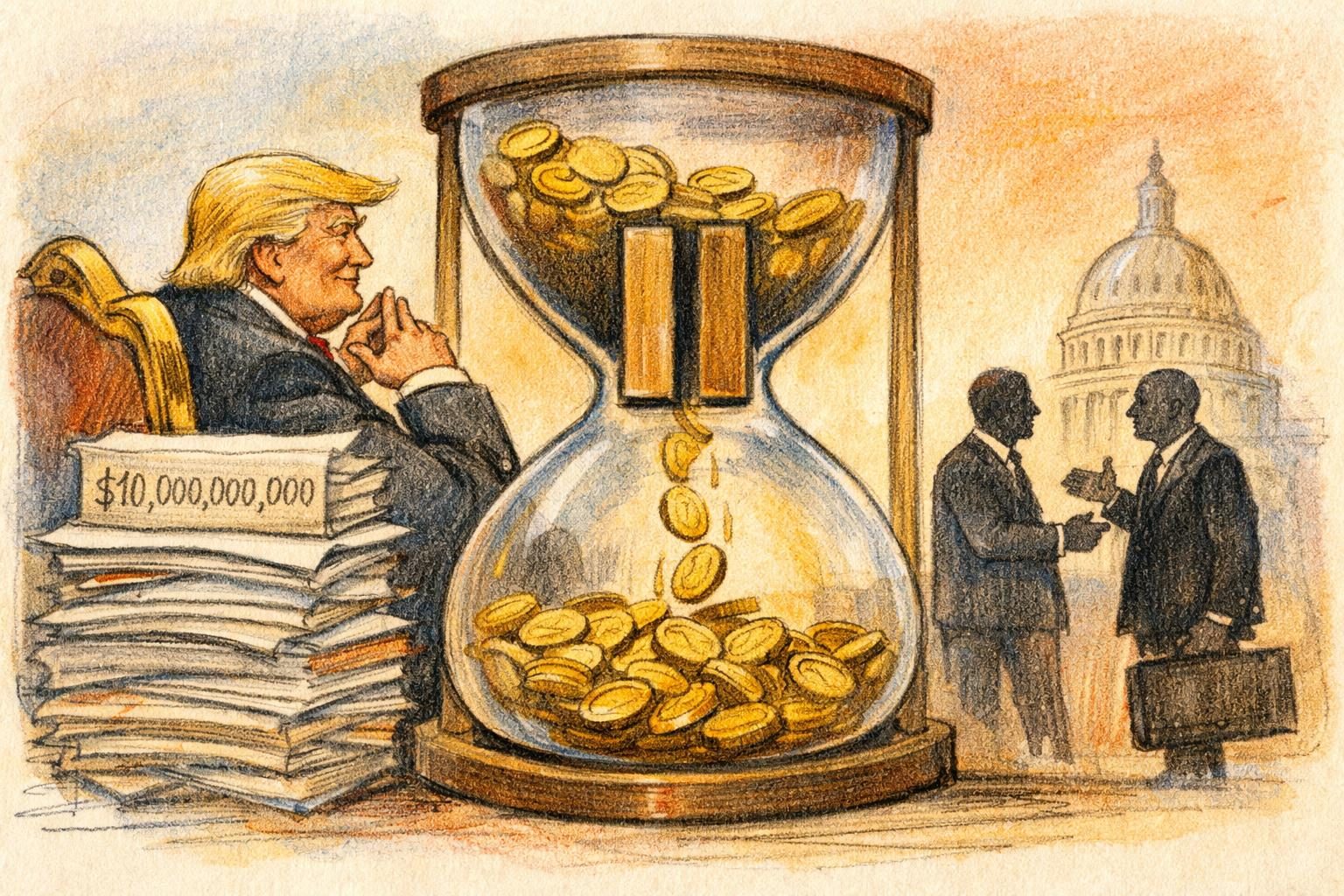
Trump’s $10 billion IRS lawsuit keeps looking like an ethics grenade

Tax revenge suit Confidence 4/5
★★★☆☆Fuckup rating 3/5
Major mess Ranked from 1 to 5 stars based on the scale of the screwup and fallout.
Correction: A previous version misstated the timing of the latest court filing. The parties sought a 90-day pause on April 17, not April 23.

President Donald Trump’s $10 billion lawsuit over the disclosure of his tax information remained alive in the April 23 window, and with it came another round of questions about whether the case is a legitimate legal grievance or just a very expensive act of revenge. Trump is suing the IRS over disclosures that allegedly reached news outlets between 2018 and 2020, and his lawyers have now asked for a 90-day pause while they continue settlement talks with the agency. That move does not make the case go away; it just delays the moment when the awkwardness has to be confronted in open court. The core fact remains strange enough on its own: the president of the United States is effectively trying to collect billions from the tax agency he leads. Even before anyone gets into the legal merits, the setup reads like a constitutional headache with a personal vendetta tucked inside it.

The lawsuit sits in a particularly uncomfortable place because Trump is not just any plaintiff suing a bureaucratic entity over an alleged leak. He is the head of the executive branch, which means the same government apparatus he oversees is also the one he claims harmed him. That collision of roles is what gives the case its ethical charge, and it is why tax and ethics experts have already raised concerns about the propriety of the suit. A private citizen can accuse an agency of mishandling sensitive information and ask a court to sort it out. A president suing his own administration for a massive payout is something else entirely, and the questions it raises are not hard to state plainly. Who is really being pressured here, and for what purpose? Is the lawsuit a serious attempt to vindicate privacy rights, or is it a legal vehicle for settling a political score? Those questions do not need fancy language to sound troubling.

The request to pause the case only adds to the sense that this is more awkward than confident. Lawyers usually ask for time when they think negotiation might produce a cleaner resolution than litigation, or when they want to buy breathing room while a case sits in an uncomfortable posture. In this instance, the pause request can be read as a sign that the administration would rather keep the dispute out of the spotlight while it tests whether there is a way to make it disappear quietly. That does not necessarily mean the claim is weak, but it also does not suggest the kind of forceful confidence one might expect from a president demanding $10 billion. The amount itself is part of the spectacle. A claim that large over disclosures to the press is eye-catching even before anyone gets into the details of the alleged leak. Once the plaintiff is the president and the defendant is his own tax agency, the whole thing starts looking less like sober legal process and more like grievance theater with a federal case number.

The broader political effect may matter more than the procedural step now sitting before the court. Trump has long cast himself as the victim of a hostile, sneaky, or conspiratorial state, and the lawsuit fits neatly inside that worldview. But when that narrative gets turned into a demand that the government pay billions to the man running it, the line between public authority and personal retaliation gets difficult to see. Critics do not need to assume the outcome to see the problem. Even if the case never reaches trial, and even if it is narrowed, paused, or settled, it still leaves behind a damaging impression about how Trump views the machinery of government. The public is left with the image of a president who can use the trappings of power to pursue a personal accounting over embarrassment. That is not a great look under any administration, and under this one it lands with extra force because the pattern feels familiar.

For now, the most immediate consequence is reputational rather than financial, but that should not be mistaken for minor. The lawsuit feeds an argument that Trump treats institutions less as public trusts than as tools for personal combat, and this case gives critics a neat example that is easy to explain without legal training. Even people with little affection for the IRS can understand why the idea of a president suing the tax agency over his own tax leak is hard to defend on principle. The agency has not been accused here of some broad policy failure; the suit is centered on disclosures that allegedly happened years ago and then became public fodder. If the matter eventually settles, the administration may hope it vanishes into the usual blur of legal paperwork. But the political damage will linger. Trump wanted a lawsuit that would punish somebody else for his embarrassment. What he got instead is a public reminder that being president does not erase the conflict between state power and private grievance, and sometimes it makes that conflict look even worse.

Support the work

Help keep this site going

If this story was useful, help support The Daily Fuckup. Reader donations help pay for hosting, archives, publishing, email, and AI costs.

Donate

Reader action

What can you do about this?

Call or write your members of Congress and tell them the exact outcome you want. Ask for a written response and refer to the bill, hearing, committee fight, or vote tied to this story.

Timing: Before the next committee hearing or floor vote.

This card only appears on stories where there is a concrete, lawful, worthwhile step a reader can actually take.

Reader images

Upload a relevant meme, screenshot, or photo. Automatic review rejects spam, ads, and unrelated junk. The top-rated approved image becomes the story's main image.

Log in to upload and vote on story images.

No approved reader images yet. Be the first.

Comments

Threaded replies, voting, and reports are live. New users still go through screening on their first approved comments.

Log in to comment


No comments yet. Be the first reasonably on-topic person here.