
Trump’s Air Force training order responds to a regulatory bottleneck
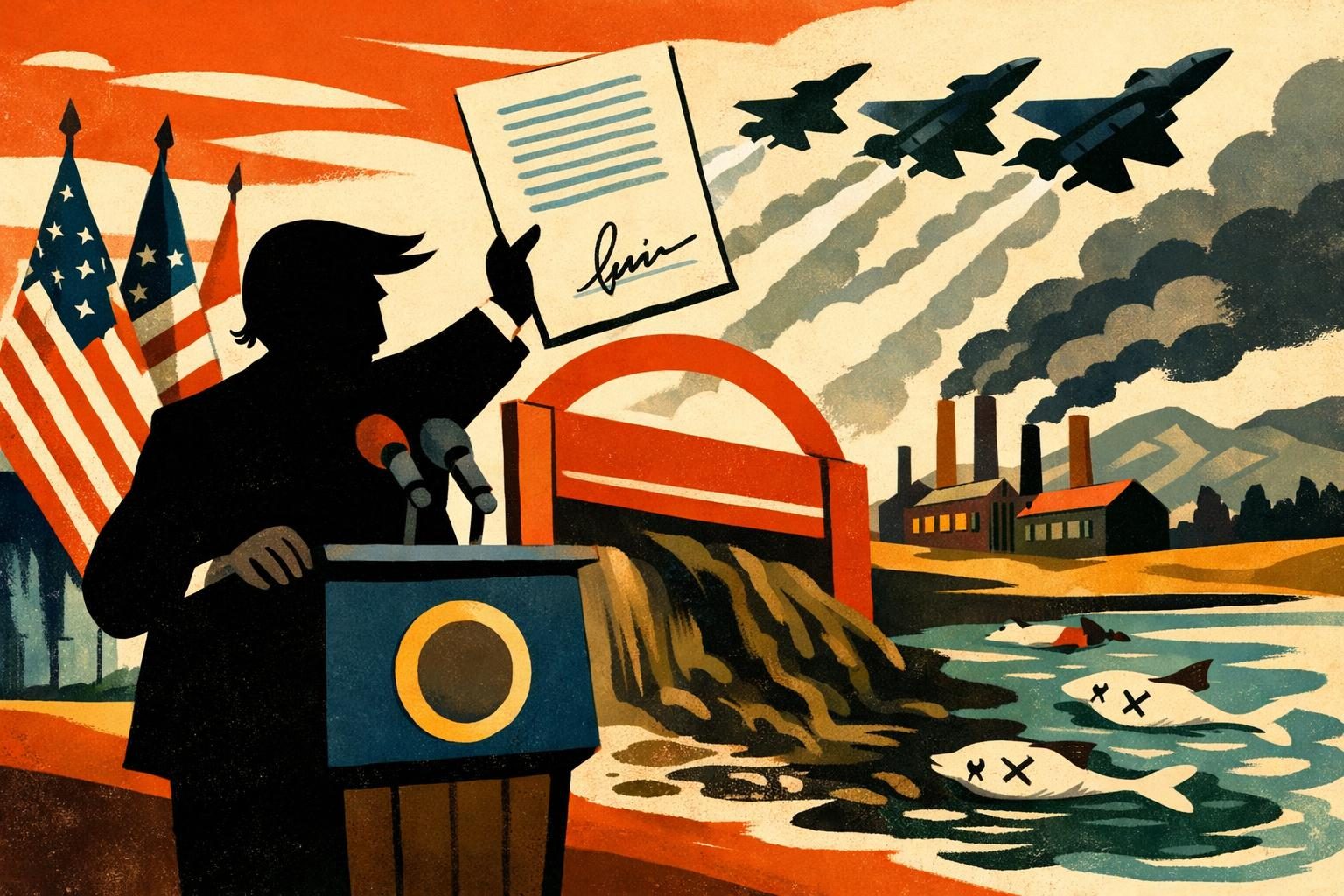
President Donald Trump signed a presidential determination on April 20, 2026, that temporarily exempts U.S. Air Force jet fighter training operations in Idaho, Oregon and Nevada from certain water-pollution requirements, setting up a one-year carve-out that the White House says is grounded in section 313 of the Federal Water Pollution Control Act. The determination runs from April 20, 2026, through April 20, 2027, and the administration frames it as a necessary step to keep training on schedule. According to the White House, the action is meant to remove a legal and regulatory obstacle that could interfere with military readiness. The paperwork also says the operations covered by the exemption are tied to ongoing litigation in Oregon Natural Desert Association v. Meink. That detail matters because it puts the move in a familiar Washington category: not a sweeping policy rewrite, but a narrow response to a live legal fight.
At its core, the order is less dramatic than the presidential language surrounding it. It does not create a new military program, announce a major procurement shift, or change the basic mission of the Air Force. It simply clears away a set of pollution-related requirements for a defined period so training flights can continue without the same level of regulatory friction. The White House says the exemption is needed to protect military readiness and sustain an Air Force that is combat ready and lethal, which is the sort of phrasing this administration likes because it turns a compliance issue into a national security test. That framing is politically useful even if the underlying administrative action is relatively ordinary. The document makes the case that the exemption serves the paramount interest of the United States, and that language does the heavy lifting. It signals urgency, resolve and a willingness to act quickly when the bureaucracy gets in the way.
What the documents do not establish, however, is the broader political story that can be built around them. The record shows a regulatory carve-out, not a complete explanation for why the training operations became entangled in water-pollution rules in the first place. It also does not prove that the underlying dispute was caused by this administration, even if the administration is now the one taking the public victory lap. The litigation reference suggests there has been a legal conflict over these operations for some time, but it does not by itself assign blame or absolve anyone. That leaves room for a more careful reading. Trump is using presidential power to lift a training-related restriction, and the White House is presenting that as evidence of decisive leadership. That may be a valid political message. It is not the same thing as proof that the bottleneck was self-inflicted, or that the exemption was the only reasonable way to handle it.
The episode also fits a recognizable Trump-era pattern: a process problem is elevated into a presidential spectacle. In this telling, a legal exemption becomes a statement of strength, and a readiness issue is turned into a story about toughness rather than administration. The effect is to convert a technical matter into a public demonstration of command authority. That can be effective politics, especially when the audience is primed to see bureaucracy as an obstacle to common sense. But it can also obscure the less glamorous reality that many defense-related disputes are managed through legal and procedural adjustments rather than bold breakthroughs. The practical result here may be modest and entirely sensible: keep the jets training, avoid disruption and prevent one more regulatory fight from slowing the Air Force. The rhetorical result is larger than the operational one. Trump and his team are selling the move as another example of the president cutting through red tape in the name of national strength, even though the underlying action looks more like a targeted fix than a grand solution. That contrast is what makes the story interesting. The order may be about water-pollution requirements and flight schedules, but the politics are about power, competence and the administration’s preference for turning routine management into a show of force.
Comments
Threaded replies, voting, and reports are live. New users still go through screening on their first approved comments.
Log in to comment
No comments yet. Be the first reasonably on-topic person here.