
The Comey Indictment Keeps Boomeranging Back on Trump’s Justice Department
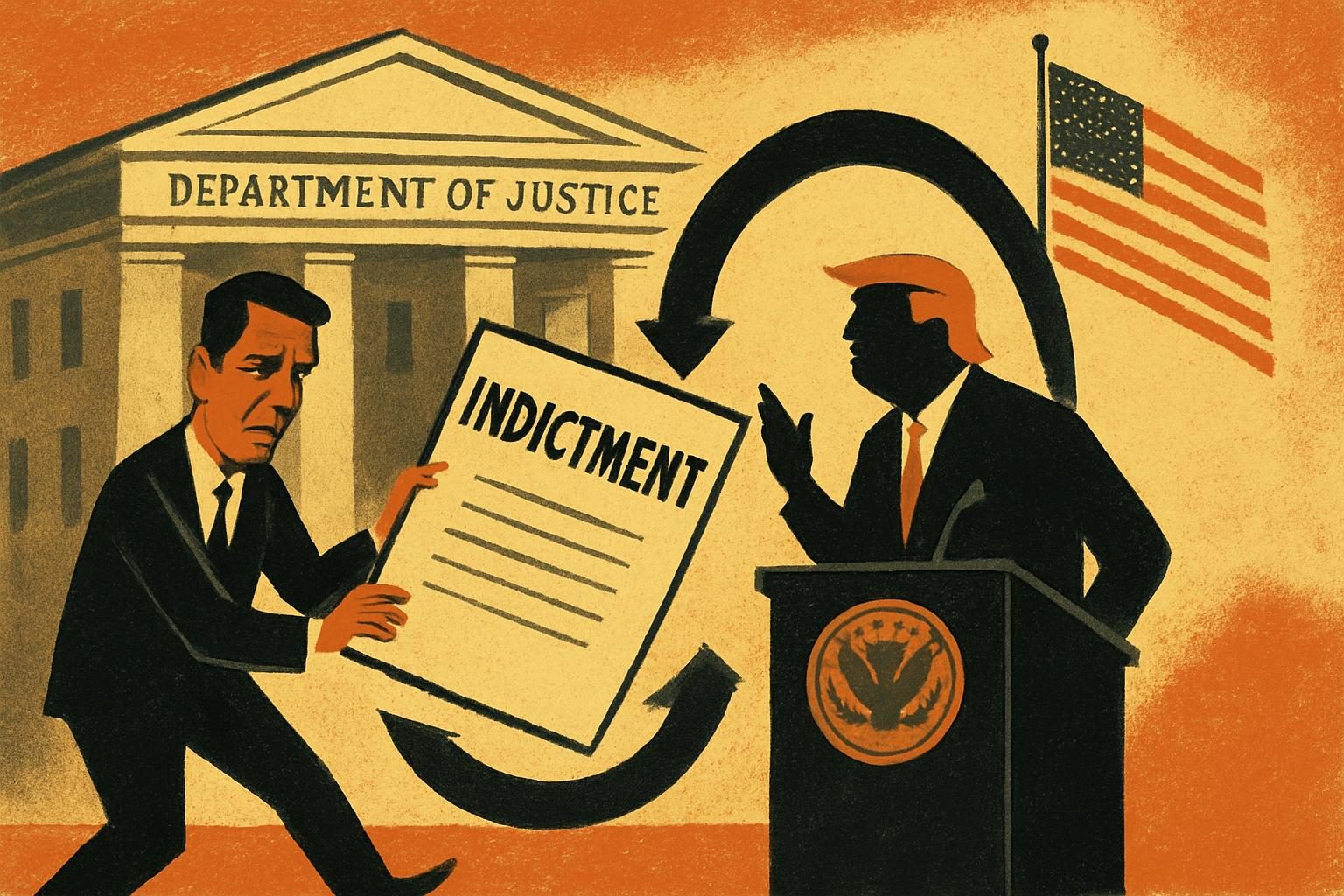
The Justice Department’s indictment of former FBI Director James Comey kept ricocheting through Washington on the previous local day, and not in a way that suggests the administration has stumbled into a tidy legal win. The case has quickly become a political stress test for a White House that has spent years telling supporters it would restore law and order while also surrounding itself with the language of grievance and retaliation. Even before the facts of the prosecution are fully litigated, the move is being read by critics as something larger than a single charging decision. To them, this is not just about whether prosecutors think they can prove a case; it is about whether Trump’s Justice Department has crossed yet another line between neutral enforcement and personal revenge. That tension is what makes the indictment such a live wire, because it arrives in a political climate already primed to suspect that official power is being used to settle old scores.
The obvious problem for the administration is that James Comey is not some obscure figure whose name would only matter in legal circles. He has been one of Trump’s most enduring antagonists, and that history gives the indictment an instant meaning that goes beyond the four corners of the charging document. The Justice Department’s public posture, at least as reflected in the filing itself, is that prosecutors are pursuing an alleged offense tied to threats or harm to President Trump, but the broader political reception has been shaped by the long-running animus between the two men. That matters because criminal law is supposed to rest on evidence, procedure, and the independent judgment of prosecutors, not on the emotional temperature of a president’s grievance ledger. Supporters of the administration can insist that the case is simply the product of a legitimate legal process, and that may be the right answer on paper, but the optics are severe enough that the burden of persuasion has already grown much heavier. When the target is a figure Trump has been publicly furious about for years, the public does not need a lot of imagination to connect the dots. The result is an indictment that may have been filed in the name of law enforcement but is being received by many as another installment in a political feud with government stationery.
That perception is not a trivial communications problem; it is a structural problem for the Justice Department itself. Once a president makes his personal grievances part of the atmosphere around federal prosecutions, every major charging decision starts to carry a cloud of suspicion, even in cases that may be defensible on the merits. Career lawyers and investigators are left operating under a shadow that they did not create and cannot fully escape, because any decision involving a Trump enemy will now be filtered through the question of whether it was made for legal reasons or political ones. That is the kind of credibility loss that can infect future cases long after the headlines move on. It also forces the department to spend time defending its own legitimacy rather than focusing entirely on the substance of the prosecution. In a normal administration, prosecutors would want the public debate to be about evidence, legal standards, and courtroom strategy. In this one, the debate keeps sliding back toward motive, trust, and whether the government has become a vehicle for punishment rather than impartial enforcement.
The political damage is amplified by Trump’s larger habit of treating legal institutions like extensions of campaign messaging and loyalty enforcement. That dynamic may thrill his most committed supporters, but it creates a corrosive effect inside the federal system, where the appearance of independence matters almost as much as the reality. Every time the president or his allies frame criticism as proof of persecution, they make it harder for the Justice Department to claim that it is acting above politics. Every time an investigation or indictment is presented as a test of loyalty, the line between public duty and private resentment gets thinner. That does not just weaken the case at hand; it weakens the administration’s standing with courts, Congress, and the broader public when it asks to be taken seriously on anything else. The Comey indictment therefore functions as both a legal event and a reputational tax, one that may be paid not only by the prosecutors involved but by the institution they represent. And even if the government believes it can ultimately prevail in court, the political cost is already obvious: the White House has handed its opponents a clean argument that it promised to end weaponization and instead kept finding new ways to brand it. The longer Trump leans into the fight, the more he reinforces the impression that his governing style is less about justice than about vendettas dressed up in official language. That is a dangerous trade for any administration, because once the public starts assuming the system is being used to settle scores, even legitimate prosecutions begin to look suspect before they begin. The Comey case may still survive judicial scrutiny, but in the court of public credibility it has already done damage that is hard to undo, and that may be the real boomerang now coming back to hit Trump’s Justice Department.
Comments
Threaded replies, voting, and reports are live. New users still go through screening on their first approved comments.
Log in to comment
No comments yet. Be the first reasonably on-topic person here.