
DOJ asks judge to bar Florida tax preparers from filing returns
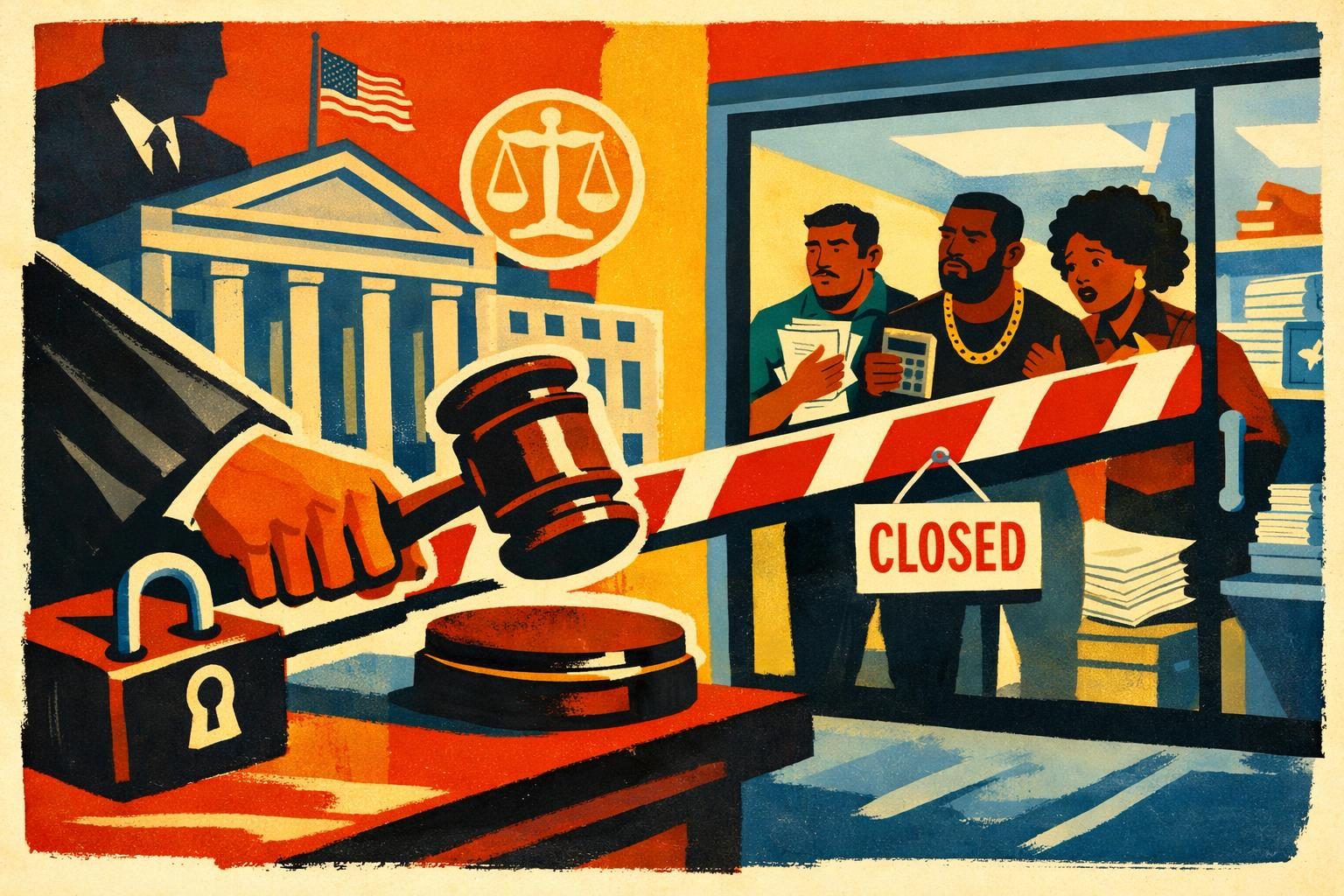
The Justice Department is asking a federal judge in South Florida to shut down a Florida tax-preparation operation it says has been filing false federal returns for customers and driving more than $7 million in tax loss. In a civil complaint filed April 29, the government seeks an injunction against Cedric Reid, Juan Santana and Advance Tax Group Inc., which it says operated out of Daytona Beach and Ocala. The filing is not a criminal indictment, and it does not by itself prove the allegations, but it signals that federal officials believe the conduct is serious enough to justify immediate court intervention. In cases like this, the government is not just trying to punish past conduct; it is trying to stop an allegedly ongoing business model before another round of returns goes out the door. That makes the complaint both a legal move and a practical one, because tax-prep schemes can keep producing damage as long as the business is allowed to keep operating.
According to the government, the defendants used fake or inflated claims to reduce clients’ tax bills and inflate refunds, including improper deductions, bogus tax benefits and questionable filing statuses. The complaint also points to alleged failures tied to due-diligence obligations, including requirements associated with credits such as the earned income tax credit. Those rules matter because tax preparers are not supposed to simply punch numbers into a return and hope the IRS does not notice; they are expected to make reasonable inquiries and avoid filing claims they know or should know are not supported. When the Justice Department says a preparer operation crossed that line, it is usually arguing that the problem is not a few isolated errors but a pattern of conduct built into the business. The more than $7 million figure suggests the government believes the alleged conduct was widespread rather than confined to a handful of returns. If the allegations hold up, the case would fit a familiar but damaging fraud pattern: a preparer promising customers bigger refunds, then pushing claims that look good on paper but collapse under scrutiny.
The request for an injunction is also important because it shows the department is seeking immediate relief rather than waiting for the slower grind of full litigation. An injunction would be a court order stopping the defendants from preparing federal returns for others while the case proceeds. That kind of relief is often used when the government says a business is not just implicated in misconduct, but is itself the mechanism by which the misconduct is being carried out. In other words, the alleged problem is the shop, not merely a few bad returns that can be corrected later. If the judge grants the request, the defendants could be cut off from the tax-prep business quickly, even before a final ruling on liability. If the court declines, the government may still pursue the case, but it would have to do so without the immediate shutdown it is asking for now. Either way, the filing puts the defendants under a bright legal spotlight, and that kind of exposure can be damaging long before any trial or settlement.
The broader political backdrop helps explain why the case may draw attention beyond the courtroom. Trump’s Justice Department has made fraud enforcement one of its favored public themes, and this complaint gives it an example that fits neatly into its law-and-order message. The administration has repeatedly framed itself as a cleanup crew for waste, abuse and cheating, and tax-preparer fraud is the kind of allegation that plays well in that narrative because it affects ordinary workers and families waiting on refunds. At the same time, that same messaging creates pressure on the department to show it is doing real enforcement rather than just performance. Filing an aggressive complaint is the easy part; proving the allegations in court is the harder one. If the government is right, the case would demonstrate that federal officials are willing to move quickly against businesses they believe are siphoning money from taxpayers and clients alike. If the evidence proves thinner than the filing suggests, it will be another reminder that public accusations can be much simpler than the burden of proving a pattern of wrongdoing in federal court.
For now, the case is still at the opening stage, and the judge will have to decide whether the government has shown enough to justify halting the operation while the litigation continues. The legal and reputational stakes are already significant for Reid, Santana and Advance Tax Group Inc., because a public injunction suit tends to leave a mark even if a defendant later prevails. Businesses accused of tax fraud often struggle to recover trust, especially when the alleged misconduct involves not just one return but a system for generating returns. The government’s complaint suggests that the alleged losses were substantial and that the conduct was not an accident, but the defendants will have the chance to contest that narrative in court. What happens next will say something about both the specific allegations and the wider enforcement style of the current Justice Department: whether it is nabbing a real tax-prep racket, or whether it is again using a hard-charging filing to make a point before the facts are fully tested. For the moment, the message from federal prosecutors is unmistakable. They believe the business should be stopped, and they are asking a judge to say so before the case gets any deeper.
Comments
Threaded replies, voting, and reports are live. New users still go through screening on their first approved comments.
Log in to comment
No comments yet. Be the first reasonably on-topic person here.