
Trump’s contracting order tightens White House grip on procurement
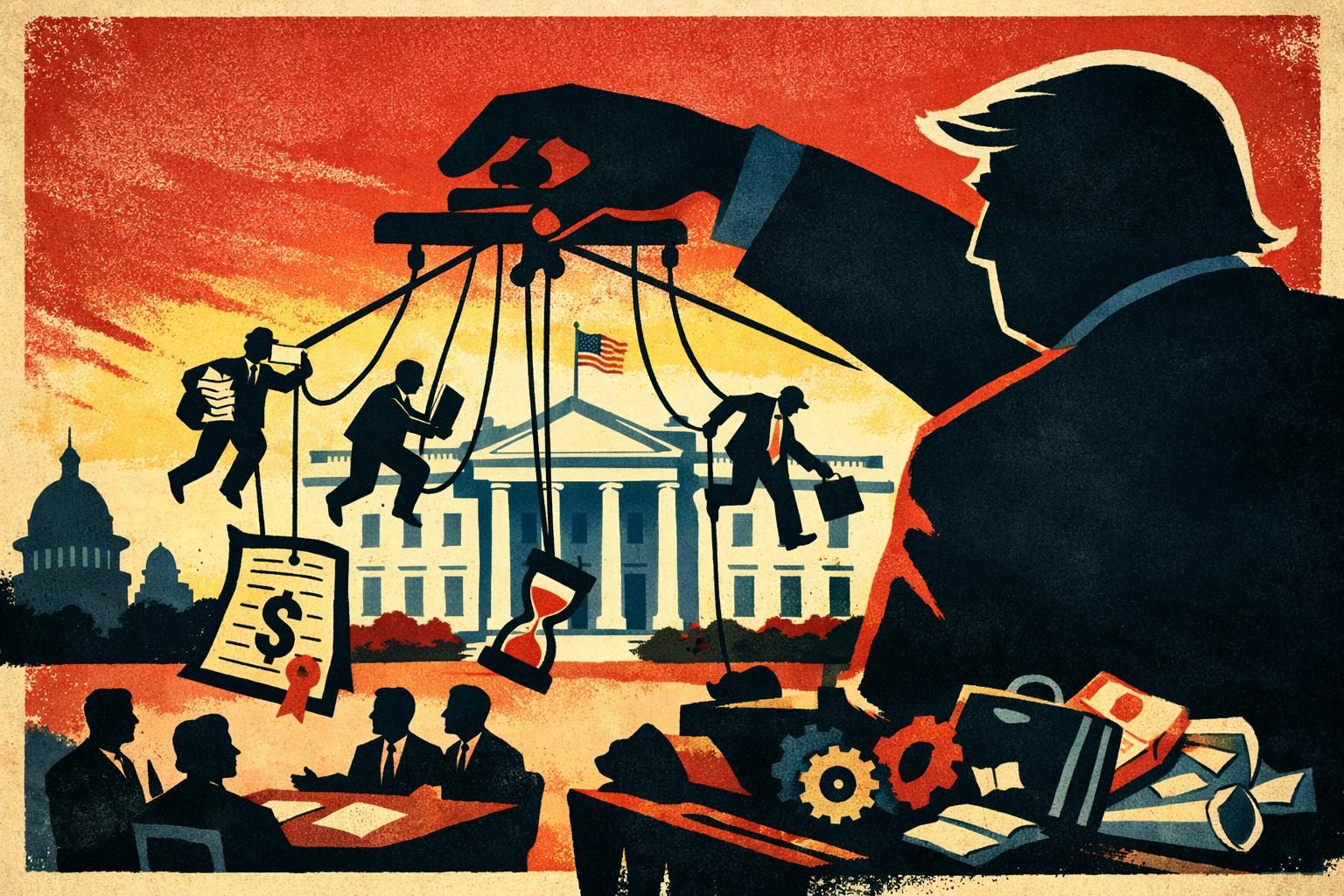
President Donald Trump closed out April with another order that looks, at first glance, like a routine push to make government buying cleaner and cheaper. The document, signed April 30 and titled Promoting Efficiency, Accountability, and Performance in Federal Contracting, presses federal agencies to favor fixed-price contracts and performance-based agreements, two models that are designed to tie payment more tightly to results. In its most basic form, the argument is easy to sell: if the government knows what it wants, it should not keep writing open-ended contracts that can drift in cost and scope. Fixed-price deals can force better planning, while performance-based structures can make it harder for contractors to get paid simply for showing up. That pitch will sound sensible to plenty of people inside and outside government. But the order is doing more than telling agencies to shop smarter. It also changes who gets to decide how much flexibility the government can use, and how far those decisions will be allowed to travel without closer review from the top.
The new directives go well beyond a general preference statement. Agency heads are told to review existing contracting practices and to look for ways to modify, restructure, or renegotiate the federal government’s largest non-fixed-price agreements so they include fixed-price and performance-based concepts where practical. The order also requires additional notice before certain contract structures can be used, and in some cases it calls for approval before agencies move forward with arrangements that fall outside the preferred mold. That is the kind of detail that can matter more than the headline language, because procurement rules are often shaped by the procedures surrounding the choice, not just the choice itself. If an agency has to clear more steps before using a flexible contract, the White House is effectively narrowing the range of acceptable decisions even when it is not banning them outright. The order does preserve some room for exceptions, including emergencies and certain research-and-development work tied to major systems. But those carveouts do not erase the broader pattern. They simply mark the places where the administration has decided that rigid control would be too disruptive.
The most revealing part of the order may be the reporting and review structure wrapped around it. Agencies must provide semiannual reporting to the Office of Management and Budget on their use of non-fixed-price contracts, giving the White House a repeated window into what kinds of agreements are being used and why. That may sound like ordinary management oversight, but in practice it gives central decision-makers more leverage over how procurement questions are framed inside agencies. Once the reports begin, the White House can compare agencies against one another, identify outliers, and press for changes with a stronger paper trail in hand. The result is not just a new preference for a contract type; it is a new hierarchy for procurement judgment. Agency leaders are being asked not merely to apply a principle but to justify why they are not following it, and that is a meaningful shift in a system that already leans heavily on internal discretion, layered approvals, and technical judgment. The administration is presenting the order as a way to improve accountability, but accountability can also be a convenient word for centralization when the practical effect is to make agencies answer upward more often.
There is a legitimate policy case for pieces of this approach, and it should not be overstated away. Government contracting has a long history of overruns, vague deliverables, and deals that reward process more than performance. A fixed-price structure can make contractors absorb more risk and force agencies to define expectations more clearly before work begins. Performance-based contracting can also help if the government can actually measure outcomes in a way that is fair, realistic, and not easily gamed. The trouble is that the order does not just nudge agencies toward those tools; it shifts the balance of power over procurement decisions toward the White House itself. That makes it part of a broader pattern in which more and more federal decision-making is being routed through central review, even in areas that are usually treated as operational rather than political. Procurement may be one of the least visible places for that kind of change, but it is also one of the most consequential. It touches enormous sums of money, shapes the government’s ability to respond to scientific and technical demands, and determines how much room agencies have to adapt when fixed rules do not fit reality. On the administration’s telling, this is about stewardship and discipline. On closer inspection, it is also about control. The order gives Washington a stronger hand in deciding not only how the federal government spends, but how much freedom it has to choose its own spending model in the first place.
Comments
Threaded replies, voting, and reports are live. New users still go through screening on their first approved comments.
Log in to comment
No comments yet. Be the first reasonably on-topic person here.