Story · May 5, 2026

Trump’s retirement-savings stunt turns a policy rollout into a vanity-project punchline

Vanity branding Confidence 4/5
★★☆☆☆Fuckup rating 2/5
Noticeable stumble Ranked from 1 to 5 stars based on the scale of the screwup and fallout.
Correction: Correction: This story concerns a White House executive order issued on April 30, 2026, establishing TrumpIRA.gov.

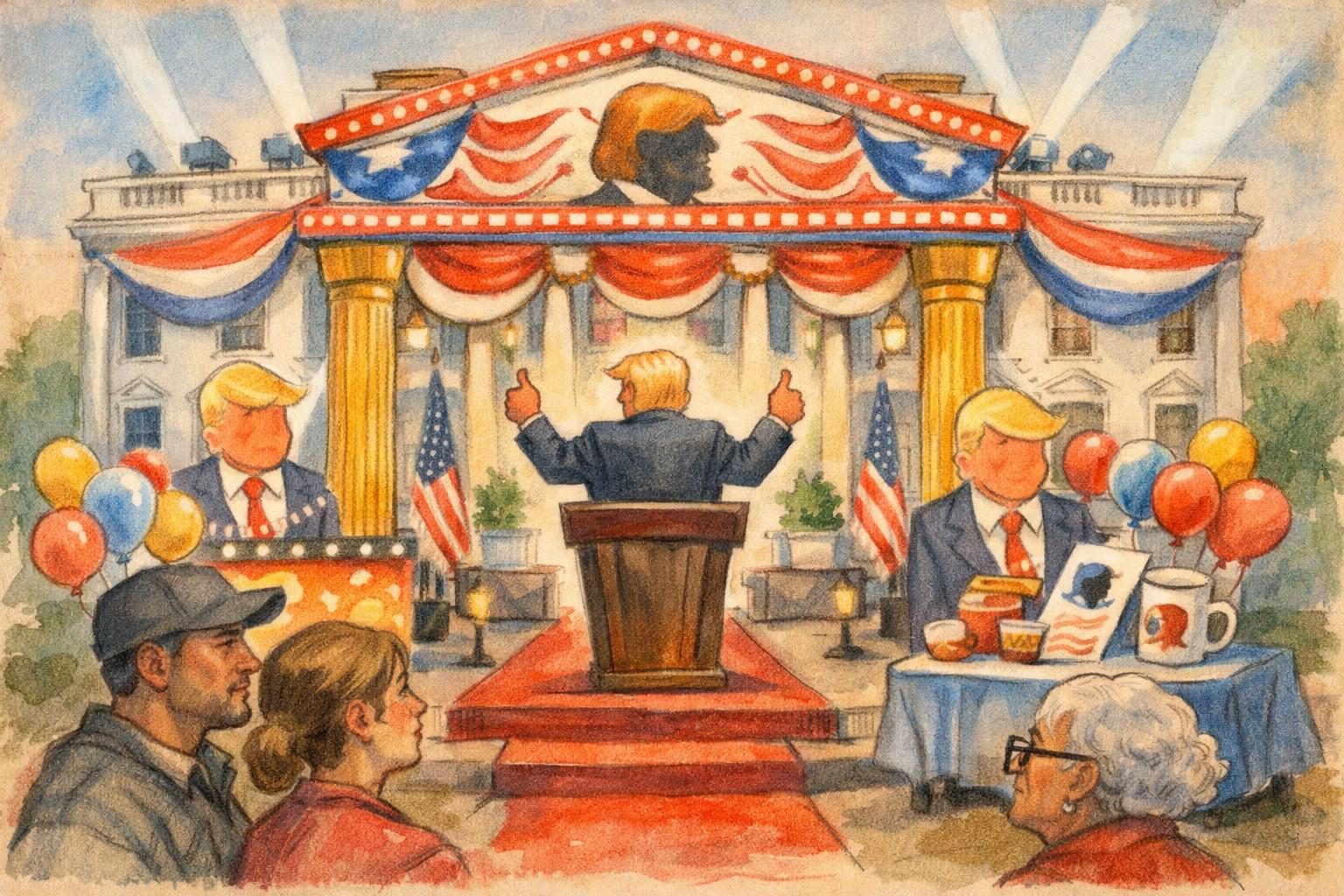
The White House spent part of Monday promoting a retirement-savings initiative that may or may not deserve a serious policy hearing, but it ensured from the start that the rollout would be remembered for the branding rather than the substance. The presidential action behind the announcement is titled, in full, “Promoting Retirement-Savings Access for American Workers by Establishing TrumpIRA.gov,” which is a long way of saying the administration would like people to think about retirement planning while also thinking about the president’s name. On paper, the underlying idea is not especially radical. The administration says it wants to expand access to retirement savings and support a saver’s match concept as part of a broader economic agenda aimed at workers. That is the kind of policy framework that can be argued over in good faith, since the value of any retirement program depends on how it is structured, who can participate, and whether it genuinely helps people put aside money they otherwise would not save. But none of that was the first impression created by the rollout. The first impression was a government action that looked less like a policy announcement than a branded campaign artifact with a federal letterhead.

That choice matters because the title does more than provide a convenient web address. It folds the president’s name directly into the identity of a public retirement portal and makes the announcement feel like an extension of the Trump brand rather than a neutral government service. A straightforward explanation of a savings-access initiative would have been one thing. A federal action that bakes TrumpIRA.gov into the headline is another, and it sends a signal about what the administration believes the point of the exercise is. The emphasis is not on bureaucratic clarity or even on the mechanics of the program. It is on making sure the Trump name sits at the center of the frame. Supporters can always argue that the White House is simply using the most recognizable brand available to it, or that this is nothing more than modern communications strategy. That defense may be politically serviceable, but it does not change the fact that the branding makes the initiative look like a personality project first and a government tool second. In a less performative era, the action might have been titled to describe the policy. Instead, it reads like someone decided the main job was to keep the logo visible.

That is why the political problem here is more cultural than legal. Nothing about the naming convention necessarily creates a procedural violation on its own, and there is no need to invent one to see why critics are already having a field day. The action offers a clean, easy-to-understand example of how little separation this administration seems to draw between governing and self-promotion. That charge has followed Trump for years because it fits a broader public perception that almost anything attached to him arrives wrapped in spectacle, branding, and relentless self-reference. This rollout reinforces that image in a particularly neat way because the title is so blunt. The White House could have led with retirement access, worker savings, tax treatment, or the details of the saver’s match concept. It could have explained the policy in terms that emphasized practical benefits for workers and families. Instead, it chose to make the president’s identity part of the announcement itself. That gives opponents an easy talking point: the government is being used as a marketing vehicle, and the policy is being introduced as an accessory to the brand rather than the other way around.

There is also a practical downside to that approach, which is that it risks smothering whatever policy conversation the administration hoped to start. Retirement savings programs are the sort of thing that require patience, explanation, and trust. People need to know who qualifies, how contributions work, what the incentives are, whether the match is meaningful, and how the program fits alongside existing retirement options. If the first thing they see is a domain name that sounds like a campaign storefront, the administration has already made the conversation harder than it needs to be. Even if the saver’s match concept ultimately proves useful, the rollout has been structured to trigger skepticism before anyone has time to examine the details. That does not mean the policy itself is doomed or that the idea lacks merit. It does mean the White House has added an unnecessary layer of noise to what should have been a basic policy explanation. In the process, it handed critics a neat visual and a simple line of attack: this is what happens when branding becomes the organizing principle of government messaging. The result is not a scandal in the conventional sense, but it is a reminder that public initiatives can lose credibility fast when they look like extensions of a personal empire.

The larger issue is that this kind of branding increasingly blurs the line between public service and private-style promotion, and the White House seems comfortable living in that blur. The economic materials surrounding the action suggest the administration is trying to present itself as focused on workers, savings, and broad-based opportunity, which is a standard and defensible political message. But the TrumpIRA.gov framing makes the announcement feel less like an effort to simplify access and more like an attempt to wrap a policy in a permanent identity marker. That may play fine with people who already see Trump as a brand rather than a politician, and it may even help the administration keep attention on the announcement for a few extra news cycles. Still, it also invites the obvious question of whether a government program should be introduced in a way that so clearly centers the president’s surname. Even if the underlying retirement idea turns out to be worth discussing on the merits, the rollout has already become a case study in vanity branding. The policy may deserve a hearing. The title deserves the ridicule it is almost certainly going to get.

Support the work

Help keep this site going

If this story was useful, help support The Daily Fuckup. Reader donations help pay for hosting, archives, publishing, email, and AI costs.

Donate

Read next

Reader action

What can you do about this?

Call or write your members of Congress and tell them the exact outcome you want. Ask for a written response and refer to the bill, hearing, committee fight, or vote tied to this story.

Timing: Before the next committee hearing or floor vote.

This card only appears on stories where there is a concrete, lawful, worthwhile step a reader can actually take.

Reader images

Upload a relevant meme, screenshot, or photo. Automatic review rejects spam, ads, and unrelated junk. The top-rated approved image becomes the story's main image.

Log in to upload and vote on story images.

No approved reader images yet. Be the first.

Comments

Threaded replies, voting, and reports are live. New users still go through screening on their first approved comments.

Log in to comment


No comments yet. Be the first reasonably on-topic person here.