
Cuba sanctions expand, and the White House still won’t say what success looks like
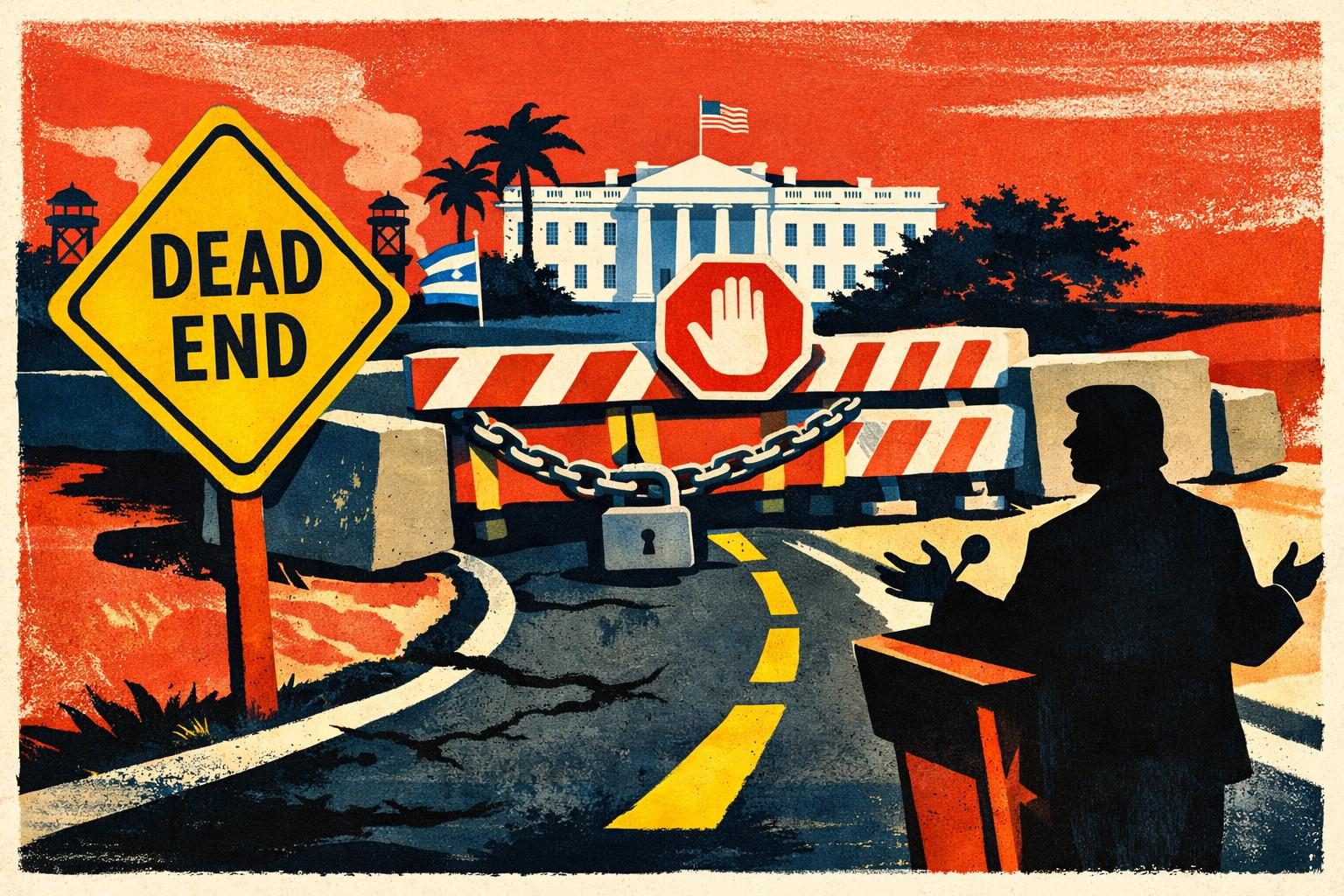
President Donald Trump’s latest Cuba sanctions order sharpens the pressure campaign, but it still does not spell out a public finish line. The May 1 action builds on the Cuba emergency declared in January and broadens the government’s ability to block property and restrict entry for foreign persons tied to the Cuban state, its economy, its security apparatus, human-rights abuses, or corruption. In plain terms, the administration is widening the list of people and institutions that can be treated as part of the problem, not just the target in Havana itself. ([whitehouse.gov](https://www.whitehouse.gov/presidential-actions/2026/05/imposing-sanctions-on-those-responsible-for-repression-in-cuba-and-for-threats-to-united-states-national-security-and-foreign-policy/))
The part missing from the public rollout is a concrete description of what would count as success. The May order says the president may modify it in light of new information, senior recommendations, or changed circumstances, and the January Cuba order says he may also change course if Cuba takes significant steps and aligns sufficiently with U.S. national security and foreign policy interests. But neither document gives a timetable, a measurable benchmark, or a public checklist that would tell outside observers when the White House would ease off. The policy has an off-ramp in law and in theory; it does not offer one in the form of a clear public map. ([whitehouse.gov](https://www.whitehouse.gov/presidential-actions/2026/01/addressing-threats-to-the-united-states-by-the-government-of-cuba/))
That matters because sanctions are not just punishment. They are supposed to change behavior, and behavior change usually comes with terms. Here, the administration is asking banks, shipping firms, investors, and other intermediaries to read a broad threat picture and then stay away from anything that could be seen as supporting the Cuban government. The May order reaches beyond named officials and into conduct involving the energy, financial, defense, mining, and security sectors, along with material support, ownership, control, and serious abuse or corruption. That breadth may raise the cost of doing business with Cuba, but it also increases the odds of overcaution by private actors who would rather walk away than risk crossing a line that is easy to state and hard to police. ([whitehouse.gov](https://www.whitehouse.gov/presidential-actions/2026/05/imposing-sanctions-on-those-responsible-for-repression-in-cuba-and-for-threats-to-united-states-national-security-and-foreign-policy/))
So the political message is clear enough: the White House wants to look harder on Havana, and on anyone who helps keep its system running. What remains unclear is how the administration expects to measure pressure as a success instead of just a posture. The official texts preserve the option to modify the policy if circumstances change. They do not, however, tell the public what improvement would be enough to trigger that change. That is the difference between an order that can be adjusted and a strategy that tells you where it is going. ([whitehouse.gov](https://www.whitehouse.gov/presidential-actions/2026/05/imposing-sanctions-on-those-responsible-for-repression-in-cuba-and-for-threats-to-united-states-national-security-and-foreign-policy/))
Comments
Threaded replies, voting, and reports are live. New users still go through screening on their first approved comments.
Log in to comment
No comments yet. Be the first reasonably on-topic person here.