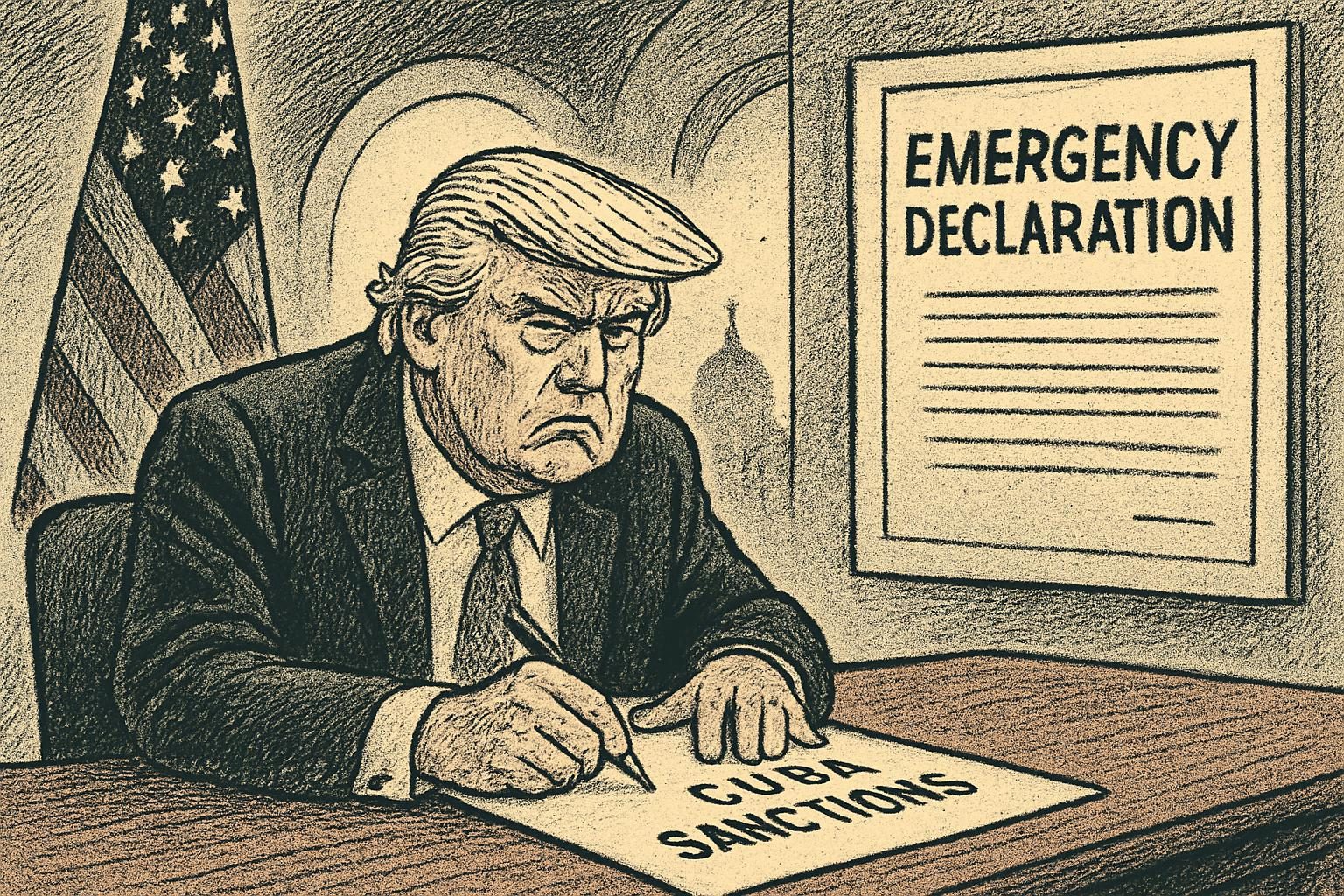
Trump’s Cuba sanctions order keeps normalizing emergency rule
President Donald Trump’s latest move on Cuba is a reminder that emergency powers, once invoked, have a way of becoming habits. The May 1 sanctions order does not create a new national emergency. Instead, it builds on the January 29 declaration that said the Cuban government’s conduct posed an unusual and extraordinary threat to U.S. national security and foreign policy. Under that existing framework, the administration is widening the menu of penalties available against people, entities and financial institutions it says support the Cuban government, its security apparatus or abuses tied to corruption and human rights violations. The order also expands the government’s ability to block foreign persons, restrict entry into the United States and pressure banks that continue doing business with sanctioned actors. In other words, the White House is not treating the emergency as a one-time response to a crisis. It is treating it as a standing legal platform for more sanctions, more restrictions and more executive control.
That is where the broader significance lies. The legal language still matters, and the administration is careful to frame its Cuba policy as a response to threats that justify action under existing law. But the practical effect is to make emergency authority feel increasingly ordinary. Once the government has declared an emergency, it can keep layering on measures without asking Congress for a fresh mandate or waiting for a separate public debate about the scope of the response. This order leans heavily on that flexibility. It adds more blocking authority and more pressure points for counterparties, including foreign banks that may have only indirect exposure to Cuba-related transactions. The administration can argue that each step is justified within the four corners of the January declaration. Yet the more often that logic is used, the harder it becomes to distinguish between a temporary crisis measure and a durable sanctions architecture built out of crisis language. That is the essence of emergency creep: the exceptional becomes routine, and the routine starts to look permanent.
There is a political logic to this approach, and it is not hard to see. Trump gets to present himself as uncompromising toward a communist government, to reinforce his message to hawks and hardliners, and to keep Cuba in the same rhetorical bucket as the administration’s broader national security themes. Sanctions are also a familiar tool because they create the appearance of action without requiring a full diplomatic settlement or a long legislative process. But the cost of leaning so heavily on emergency authority is that it starts to blur the line between governance and permanent mobilization. Companies with Cuba exposure have to spend more time on compliance, banks have to rework risk calculations and lawyers have to parse increasingly detailed restrictions. Foreign governments and business partners watching from the outside have to guess where the latest boundary lies and whether the boundary will shift again next month. The administration can call that decisiveness. Others may see it as rule by improvisation, with the legal system expected to clean up the confusion after the fact.
The administration’s own framing shows how expansive the approach has become. The White House says the order targets those responsible for repression and threats to U.S. national security and foreign policy, and it includes a national-interest waiver along with specific categories of covered conduct. Those features matter at the margins, because they suggest the government is trying to keep some discretion and some exceptions in the system. But they do not change the larger structure. The country is still operating under a declared emergency, and that declaration is being used to justify a broadening sanctions regime rather than a narrow response to a defined incident. That is the part that should concern anyone watching the steady growth of executive power. Every time the White House reaches for emergency authority and gets the policy result it wants, it teaches the system a lesson: the slower, more deliberative route can be bypassed, and the political costs are manageable. Maybe that works in the short term. Long term, it normalizes a constitutional posture in which the president governs through repeated emergencies and the rest of the system is left to adjust afterward. On Cuba, the immediate fallout may be limited to tighter sanctions, greater banking caution and more diplomatic friction. But the deeper effect is more corrosive than that. It reinforces the idea that emergency rule is not a break-glass exception at all, but simply another way to run the government."}
Comments
Threaded replies, voting, and reports are live. New users still go through screening on their first approved comments.
Log in to comment
No comments yet. Be the first reasonably on-topic person here.