Story · May 4, 2026

Trump’s governing style is still chaos with a flag pin on it

Chaos as style Confidence 3/5
★★★☆☆Fuckup rating 3/5
Major mess Ranked from 1 to 5 stars based on the scale of the screwup and fallout.
Correction: Correction: This piece brings together White House actions from March 20, March 31, and May 1, 2026; it was not all released on the same day.
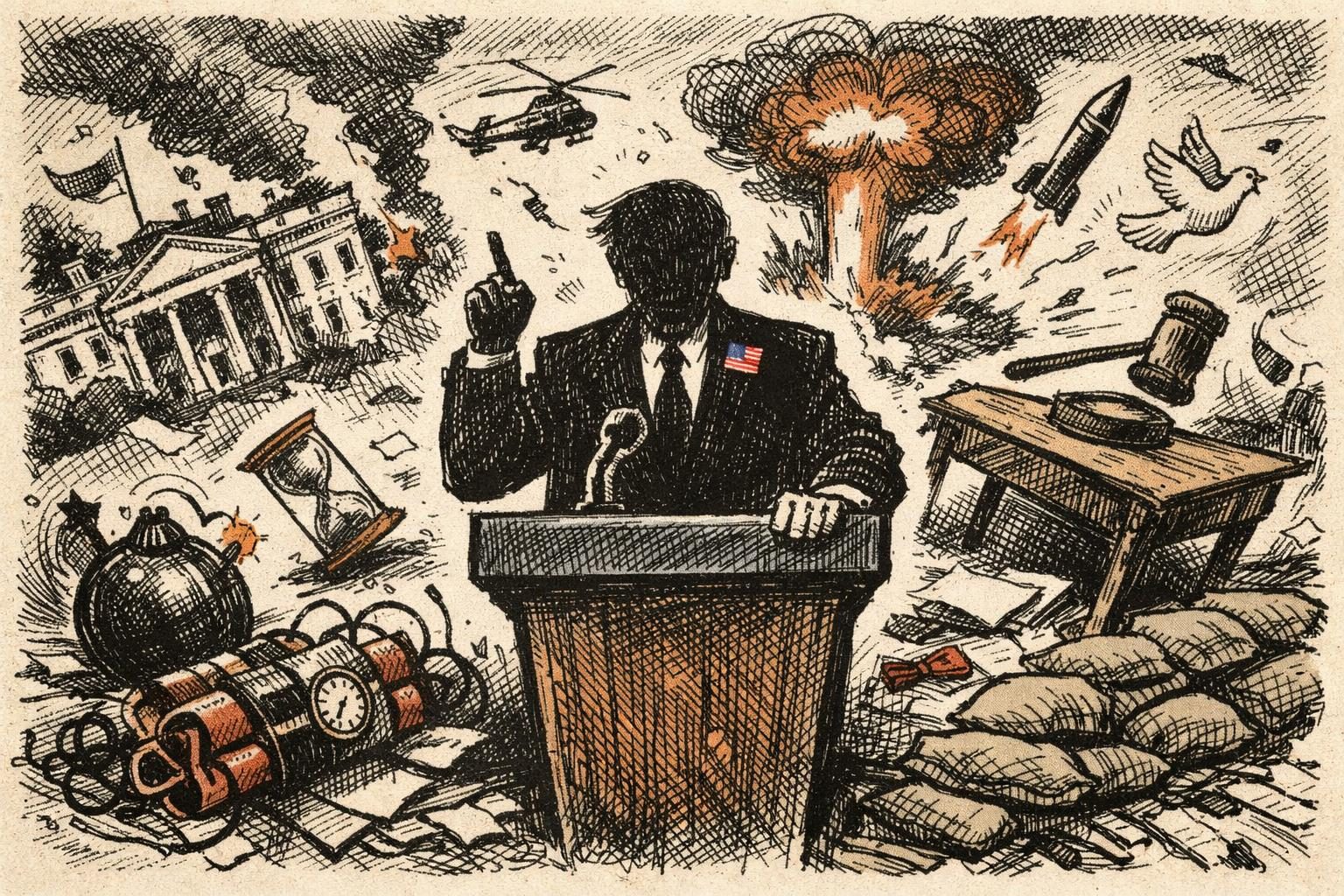
Trump’s governing style is still chaos with a flag pin on it reader image
Reader image selected by automatic review and community voting.

The clearest thing about Trump’s governing style is not that it is always wrong. It is that it is almost always loud, highly theatrical, and only selectively interested in the boring parts of government that determine whether a policy actually works. On this day, the White House rolled out material meant to showcase toughness on sanctions, elections, and national security, with a separate push around artificial intelligence and legislative framing that also fit the same playbook: project control, announce strength, leave no doubt about who is in charge. The problem is that the public-facing performance keeps outrunning the machinery underneath it. The administration tends to treat momentum, volume, and confrontation as if they were substitutes for disciplined execution. They are not. When the details are shaky, the symbolism may still land with supporters, but the practical effect is often more confusion than clarity.

That tension is visible in the administration’s own posture. A sanctions announcement aimed at Cuban regime officials was presented as a hard-edged response to repression and threats to U.S. national security and foreign policy, which is the kind of message Trump likes best because it sounds forceful and morally simple. The elections material was similarly framed as a matter of ensuring citizenship verification and voter eligibility in federal elections, again using the language of order, integrity, and decisive action. And the AI legislative framework was rolled out as another sign that the White House is not just reacting to the moment but trying to shape the future. In isolation, each of those moves can be described as a policy position. In combination, they reveal a governing instinct that prizes declaration over follow-through. The White House seems eager to claim the moral high ground before the policy ground has been fully mapped. That is a recurring source of trouble. Once the announcement goes out, the administration has already invited scrutiny over whether it can actually deliver what it promised, whether it thought through the downstream effects, and whether the legal and practical mechanisms can survive contact with reality.

That is why so much of the criticism surrounding Trump’s style keeps circling back to the same core complaint: the White House confuses motion with mastery. A president can sign a lot of paper and still leave a trail of unresolved questions behind him. He can announce sanctions and still raise doubts about enforcement, retaliation, diplomatic fallout, and whether the target list is the right one. He can talk about election integrity and still trigger broader arguments over access, burden, administration, and the risk that the policy is designed more for political symbolism than clean implementation. He can unveil a framework on AI and still leave people wondering how much of it is guidance, how much of it is leverage, and how much is just another attempt to dominate the news cycle. That matters because the downside is not theoretical. Uncertainty can move markets. It can complicate diplomacy. It can invite lawsuits, bureaucratic resistance, and simple confusion among the people expected to carry the policy out. When a White House makes drama the organizing principle, it often ends up producing its own aftershocks.

The deeper problem is that the administration keeps creating the conditions for backlash and then acting surprised when the backlash arrives. Trump’s supporters may see the style as proof of strength, and in a narrow political sense that is not irrational. He benefits from looking combative. He benefits from appearing unafraid to escalate. He benefits from turning policy into a loyalty test that forces others to react on his terms. But there is a difference between forcing a response and producing a durable result. Businesses dislike uncertainty because it makes planning harder. Civil liberties advocates dislike politicized enforcement because it blurs the line between law and punishment. Foreign partners dislike unpredictability because it makes cooperation risky. Even voters who prefer a tougher line on trade, immigration, sanctions, or elections can tire of the constant sense that every new announcement is going to generate another round of cleanup. Once that pattern sets in, each new hard-line gesture stops looking like confidence and starts looking like a fresh source of self-inflicted turbulence. The White House may still be able to sell that turbulence as resolve. It becomes harder to sell it as competence.

That is the larger story here, and it is bigger than any one sanctions announcement, election-order push, or policy framework. Trump’s governing model remains built around the idea that spectacle can cover for process, and that an aggressive tone can compensate for weak execution. Sometimes that may be enough to win the day’s news cycle. It is not enough to run a government that has to function beyond the news cycle. Boldness can be useful when it sits on top of planning, discipline, and an honest accounting of second-order effects. Trump keeps choosing the other route, where the performance is the point and the cleanup is somebody else’s problem. That is why the criticism keeps sticking. It is not just that the White House looks messy. It is that the mess appears to be part of the method. And once a presidency starts manufacturing its own downside as a matter of habit, the chaos is no longer a side effect. It is the brand, the operating system, and the recurring screwup all at once.

Support the work

Help keep this site going

If this story was useful, help support The Daily Fuckup. Reader donations help pay for hosting, archives, publishing, email, and AI costs.

Donate

Read next

Reader action

What can you do about this?

Call or write your members of Congress and tell them the exact outcome you want. Ask for a written response and refer to the bill, hearing, committee fight, or vote tied to this story.

Timing: Before the next committee hearing or floor vote.

This card only appears on stories where there is a concrete, lawful, worthwhile step a reader can actually take.

Reader images

Upload a relevant meme, screenshot, or photo. Automatic review rejects spam, ads, and unrelated junk. The top-rated approved image becomes the story's main image.

Log in to upload and vote on story images.

Trump’s governing style is still chaos with a flag pin on it reader image 1
Score: 95 AI / 0 community
By: mike
Current main image

Comments

Threaded replies, voting, and reports are live. New users still go through screening on their first approved comments.

Log in to comment


No comments yet. Be the first reasonably on-topic person here.