
Trump Blocks Minnesota Climate Case While Unveiling New Drug Strategy
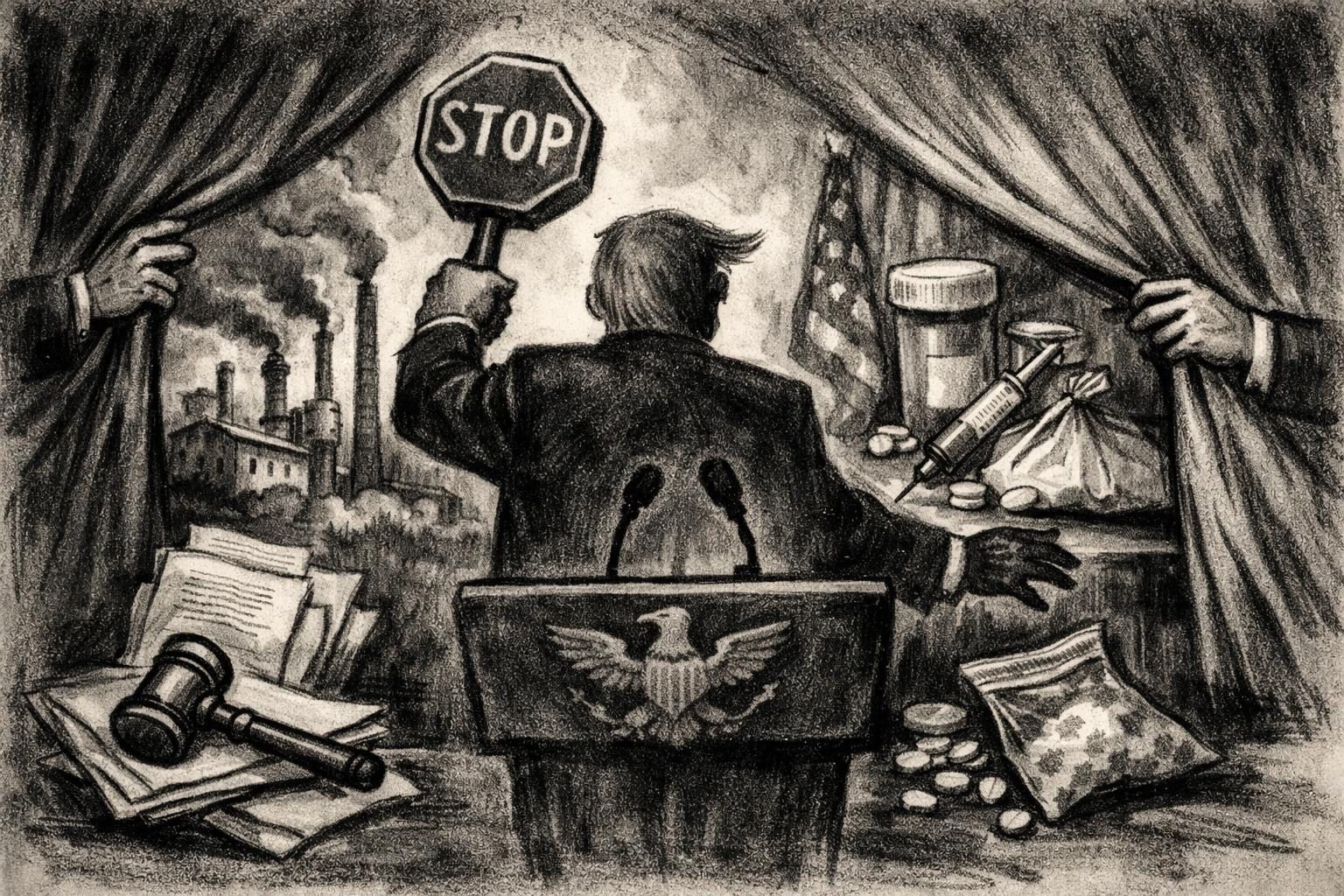
The Trump administration spent May 4 pushing two separate federal actions that show how aggressively it has been using executive power: a new national drug-control strategy and a Justice Department complaint aimed at stopping Minnesota’s climate lawsuit against energy companies. The first was presented as a roadmap for the administration’s drug policy. The second asked a federal court to block a state case the Justice Department says tries to regulate global greenhouse gas emissions and intrudes on exclusive federal authority. ([whitehouse.gov](https://www.whitehouse.gov/releases/2026/05/2026-national-drug-control-strategy-released/))
The drug-control strategy was released by the Office of National Drug Control Policy on May 4, 2026. The White House said the document is intended to provide a strategic roadmap for the administration and to guide federal efforts against illicit drugs and overdose. The release did not change law on its own, but it did set out how the administration wants to frame its next phase of drug policy. ([whitehouse.gov](https://www.whitehouse.gov/releases/2026/05/2026-national-drug-control-strategy-released/))
The Minnesota filing was more concrete. DOJ said it filed a complaint in U.S. District Court for the District of Minnesota to stop enforcement of the state’s climate lawsuit. In the department’s telling, Minnesota is trying to regulate global greenhouse gas emissions through state-court litigation against energy companies, and that effort is preempted by federal law and the Constitution. The complaint was filed on May 4, 2026. ([justice.gov](https://www.justice.gov/opa/pr/justice-department-files-complaint-against-minnesota-over-its-attempt-override-federal-law))
That complaint matters because it turns a policy fight into a courtroom fight. DOJ is not merely objecting to Minnesota’s theory; it is asking a federal judge to shut down the state case. The department also linked the filing to a White House executive order directing DOJ to protect American energy from what the administration calls state overreach. ([justice.gov](https://www.justice.gov/opa/pr/justice-department-files-complaint-against-minnesota-over-its-attempt-override-federal-law))
The tariff side of the ledger is older but still part of the same governing style. The White House proclamation covering aluminum, steel and copper imports was dated April 2, 2026, and most of its tariff changes took effect on April 6, 2026. The document set different rates and carveouts for different categories of products, including lower rates for some goods tied to the United Kingdom and the United States. ([whitehouse.gov](https://www.whitehouse.gov/presidential-actions/2026/04/strengthening-actions-taken-to-adjust-imports-of-aluminum-steel-and-copper-into-the-united-states/))
Taken together, the actions show an administration that prefers to announce forcefully and litigate later. The drug strategy is a policy document, not a law. The Minnesota filing is a direct bid to halt a state case. The metals proclamation is a trade move with a detailed effective date and a maze of exceptions. None of that is unusual in Washington. What is unusual is how often the White House now seems to treat legal conflict as part of the message itself. ([whitehouse.gov](https://www.whitehouse.gov/releases/2026/05/2026-national-drug-control-strategy-released/))
Comments
Threaded replies, voting, and reports are live. New users still go through screening on their first approved comments.
Log in to comment
No comments yet. Be the first reasonably on-topic person here.