
Trump keeps selling strength while the system digs in
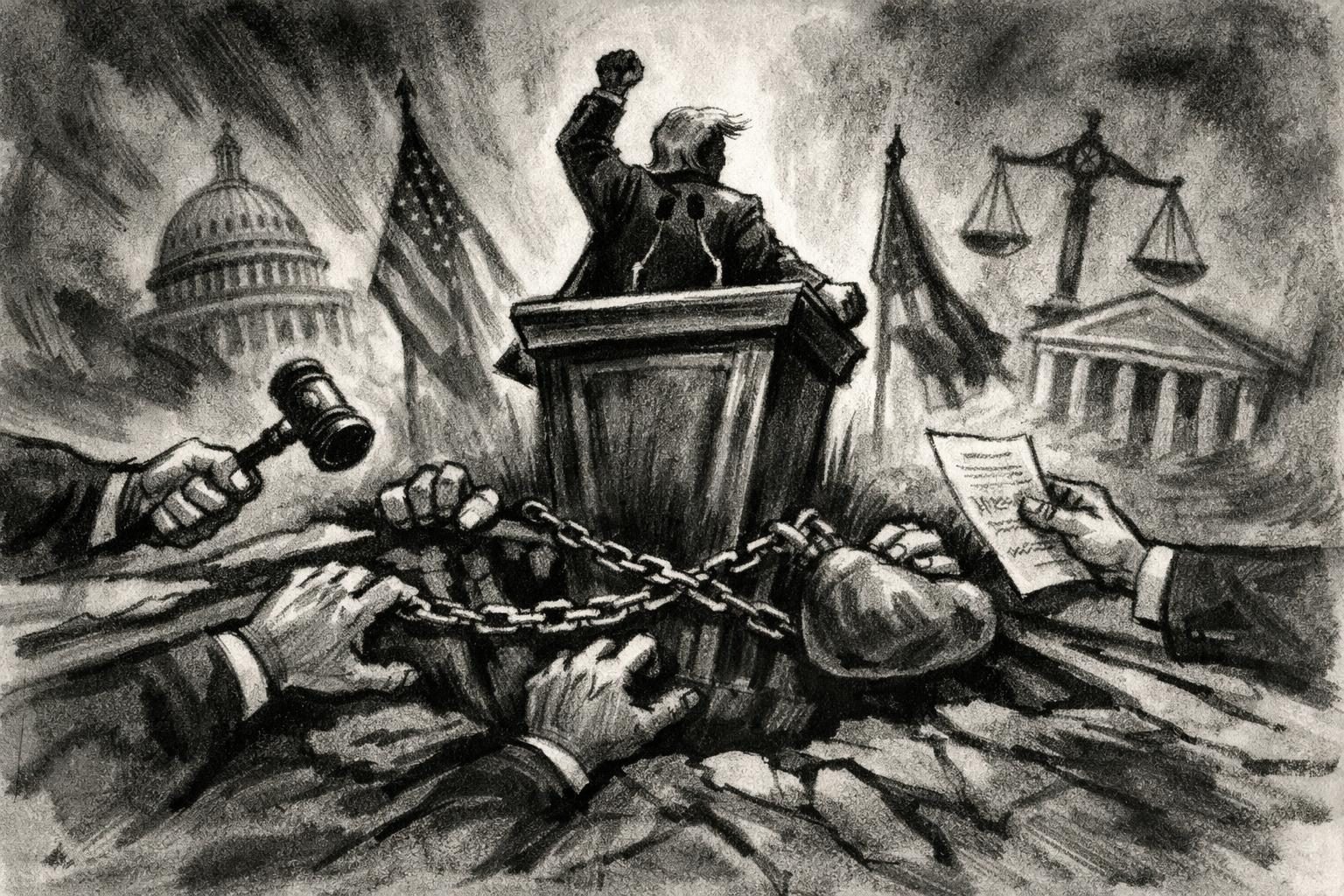
The most revealing thing about Trump’s current governing style is not any single blowup, announcement, or courtroom loss. It is the pattern that keeps repeating underneath the noise. The White House keeps presenting aggressive action as proof of command, whether the subject is tariffs, sanctions, regulation, or law enforcement. Every move is packaged as evidence that the president is strong, decisive, and finally forcing the system to bend. But the system keeps pushing back. Courts keep checking the edges of executive power. Agencies keep running into the practical friction that comes from hurried directives and messy implementation. And the broader political conversation keeps circling back to a basic question that is hard for the administration to answer with confidence: is any of this building something durable, or is it mostly creating more work for other people to clean up later?
That tension is especially visible in the tariff fight, where Trump has continued to sell confrontation as a sign of toughness even as legal challenges keep narrowing the administration’s room to maneuver. The problem is not that the White House cannot impose pain in the short term. It clearly can. The problem is that pain is not the same thing as control, and force is not the same thing as a stable policy framework. When a trade move is challenged in court, delayed by process, or forced into revision, the administration may still be able to claim momentum, but the claim comes with an asterisk. It is easy to talk like the boss when the podium is nearby. It is much harder to look like the boss when judges, lawyers, bureaucrats, and market actors are all asking whether the legal foundation is actually there. In that sense, the tariff drama is less a demonstration of command than a recurring reminder that authority has to survive scrutiny before it means much.
The same basic dynamic runs through other corners of the administration’s agenda. Trump’s team still prefers the language of decisive action, and it tries to turn nearly every move into a test of loyalty or strength. The White House has also continued to highlight family-focused initiatives and other public-facing efforts that are meant to project control and competence, including a recent announcement tied to support for families and moms. That kind of messaging helps the administration argue that it is not simply fighting institutional battles, but governing with purpose. Yet the larger problem remains unchanged: the harder the administration leans on speed and swagger, the more exposed it becomes when process catches up. Agencies cannot wish away administrative requirements. Courts do not bend because a policy is politically convenient. The Justice Department and other federal institutions may be aligned with the president in many respects, but they still operate inside structures that create delays, reviews, and limits. Those constraints are not bugs in the system; they are the system. And for a White House built around personal force, that reality keeps turning into an obstacle.
The political cost of that mismatch is starting to matter more than the theatrical benefit. Trump’s identity has always depended on a sharp contrast: he is the man who acts while everyone else hesitates, preens, or hides behind procedure. That contrast still has power with supporters, especially when it is wrapped in the idea that he is fighting a corrupt or sluggish establishment. But it is harder to sustain when the public keeps seeing the same loop play out. Announce a bold move. Claim victory. Encounter legal resistance, administrative complications, or market uncertainty. Revise, delay, or repackage the effort. Repeat. Over time, that cycle makes the government look less like an engine of change and more like a permanent emergency generator, always loud, always urgent, and never quite sure whether it has enough fuel to keep running. Businesses can adjust to a policy that is controversial but clear. Allies can adapt to a government that is blunt but predictable. Voters can even accept a leader who takes risks if those risks seem coherent. What is harder to defend is a style of government that confuses escalation with effectiveness and then asks everyone else to pretend the difference does not matter.
That is why the criticism surrounding this period is bigger than any one court ruling or enforcement wrinkle. The deeper charge is that Trump keeps treating power as if it can substitute for legitimacy, and the last several days offer another reminder that this assumption has limits. Courts are not impressed by rhetoric. Bureaucracies do not become more efficient because a president sounds furious. Markets do not settle down because the White House insists everything is under control. Even friendly institutions can only carry so much weight before the cracks show. The administration can still generate headlines, and it can still frame each setback as part of a larger fight, but that is not the same as producing policy that lasts. If the White House wants to keep claiming victory, it will need more than forceful language and a dramatic posture. It will need results that survive legal review, administrative implementation, and political scrutiny. So far, that is the part that keeps breaking, and the repeated failures are starting to tell a story the White House cannot fully spin away.
Comments
Threaded replies, voting, and reports are live. New users still go through screening on their first approved comments.
Log in to comment
No comments yet. Be the first reasonably on-topic person here.