
Trump’s habit of governing by emergency keeps getting closer scrutiny
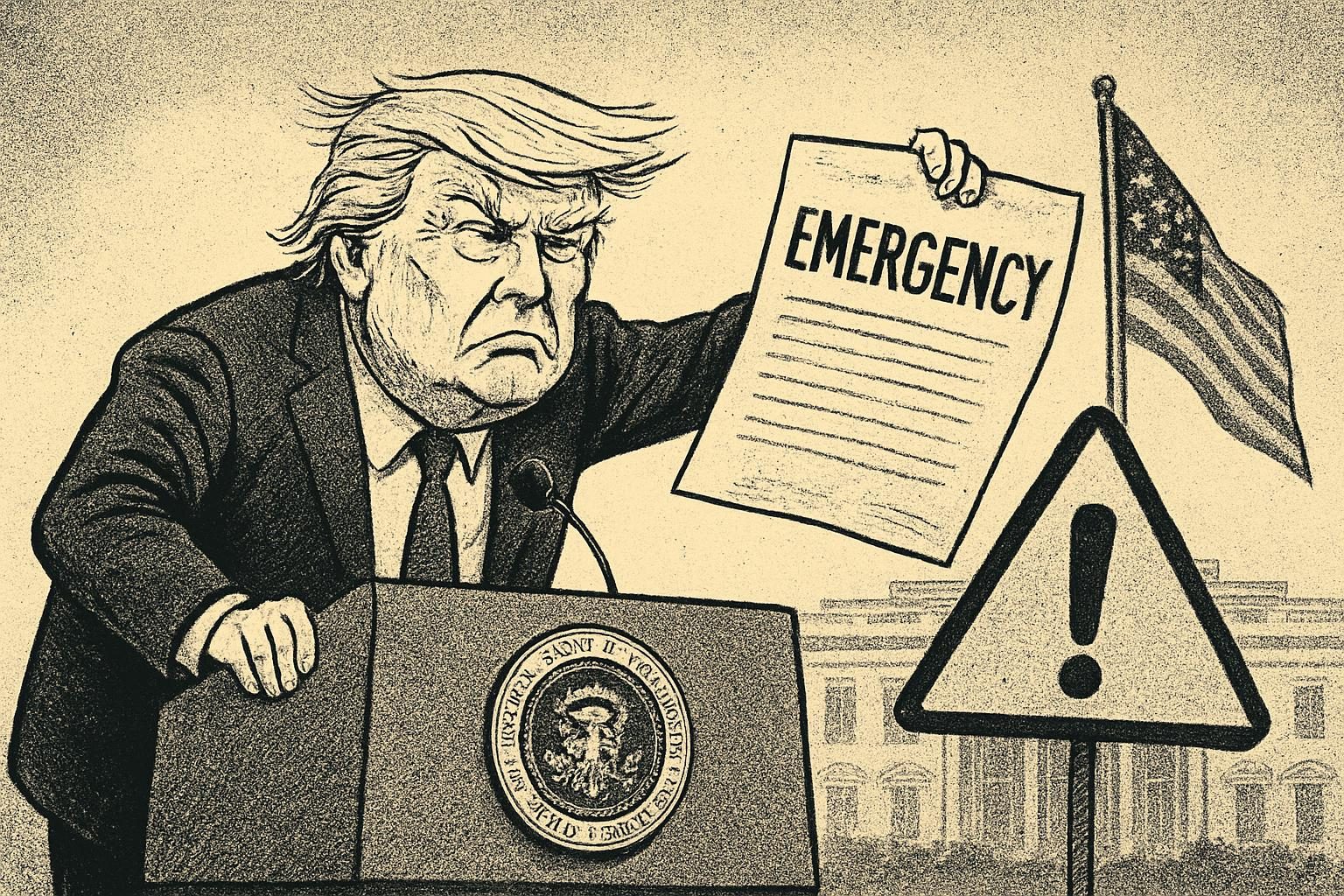
If the day’s tariff fight looked like a discrete legal setback, it was really only the most visible symptom of a much larger governing style that has become central to Trump’s second-term playbook: use emergency language, national-security claims, and broad executive authority to move first and argue later. That approach lets the White House act quickly, set the terms of debate, and present each new action as proof that the president is doing something muscular about a problem that Congress has failed to solve. It also creates a constant test of how far that reasoning can stretch before courts, businesses, and even some allies decide the rationale is too thin to support the policy hanging on it. On May 8, that tension was again on display as the administration continued to defend a broad posture of unilateral action while absorbing fresh questions about whether it is governing through law or through improvisation. The practical effect is that every new invocation of urgency becomes both a policy tool and a legal vulnerability. The more often the White House relies on that formula, the less it can assume the courts will simply defer.
The administration’s recent actions show how deeply that mindset has taken hold. In one arena, it has kept pressing ahead with tariff measures tied to claims about strategic vulnerability and national security, including adjustments involving imports of aluminum, steel, and copper. In another, it has used trade and industrial-policy authorities to address semiconductors, semiconductor manufacturing equipment, and derivative products in ways that go well beyond the ordinary pace of legislation. In yet another, it has relied on sanctions as a flexible instrument for punishing adversaries and signaling toughness abroad, including a fresh sanctions package directed at people the White House says are responsible for repression in Cuba and threats to U.S. national security and foreign policy. Taken together, those moves reveal a governing theory in which the president frames a problem as urgent, invokes a broad statutory hook, and then acts as if the existence of the hook settles the policy debate. That can be effective in the short term because it turns executive power into a substitute for coalition-building. But it also assumes the underlying legal authorities can bear the weight of all the uses to which the White House wants to put them. When that assumption is challenged, the administration is forced to explain exactly why a specific action fits within a statute that was often written far more narrowly than the president’s ambitions suggest.
That is where the political benefits of emergency governance begin to collide with its structural weaknesses. Trump’s style has always depended on dramatic movement, visible confrontation, and the promise that he alone can break through a system he portrays as slow, corrupt, or captured. Emergency authority fits that brand perfectly because it lets him claim he is acting for the country while bypassing the messier work of persuading lawmakers and building durable policy consensus. It also gives his team a way to reframe ordinary policy disputes as existential threats, which makes compromise look weak and delay look like failure. But the legal system does not reward vibes, and that is the problem. Courts do not need to decide whether the president sounds decisive; they need to decide whether Congress actually granted the power being used, whether the statutory text supports the action, and whether the government has offered a real explanation rather than a slogan. That is why the same tactic that produces political theater can become an evidentiary burden the moment a judge asks for the record. The White House may be able to move markets, dominate headlines, and force other actors to react, but it cannot simply wish away the fact that emergency powers are supposed to be exceptions, not a standing operating principle.
The scrutiny is likely to intensify because the administration keeps widening the distance between the scale of its actions and the clarity of the legal basis it offers. Tariffs justified on national-security grounds are especially exposed because they invite skepticism from people who can see that trade policy is doing double duty as foreign policy, industrial policy, and political messaging all at once. Sanctions are often easier to defend in principle, but even there the question becomes whether the targets and stated purposes line up cleanly with the authority cited, or whether the administration is leaning on broad phrasing to reach outcomes Congress never explicitly approved. Semiconductor policy presents a similar problem, since the White House is effectively trying to shape a strategic industry through executive action while asking everyone else to accept that this is still just routine statutory implementation. The more expansive the claim, the more tempting it is for critics to argue that the president is using national security as a blanket permission slip. The White House can respond that these are hard problems requiring quick action and that adversaries will not wait for Congress to find consensus. But speed alone does not settle legality, and decisiveness alone does not create legitimacy. The administration’s recurring pattern is therefore both a strength and a trap: it makes Trump look forceful in the moment, yet it keeps handing opponents an opening to ask whether the country is being governed by statute or by stunt. That question is not going away, and every new emergency-style move makes it harder for the White House to pretend it should.
Comments
Threaded replies, voting, and reports are live. New users still go through screening on their first approved comments.
Log in to comment
No comments yet. Be the first reasonably on-topic person here.