
Trump’s Victory Day Proclamation Is History as Branding, Not Government Action
The White House did, in fact, issue the proclamation it said it would. On May 7, the president signed a document designating May 8, 2026, as a day to celebrate Victory Day for World War II, using the familiar language of Allied triumph, sacrifice, national resolve, and historical memory. The proclamation is real, official, and posted by the administration, which means this is not one of those empty social-media flourishes that never quite becomes paper. But the existence of a signed proclamation should not be confused with a change in law, and the administration seems eager to let those ideas blur together just long enough to generate the desired political effect. There is a meaningful difference between commemorating an event and creating a new federal holiday, and this proclamation falls squarely on the commemorative side of that line. It is a statement, not a statute. It is an observance, not a mandate. And while the wording is built to sound weighty, the legal impact is far more modest than the surrounding pageantry suggests.
That distinction matters because the federal holiday calendar is not something the White House can casually rewrite by proclamation, no matter how grandly the message is staged. Under federal law, the list of holidays observed by the government is fixed in statute, and that means the administration cannot simply wave a pen and make May 8 into a day off for most workers or a new entry in the official holiday roster. The proclamation does not alter the holiday schedule in Title 5 of the U.S. Code. It does not create a new entitlement to leave. It does not automatically close federal offices or otherwise change the ordinary operation of government. In practical terms, it asks the country to mark the date, not to stop working because of it. That may sound like a minor technicality, but in Washington it is often the whole ballgame. Administrations of every stripe use proclamations to draw attention to anniversaries, honor institutions, and attach official language to events that matter politically or historically. What they cannot do is pretend that a proclamation has the same force as legislation. The Trump White House has a habit of dressing up ceremonial acts as if they were substantive policy, and this one fits that pattern neatly.
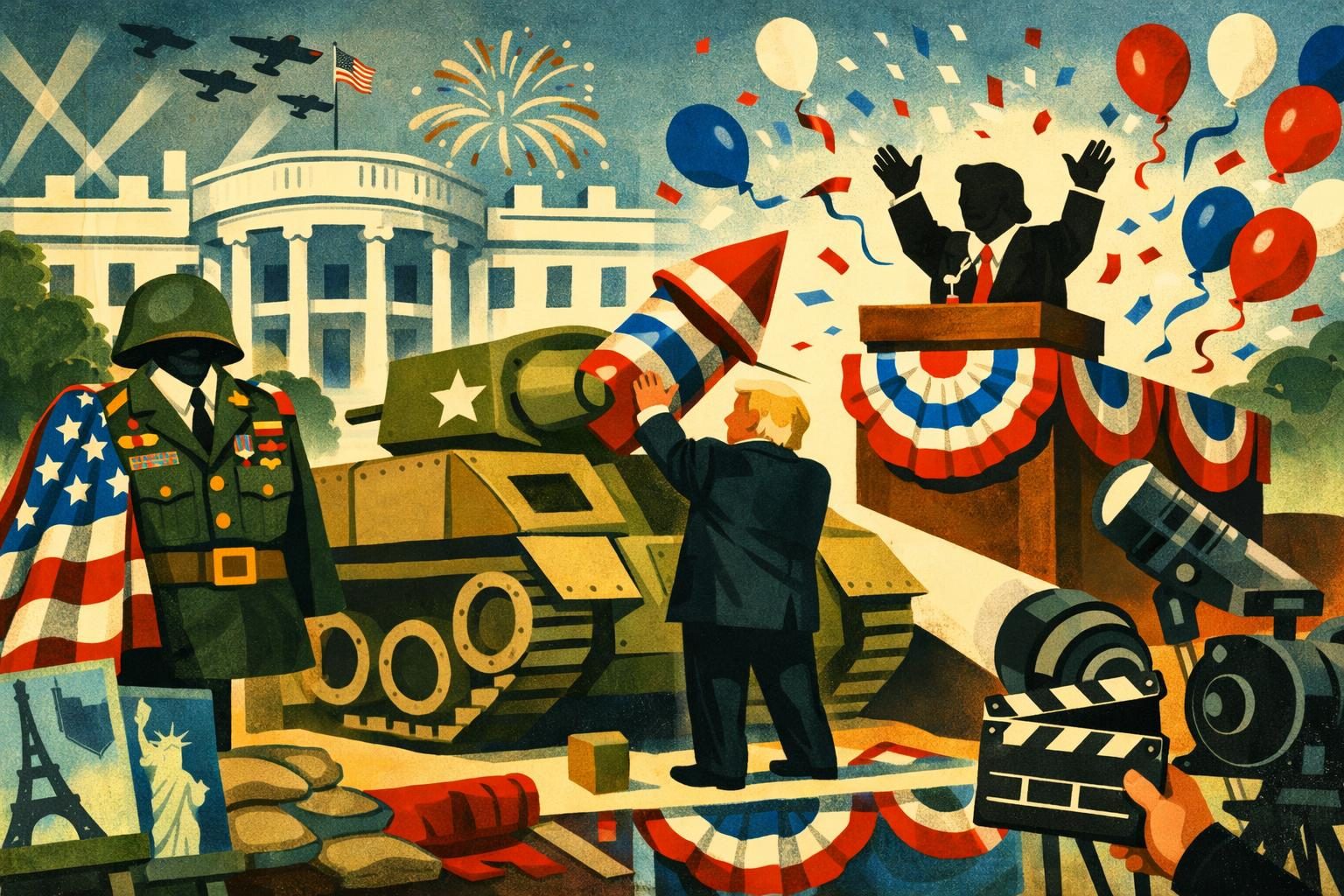
The symbolism is doing the real work here. The proclamation ties the end of the war in Europe to a larger story about American greatness, sacrifice, and endurance, and it folds that history into the administration’s broader effort to wrap itself in patriotic imagery. It also places the observance inside a political moment that is not exactly accidental, linking the anniversary to the country’s 250th year and making the whole exercise feel like an extension of campaign-style branding rather than a dry act of remembrance. That does not mean the historical tribute is fake or that honoring World War II victory is improper. It means the administration is clearly interested in controlling the frame. Instead of simply acknowledging a solemn milestone, the White House is presenting the day as a stage on which the president can stand in front of the flag and claim continuity with some of the country’s most revered moments. That is a familiar Trump move: take something serious, drape it in spectacle, and hope the spectacle does the heavy lifting. The language is broad enough to sound consequential, but the actual governmental effect is narrow enough to avoid scrutiny if no one bothers to read past the ceremony. The gap between the image and the legal reality is exactly where the political value sits.
That gap is what makes the proclamation worth examining beyond the usual celebratory gloss. If the administration simply wanted to honor the anniversary, it could have done so with straightforward language and modest expectations. Instead, it chose the kind of phrasing and presentation that invite people to assume more than the document actually delivers. That does not make the proclamation unlawful, and it does not make the historical commemoration illegitimate. It does, however, make it look like classic Trump-era governance by branding exercise: lots of spectacle, lots of flags, lots of claims about national meaning, and very little concrete change in the machinery of government. The administration can honestly say it issued a presidential proclamation. It cannot honestly say it created a holiday. It cannot honestly say it altered the statutory calendar. And it cannot claim that an official gesture is the same thing as policy simply because it was delivered with enough patriotic music in the background. In the end, the document serves as a reminder that this White House often prefers the appearance of action to the burdens of actual action. The proclamation is real, the history is real, and the legal effect is small. That is not a contradiction in the administration’s mind. It is the method.
Comments
Threaded replies, voting, and reports are live. New users still go through screening on their first approved comments.
Log in to comment
No comments yet. Be the first reasonably on-topic person here.