
White House Again Sells Law-and-Order Branding, Citing Contested Crime Metrics
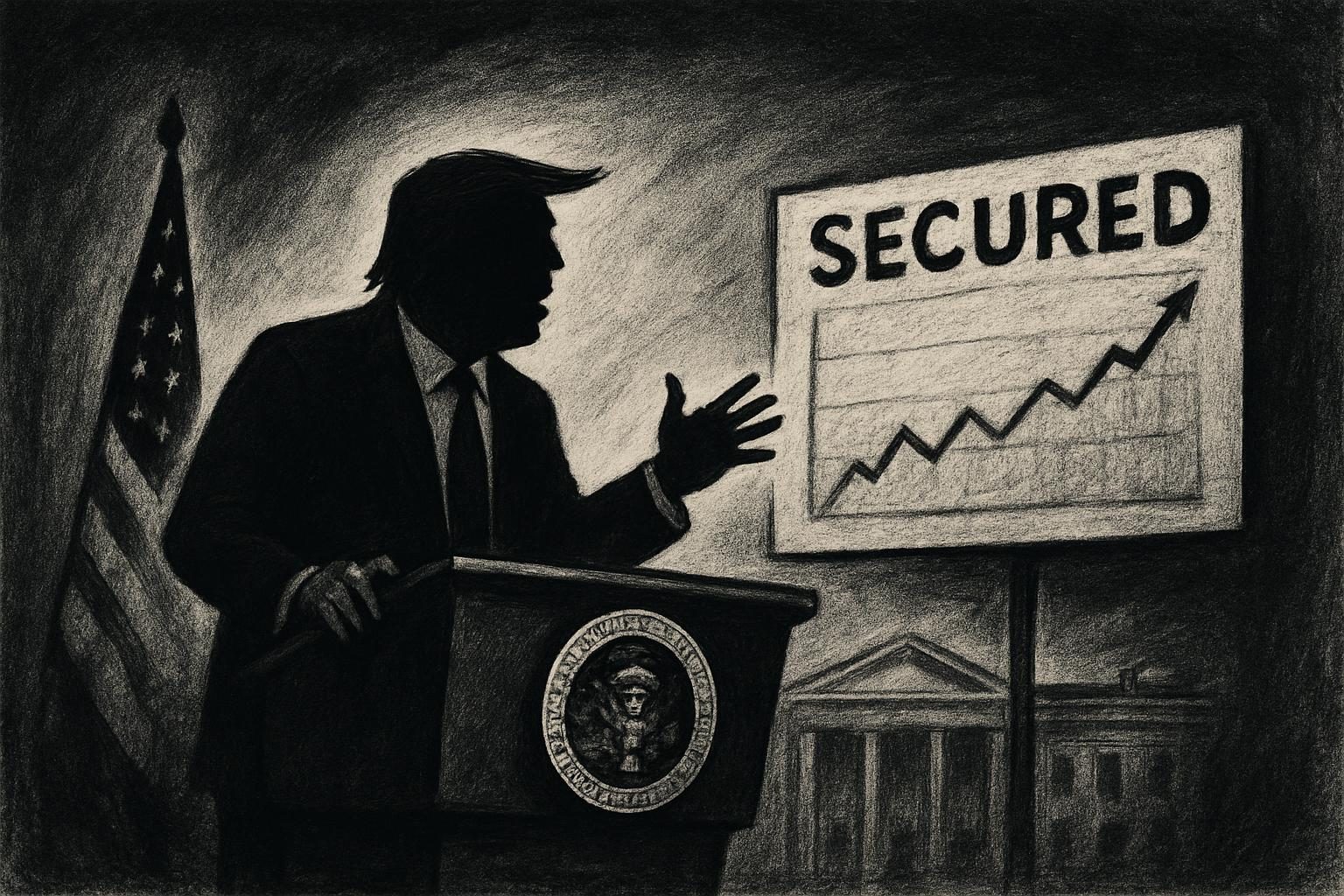
The White House spent May 13 doing what it has done often enough to make the pattern obvious: it wrapped Donald Trump’s law-and-order brand in the language of public safety and presented that as proof of progress. In a fresh official statement, the administration cast the president as the figure who has restored order, backed police, and made the country safer again. That is a familiar political move, and it is one every modern White House understands well. Presidents want to be seen as tough on crime and attentive to public safety. But this release goes further than ordinary message discipline and tries to let selective metrics carry the weight of a larger claim.
The difference here is important. The statement does contain numbers and specific assertions. It cites crime trends, officer deaths, overdoses, and other claimed outcomes tied to the administration’s enforcement posture. What it does not do, at least in the release itself, is show how those figures were derived, whether they come from independent sources, or why they should be treated as conclusive proof that the country is now safer. That leaves the document doing two things at once: offering measurable claims on the surface while relying on political branding to make those claims feel settled. The problem is not that the release has no data. The problem is that it treats data like a conclusion instead of something that still needs context, sourcing, and scrutiny.
That matters because official communications are supposed to do more than repeat a theme. If the administration wants to argue that its law-and-order approach is producing measurable results, the underlying evidence has to be visible enough to test. Here, the White House chose the opposite path. It foregrounded praise, confidence, and strength, then folded in a set of claims that were presented as self-evident rather than independently demonstrated in the statement. Supporters will read that as reassurance. Skeptics will read it as political framing dressed up as public safety analysis. Either way, the release is less a report card than a message exercise.
The broader pattern makes that easier to see. The White House has repeatedly used its official channels to present Trump as the president who brought law and order back into focus and who is securing the country through enforcement-heavy politics. Repetition is the point. The administration is building a political identity through constant reinforcement, hoping the language hardens into accepted fact simply because it appears in official copy. There is nothing unusual about a White House trying to shape a governing narrative. The notable part is how much of the argument depends on the narrative itself, even when the statement includes numbers that still need explanation and verification.
A stronger version of the release would have anchored its claims to a new policy action, a clearly sourced dataset, or a specific enforcement result that readers could check for themselves. Instead, it presents law-and-order branding as if the brand and the evidence were the same thing. They are not. A president can claim credit for a safer country. He can highlight enforcement priorities, police support, and public-safety initiatives. But when the government packages that case without showing its work, it asks readers to accept confidence in place of confirmation. That may be good politics for a day. It is not the same as proving the point.
So the story here is not that the White House offered nothing measurable. It did offer measurable claims. The story is that those claims arrived inside a release built to sell a conclusion first and justify it second. On May 13, the White House again chose style over specificity and repetition over explanation. That may keep the law-and-order message alive for another news cycle. It does not make the underlying claims any less contested, and it does not make the evidence any less necessary.
Comments
Threaded replies, voting, and reports are live. New users still go through screening on their first approved comments.
Log in to comment
No comments yet. Be the first reasonably on-topic person here.