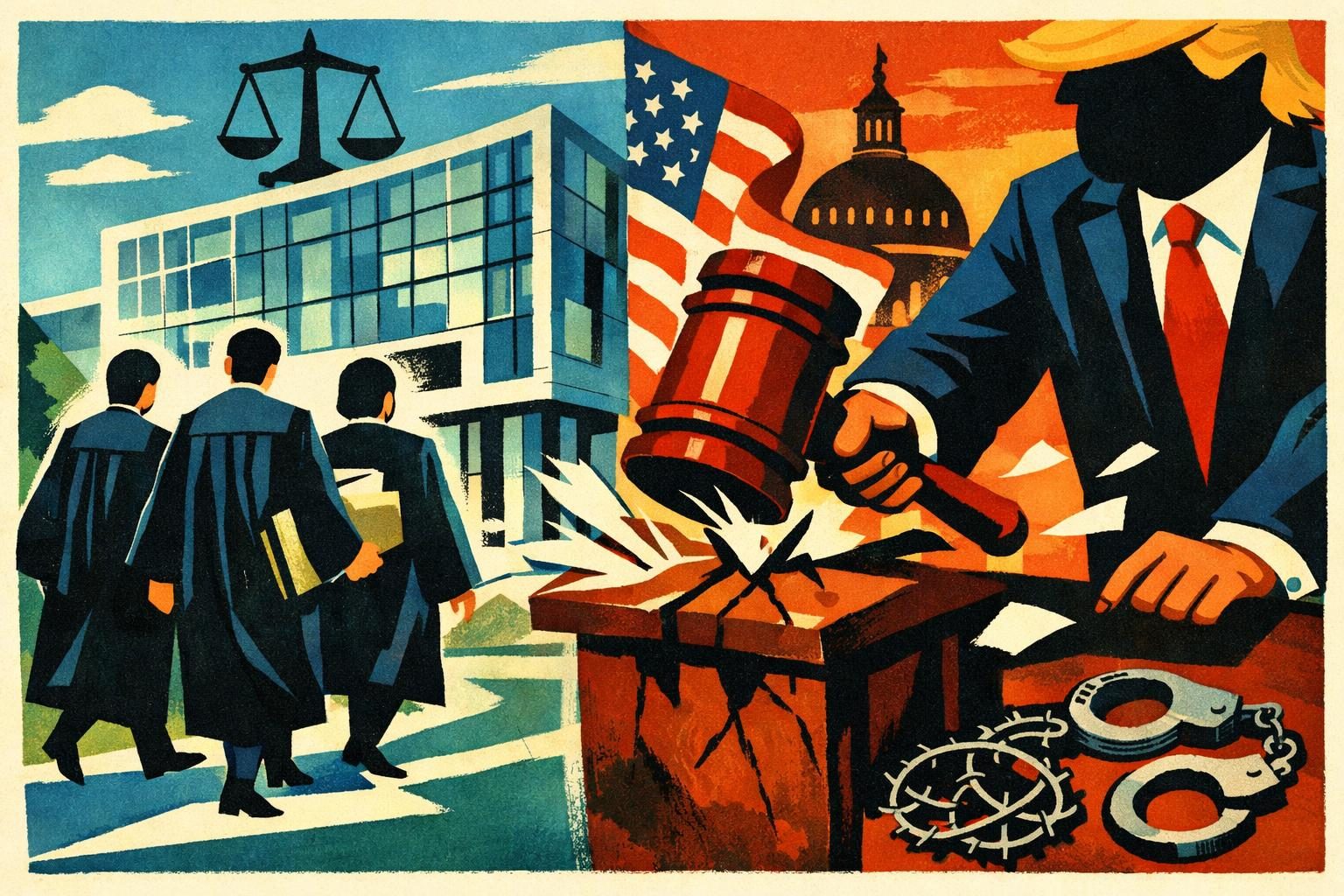
Trump’s sanctions on ICC judges triggered a new lawsuit
Three International Criminal Court judges have turned Donald Trump’s sanctions against them into a legal fight, filing suit on June 24, 2026, in a sharp challenge to a White House tactic that has increasingly blurred the line between foreign policy and personal retaliation. The judges say the measures imposed last year were unlawful and were designed to pressure them over their judicial work, not to address any legitimate national emergency. In other words, the complaint argues that they were not sanctioned for conduct that threatened the United States, but for doing their jobs in cases the administration disliked. That is an unusually direct accusation against an American president, and it goes to the core of what sanctions are supposed to be for. Rather than serving as a tool of statecraft, the judges say, the penalties were used as a cudgel against independent decision-makers. The lawsuit does not just ask whether the government had authority to act; it asks whether the administration crossed a line by turning financial punishment into a form of courtroom intimidation.
The filing says the sanctions were more than symbolic displeasure and amounted to an effort to exert extra-judicial pressure by targeting the judges’ personal and financial interests. That distinction matters because sanctions are usually framed as a response to state behavior, not as a way to make individual judges feel the consequences of decisions that anger a political leader. According to the complaint, the administration exceeded its authority under the International Emergency Economic Powers Act, the statute often used to justify emergency economic restrictions, and did so without a genuine emergency or extraordinary threat. The judges also argue that the sanctions were meant to coerce future behavior, effectively warning them that rulings inconsistent with private or political interests could carry personal cost. If that claim holds up, it would place the administration’s conduct in a far more aggressive category than ordinary diplomatic friction. It would suggest the government was not merely objecting to the ICC’s actions, but trying to influence how judges think and vote. That is a serious allegation in any system, and an especially awkward one for a president who frequently presents himself as a defender of law and order. The case is likely to test how far the executive branch can go when it wants to punish officials beyond America’s borders.
The political and reputational fallout may be as significant as the legal questions. At home, the lawsuit reinforces a familiar critique of Trump: that he treats independent institutions as enemies to be pressured, punished, or humiliated when they fail to show loyalty. Abroad, it gives allies and critics alike a fresh example of the United States using state power in a way that can look less like principled diplomacy and more like personal vendetta. The ICC judges are not household names in the United States, but the symbolism of foreign judges suing an American president over sanctions is hard to miss. It suggests a global audience is watching how the administration uses its economic leverage, and that the president’s instincts toward retaliation can travel well beyond domestic politics. The timing also matters because Trump has continued to frame legal conflict in personal terms, often casting institutions that constrain him as hostile actors rather than neutral referees. A lawsuit from judges who say they were singled out for their work only adds to the impression that this White House sees disagreement as something to be punished, not managed. Even if the administration argues it was acting within its powers, it now has to defend a move that looks, on its face, like an attempt to make judges pay for judging.
The broader significance of the case goes beyond the ICC itself because it fits a wider pattern in which Trump’s conflicts with institutions become retaliatory exercises. That pattern has already shown up in domestic disputes over records, voting, payments, and other legal fights, where the administration has often responded by escalating rather than cooling tensions. The sanctions lawsuit extends that dynamic into international judicial politics, where the stakes are less partisan but the principle is the same: pressure the people making the decisions until they feel the cost. Whether the court ultimately sides with the judges or narrows the government’s latitude, the episode is likely to linger as evidence of how casually punitive tools can be deployed when Trump wants to send a message. The administration may still argue that sanctions are a legitimate response to conduct it finds objectionable, but that argument gets harder to sell when the targets are judges and the alleged purpose is to influence their work. For critics, the case is another reminder that under Trump, the distinction between policy and score-settling tends to be flexible when it is politically convenient. For the ICC judges, suing may be less about reversing the past than about forcing the White House to explain, in public and in court, why punishing judges for their decisions should ever be considered an acceptable use of American power.
Comments
Threaded replies, voting, and reports are live. New users still go through screening on their first approved comments.
Log in to comment
No comments yet. Be the first reasonably on-topic person here.