
Boston judge blocks key parts of Trump’s election order over constitutional concerns
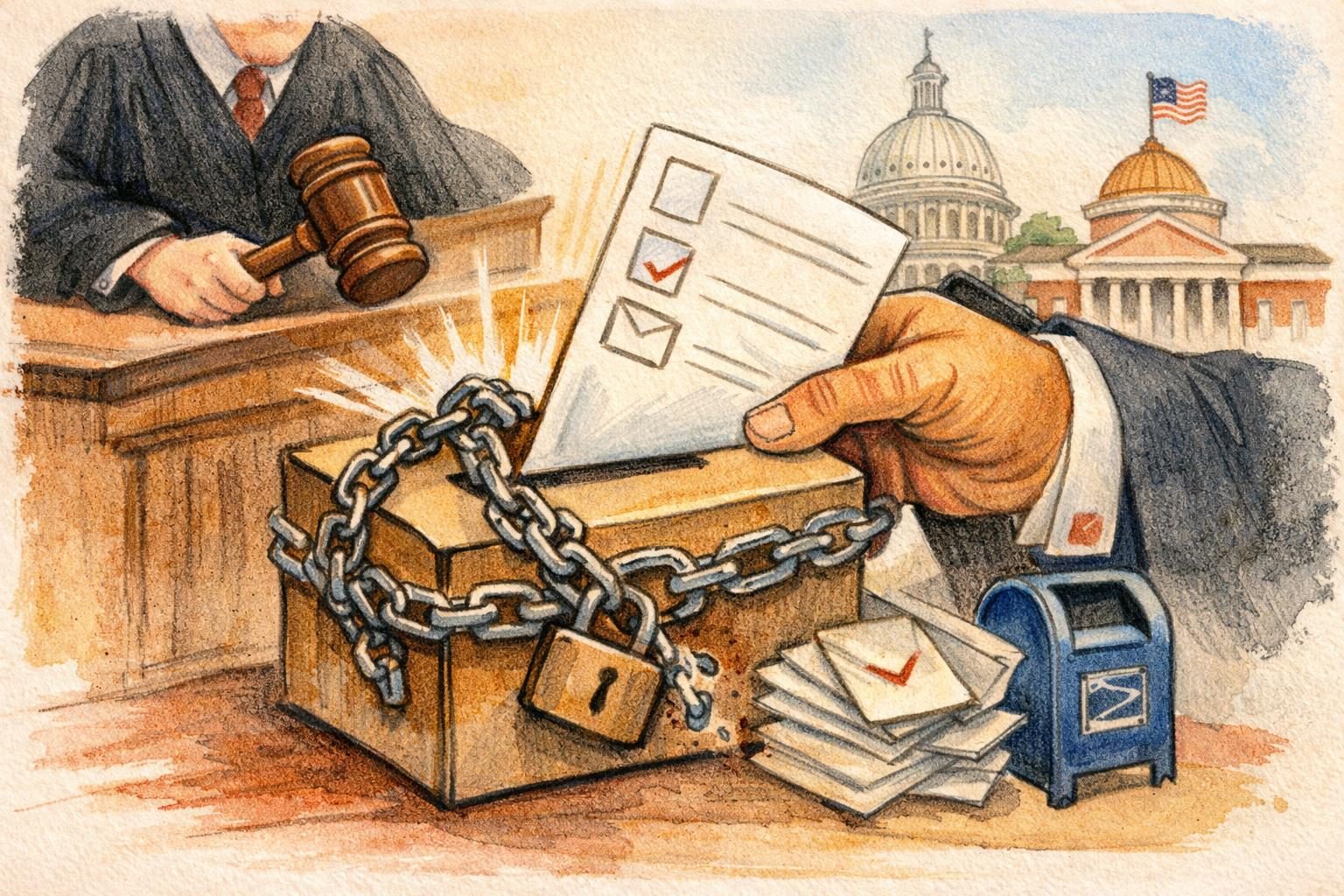
A federal judge in Boston has put the brakes on two of the most aggressive pieces of President Trump’s election executive order, but the ruling did not happen in a vacuum. A separate Washington case in May had already refused to stop the order at an early stage because the challenged policy had not yet been put into effect. The Boston decision on June 25, 2026, was the first merits ruling to cut down the plan.
U.S. District Judge Indira Talwani halted provisions that would have created a federal voter list and would have pushed the U.S. Postal Service into setting new limits tied to mail ballots. Those are the parts that most directly tried to pull federal agencies into work normally handled by state election officials. The order itself was issued in March and published in the Federal Register in April. ([govinfo.gov](https://www.govinfo.gov/app/details/FR-2026-04-03/2026-06601?utm_source=openai))
The legal issue is basic federal structure: states run elections, while Congress can set rules in areas it has authority over. A president can direct executive agencies, but that power does not let the White House invent election policy on its own. Talwani’s ruling reflects that line by stopping the challenged provisions rather than blessing a federal takeover of election administration. ([govinfo.gov](https://www.govinfo.gov/app/details/FR-2026-04-03/2026-06601?utm_source=openai))
The executive order also directed the attorney general to prioritize prosecutions involving noncitizen voting and instructed the Postal Service to begin rulemaking on mail-in and absentee ballot services. But the Boston ruling narrowed the immediate impact by blocking the sections that would have changed how states verify voters and how ballots move through the mail system. ([govinfo.gov](https://www.govinfo.gov/content/pkg/FR-2026-04-03/pdf/2026-06601.pdf?utm_source=openai))
The administration can appeal, and the broader fight over the order is still alive. But for now, the court has said the White House cannot use an executive order to seize control of election rules that the Constitution leaves elsewhere. ([govinfo.gov](https://www.govinfo.gov/app/details/FR-2026-04-03/2026-06601?utm_source=openai))
Comments
Threaded replies, voting, and reports are live. New users still go through screening on their first approved comments.
Log in to comment
No comments yet. Be the first reasonably on-topic person here.