
Supreme Court strikes down party coordinated-expenditure limits
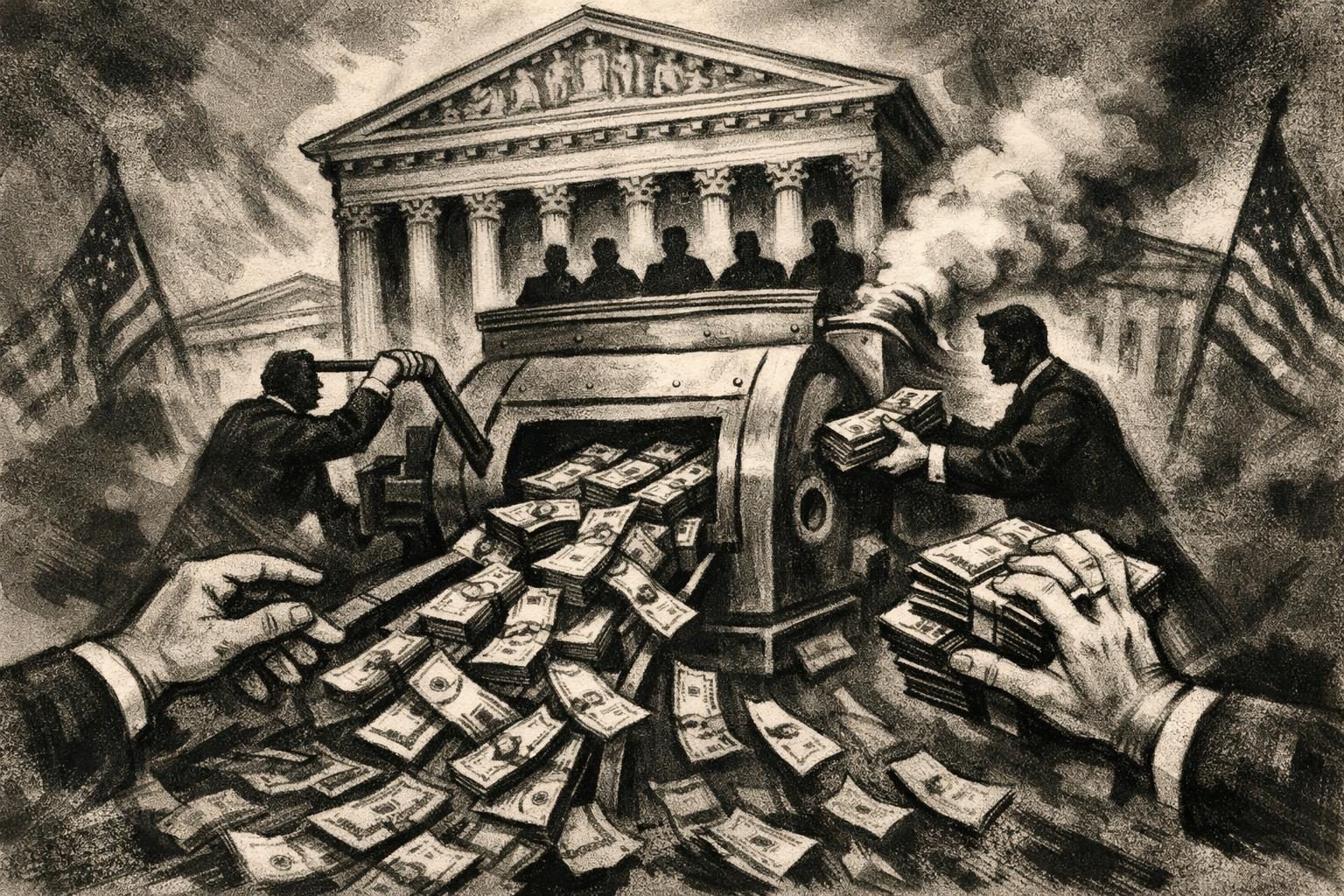
The Supreme Court on June 30 took a sharp knife to one of the campaign-finance rules that has long governed how political parties can work with their own candidates, striking down the Federal Election Campaign Act limits on coordinated party expenditures in National Republican Senatorial Committee v. Federal Election Commission. The practical effect is immediate and substantial: party committees now have more room to spend in lockstep with candidates than they did before. The Federal Election Commission moved quickly to acknowledge the ruling and update its guidance accordingly. That makes this a real shift in the money mechanics of federal politics, especially for national committees that operate as a bridge between donors, consultants, and campaigns. It is, however, still only a shift in one part of the larger system, not a wholesale demolition of campaign-finance law.
The legal holding is narrower than the breathless reaction it is likely to inspire. The Court did not erase every coordination rule, and it did not wipe away the separate contribution, disclosure, and anti-circumvention provisions that still structure federal elections. What it targeted were the FECA caps on coordinated party expenditures, which had limited how much national and state party committees could spend in concert with nominees and candidates. According to the FEC’s own post-decision materials, the Court concluded those limits are unconstitutional. That matters because coordinated spending is where party infrastructure stops being merely supportive and starts functioning like an extension of the campaign itself. But the ruling does not create a legal vacuum, and it does not give anyone a free pass to pretend the rest of election law has vanished overnight.
That distinction is important because the first wave of commentary around any major campaign-finance decision tends to swing between triumphalism and catastrophe. This one should do neither. The Court’s ruling gives party committees more practical power, especially in close races where every extra dollar can be steered toward television, digital buys, field operations, and consultant-heavy activity that directly benefits a candidate. It also makes the party system even more attractive to donors who want influence without having to write a check directly to a candidate operation. For Trump-world, and for the broader universe of aligned Republican operatives, the decision is useful because it helps national committees behave less like referees and more like high-capacity vendors with donor money attached. That is not a cosmetic change. It alters who can spend, how closely they can coordinate, and how much campaign activity can be centralized through party channels.
At the same time, the ruling does not settle the political argument over corruption, influence, or the appearance of influence, which has hovered over campaign-finance law for decades. Supporters will almost certainly describe the decision as a clean victory for speech and association, while critics will say it further relaxes the boundary between candidates and the money networks that orbit them. Both reactions will likely be overstated in one direction or the other. The Court did leave in place the core framework of disclosure and other anti-corruption tools, and the FEC notes that other rules still apply, including earmarking restrictions and related safeguards. Still, the headline consequence is obvious: one more guardrail is gone, and the party spending machine gets a bigger throttle. That does not mean elections are now lawless. It does mean the line between a party committee and a candidate’s own operation just got easier to blur, especially for well-financed campaigns that already know how to exploit every inch of the remaining rules.
Comments
Threaded replies, voting, and reports are live. New users still go through screening on their first approved comments.
Log in to comment
No comments yet. Be the first reasonably on-topic person here.