Judge Presses Trump Team for Clearer Assurances on East Potomac Golf Project
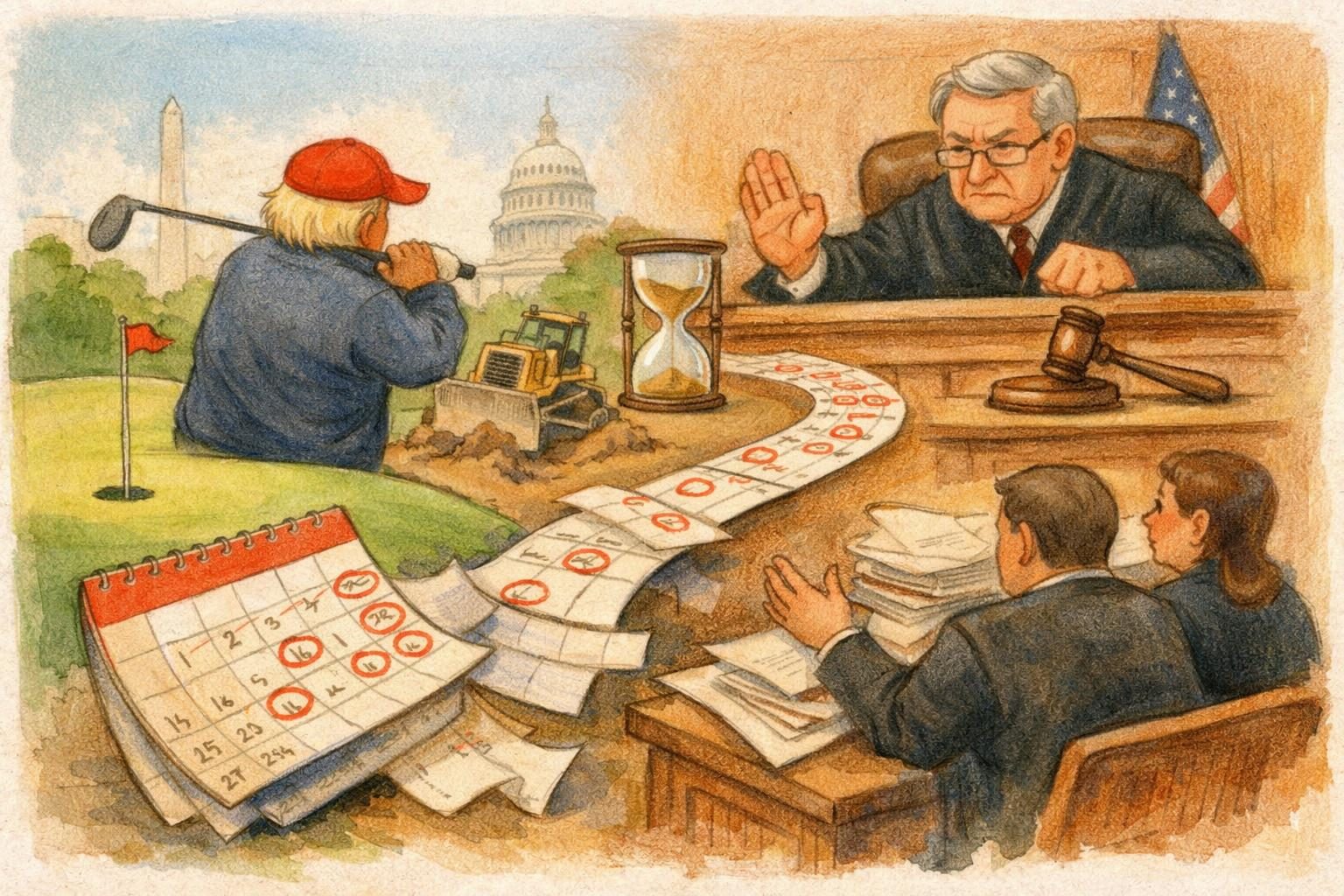
A federal judge is pressing the Trump administration to be much clearer about what, exactly, it plans to do at East Potomac Golf Links while a legal challenge to the project is still pending. At a July 2 hearing, U.S. District Judge Ana Reyes questioned whether the government was minimizing the immediacy of the work while President Donald Trump was publicly describing a start date and showing off renovation ideas as though the course makeover were already moving forward. The dispute centers on a golf course in federally controlled parkland, where any major change can draw scrutiny from both preservation and environmental advocates. The judge did not issue a stop-work order, and she did not dismiss the case, but she signaled that vague assurances would not be enough if the administration wants the court to believe the project remains only in a preliminary stage. The result is a familiar kind of Washington clash: the public message says one thing, while the legal posture is supposed to say something more cautious.
The administration’s lawyer told the court that the East Potomac plan remained under review and that the designs being discussed were still conceptual. That might have been a manageable position if the president had not already given the project a far more definite public gloss. According to the hearing record and the public statements surrounding the project, Trump has suggested a Sept. 1 start date for major renovations, which made the judge skeptical that the government was merely floating ideas rather than preparing to act. Reyes appeared to be looking for consistency between the administration’s courtroom posture and the president’s own remarks, and she seemed unconvinced that the two could easily be reconciled. The hearing did not resolve the underlying dispute, but it did make clear that the court expects tighter explanations before it gives any weight to the government’s claim that nothing final has been decided. In practical terms, that means the administration has to persuade the judge not just that the project is allowed, but that it is still in a genuinely unfinished state.
The tension here is not only procedural but political, and that is part of what makes the case so awkward for the White House. Trump often presents construction projects as symbols of momentum and competence, a way of turning policy into something visible and concrete. But when that instinct collides with active litigation, it can create exactly the kind of credibility problem judges hate. Opponents of the golf course project are likely to argue that this is a classic announce-first, justify-later approach, especially if the president is publicly treating the renovations as inevitable while government lawyers insist the plans are still in the conceptual phase. Even people who are not sympathetic to the lawsuit should be able to see the risk: if the administration appears to be ahead of the legal process in public, it invites suspicion that the court is being asked to bless a foregone conclusion. That kind of mismatch can turn a straightforward project dispute into a test of whether the government’s representations can be trusted at all.
For now, the case remains alive and the project remains possible, but the judge’s response suggests the administration is not going to get the benefit of the doubt without more discipline. Reyes stopped short of blocking the work, which means the government has not suffered an immediate legal defeat, yet she also did not wave the case away as premature or harmless. Instead, she appears to want a cleaner factual record and more precise assurances about what the administration is actually planning to do, and when. If the White House wants to avoid further judicial skepticism, it may need to narrow its public claims, tighten its legal explanations, or both. Otherwise, it risks making the court believe that the project is being pushed forward on the strength of presidential bravado rather than a settled approval process. The broader lesson is not just about one golf course renovation. It is about how quickly a public timeline can undercut a legal defense when the people making the argument in court are being contradicted by the president himself outside it. For now, East Potomac is still in play, but so is the lawsuit, and the judge has made plain that she expects the administration to stop treating uncertainty as if it were the same thing as a green light.
Comments
Threaded replies, voting, and reports are live. New users still go through screening on their first approved comments.
Log in to comment
No comments yet. Be the first reasonably on-topic person here.