
Justice Department rejects ICC jurisdiction over U.S. persons
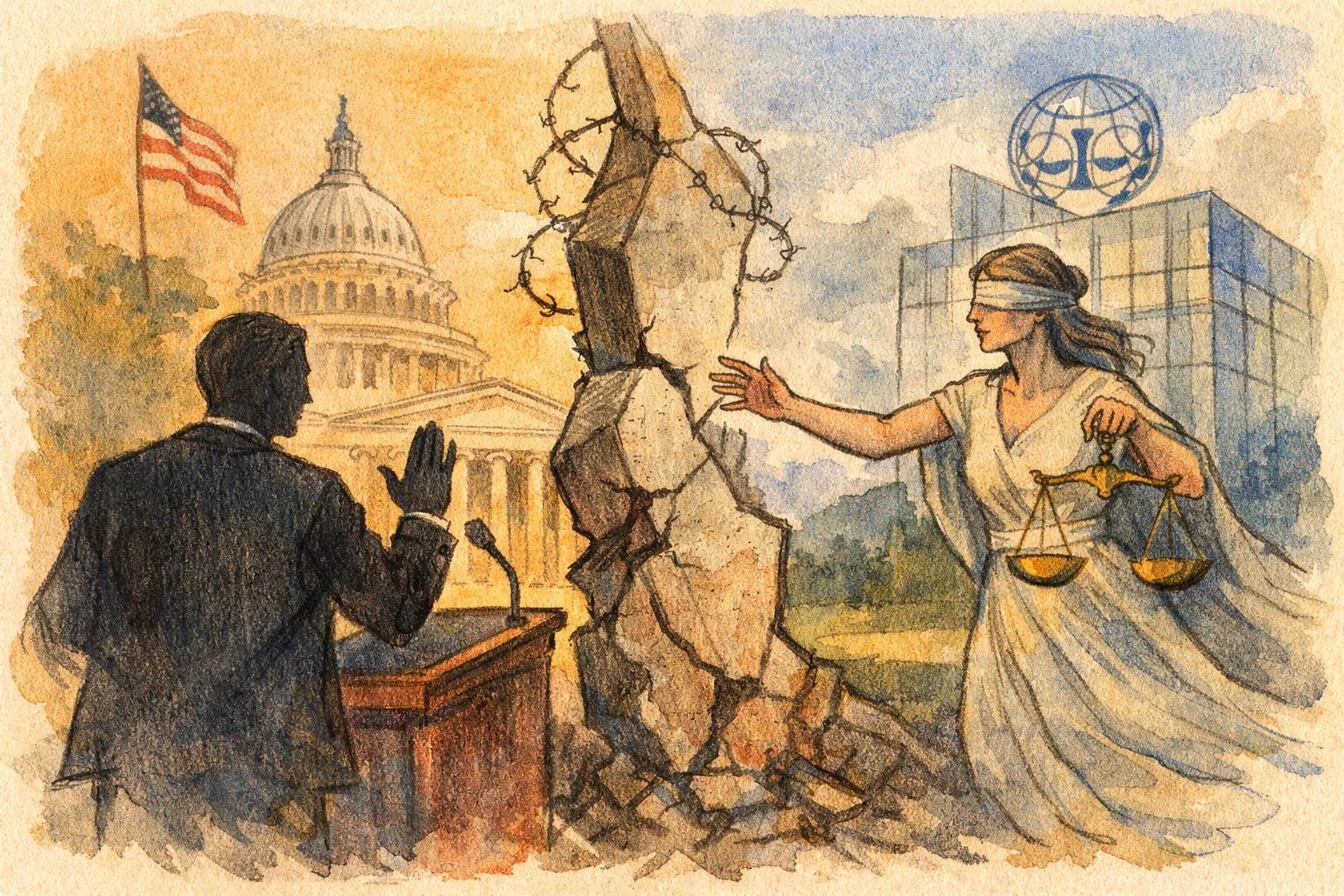
The Justice Department spent part of the holiday week delivering a message that was legally familiar but politically noisy: the International Criminal Court has no jurisdiction over U.S. persons, and the United States is not going to behave as if it does. A July 2 statement from the department, paired with a letter from Acting Attorney General Todd Blanche, made that position unusually public and unusually blunt. It was not written in the cool, procedural language of a routine legal filing. Instead, it had the feel of a deliberate warning shot aimed well beyond the courtroom. The basic point was simple: American citizens, officials, and servicemembers are not subject to the ICC’s authority just because the court says otherwise, and the administration wanted that boundary heard loudly.
Legally, none of that is especially surprising. The United States is not a party to the Rome Statute, the treaty that created the ICC, and Washington has long rejected the notion that the court can impose obligations on Americans on its own terms. The Justice Department’s statement leaned hard on that familiar ground, arguing in substance that the ICC cannot manufacture jurisdiction where U.S. law does not recognize it. That is not a new legal theory and not some fresh assertion of sovereignty pulled from nowhere. It is, instead, a restatement of a boundary that has existed for years. What stood out was not the doctrine but the presentation. By turning a settled legal posture into a public confrontation, the department made the announcement feel less like clarification and more like a display. That choice matters because it changes the meaning of the message. The question was no longer just what the law says, but how aggressively the administration wanted to say it.
That aggressiveness is part of what makes the episode fit so neatly into the Trump-era governing style. When this White House dislikes an institution, it rarely treats the disagreement as something to be managed quietly. More often, it turns the dispute into a public contest of wills. The ICC statement followed that pattern closely: take a legal disagreement, wrap it in sovereignty language, and use the confrontation itself as proof of strength. Supporters who already view international courts as meddlesome or politically biased are likely to see the move as exactly the sort of hard edge they want from this administration. Critics will see something very different, namely a preference for spectacle over careful diplomacy. Both reactions are foreseeable, and both point to the same underlying reality. The administration is not merely answering a legal question. It is using the legal question as a stage on which to perform defiance.
There is, however, a familiar downside to making every jurisdictional disagreement feel like a test of national resolve. Once the government treats a narrow legal point as a broader showdown, it reduces its own room to maneuver later. If a future diplomatic situation requires nuance, patience, or some carefully calibrated middle ground, the administration will already have spent political capital on the most absolutist version of the argument. That is one of the more persistent hazards of Trump-style confrontation politics. It can be effective in the moment because it sounds decisive and plays well in the attention economy of cable news and social media. But it can also leave the government boxed in by its own rhetoric. In this case, the practical legal consequence is likely limited. The ICC was not going to secure new authority over Americans simply because the Justice Department spoke more forcefully. But the public statement still mattered because it revealed what this administration values: declaration over diplomacy, line-drawing over quiet maintenance of the status quo, and the spectacle of resistance over the boring work of managing a longstanding position without turning it into a fight.
That does not mean the administration is wrong on the core jurisdictional point. The legal boundary it described is not a novel one, and the United States has consistently resisted the notion that an international tribunal can reach Americans absent U.S. consent. The issue is how the government chose to frame that boundary. By making the rejection so visible and so emphatic, it turned an already established position into a political gesture with domestic resonance. That is useful if the goal is to reassure allies at home who want a confrontational defense of sovereignty. It is less useful if the goal is precision, flexibility, or credibility in future negotiations. The broader pattern is easy to see: when the administration wants to signal resolve, it prefers a hammer to a scalpel. Sometimes that produces a clear message. Sometimes it produces heat without much light. In this case, the law was already doing most of the work. The loud part was the point.
Comments
Threaded replies, voting, and reports are live. New users still go through screening on their first approved comments.
Log in to comment
No comments yet. Be the first reasonably on-topic person here.