Story · July 16, 2026

Trump’s ICC rejection is another legal dare dressed up as sovereignty

Legal defiance Confidence 4/5
★★★☆☆Fuckup rating 3/5
Major mess Ranked from 1 to 5 stars based on the scale of the screwup and fallout.
Correction: Correction: This article has been updated to clarify that the Justice Department’s ICC position was stated in a July 2 letter and reflects a longstanding U.S. stance, not a new legal theory.
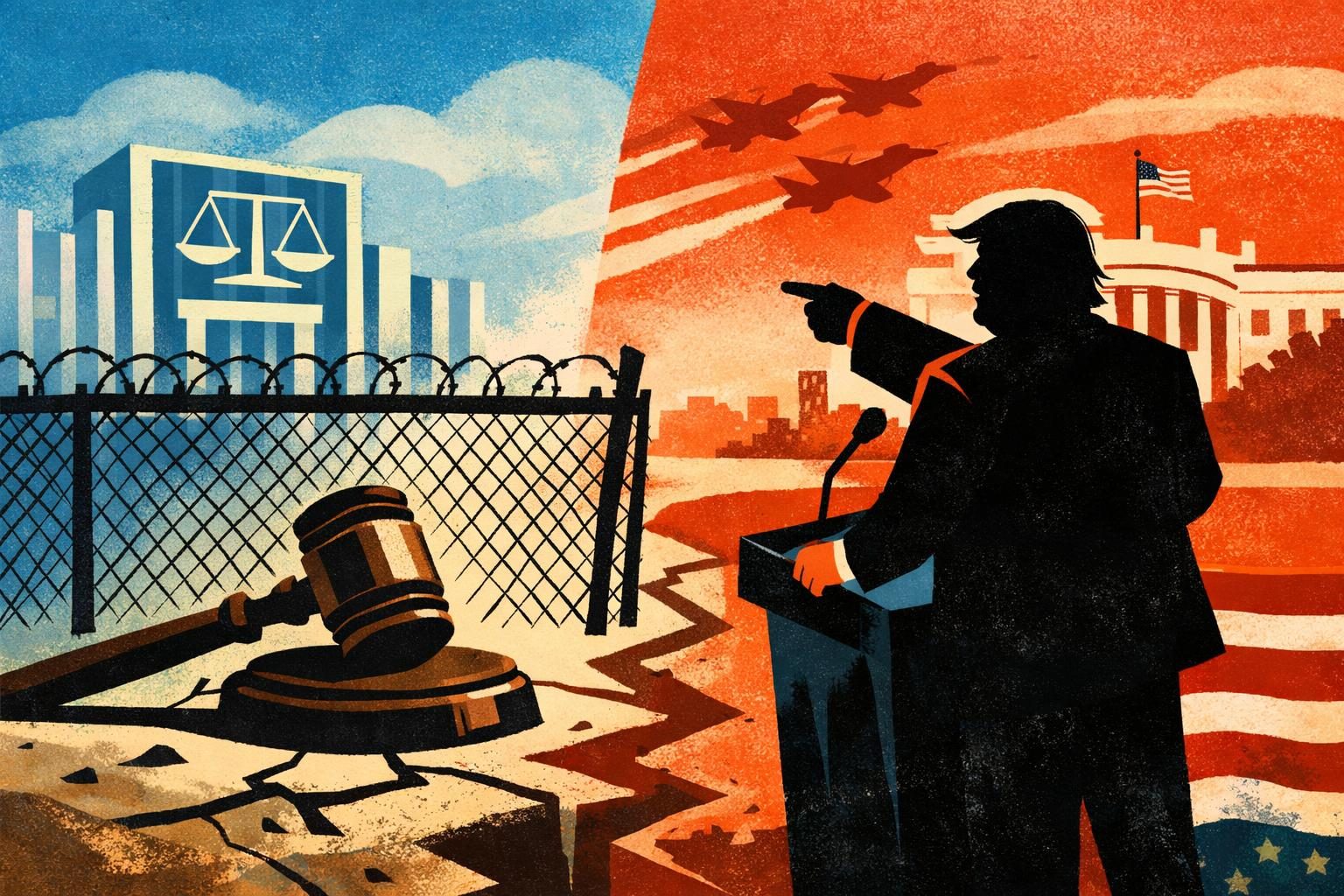
Trump’s ICC rejection is another legal dare dressed up as sovereignty reader image
Reader image selected by automatic review and community voting.

The Trump administration has once again chosen confrontation over nuance, this time by drawing a hard line against the International Criminal Court’s authority over Americans. In a July 2 letter to the court’s president, the Justice Department formally rejected any assertion of ICC jurisdiction over U.S. persons. The message was plain enough that no one needs a decoder ring to understand it: Washington does not accept the court’s reach when it comes to Americans, and it is prepared to say so in writing. Acting Attorney General Todd Blanche framed the matter as one of constitutional principle and national sovereignty, making the legal position sound less like a technical objection and more like a declaration of identity. The practical effect is limited, at least for now, but the political meaning is not. This is the kind of move that turns a legal memo into a loyalty signal, especially in a White House that tends to treat defiance as proof of strength and institutional restraint as a sign of weakness.

The Justice Department’s position is not happening in a vacuum, and it is not exactly a surprise to anyone who has watched Trump-era foreign policy for more than five minutes. The administration has long preferred to treat international institutions as useful only when they are doing something Washington already likes, and disposable the moment they become inconvenient. The ICC has been an easy target for that posture because it sits at the intersection of legal accountability, international cooperation, and American exceptionalism. The Trump world view does not seem especially interested in sorting those categories carefully. Instead, it tends to collapse them into a single question: who gets to tell the United States what to do? In that frame, rejecting ICC authority over Americans is less about a specific jurisdictional dispute than about rehearsing a familiar political script. The court becomes a prop, the assertion of sovereignty becomes the punchline, and the administration gets to present itself as the only actor willing to stand up to global meddling. That may be a useful story for the domestic audience that likes the sound of a slammed door, but it is not the same thing as a serious legal resolution.

There is also a more awkward reality buried under the rhetoric. The U.S. has long resisted being bound by ICC jurisdiction, so the administration is not creating this position from scratch, nor is it inventing a brand-new theory of American legal immunity. But there is a difference between longstanding skepticism and the sort of public, deliberately sharp rejection issued here. Tone matters because tone signals intent, and this White House has shown repeatedly that it prefers escalation to ambiguity. The July 2 letter reads less like a careful preservation of legal standing and more like a public dare. That may win applause from people who enjoy watching Washington pick fights with institutions it cannot control, but it also narrows the space for diplomatic finesse. Allies that are more comfortable with the ICC’s existence may not read this as a principled jurisdictional footnote. They may read it as another reminder that the United States wants the prestige of leadership without the inconvenience of shared rulebooks. That is not a small distinction in diplomacy, where credibility often depends on whether others believe your objections are anchored in law rather than in mood.

The likely fallout is not dramatic in the immediate legal sense, but the reputational and diplomatic costs may linger. The administration is signaling that it will not recognize ICC authority over Americans, which reinforces a familiar pattern in Trump-world politics: reduce a complicated international legal issue to a simple story about strength, then act as though strength itself is the solution. It is not clear what concrete policy gain follows from that move, at least not from the public record available so far. What is clear is that the administration seems comfortable making international legal confrontation part of its domestic brand. That can be effective theater, especially when the audience is primed to admire defiance for its own sake. But theater is not governance, and swagger is not a substitute for legal clarity. If the White House is trying to project confidence, it has done so. If it is trying to improve America’s standing with allies who prefer predictable institutions to personality-driven brinkmanship, this is a harder sell. For now, the clearest thing about the July 2 letter is that it keeps the administration in familiar territory: turning law into a stage, sovereignty into a slogan, and a narrow jurisdictional dispute into another chapter in a much larger habit of picking fights that need not be picked.

Support the work

Help keep this site going

If this story was useful, help support The Daily Fuckup. Reader donations help pay for hosting, archives, publishing, email, and AI costs.

Donate

Read next

Reader action

What can you do about this?

Call or write your members of Congress and tell them the exact outcome you want. Ask for a written response and refer to the bill, hearing, committee fight, or vote tied to this story.

Timing: Before the next committee hearing or floor vote.

This card only appears on stories where there is a concrete, lawful, worthwhile step a reader can actually take.

Reader images

Upload a relevant meme, screenshot, or photo. Automatic review rejects spam, ads, and unrelated junk. The top-rated approved image becomes the story's main image.

Log in to upload and vote on story images.

Trump’s ICC rejection is another legal dare dressed up as sovereignty reader image 1
Score: 95 AI / 0 community
By: mike
Current main image

Comments

Threaded replies, voting, and reports are live. New users still go through screening on their first approved comments.

Log in to comment


No comments yet. Be the first reasonably on-topic person here.