
White House folds Declaration anniversary into Trump-era rhetoric
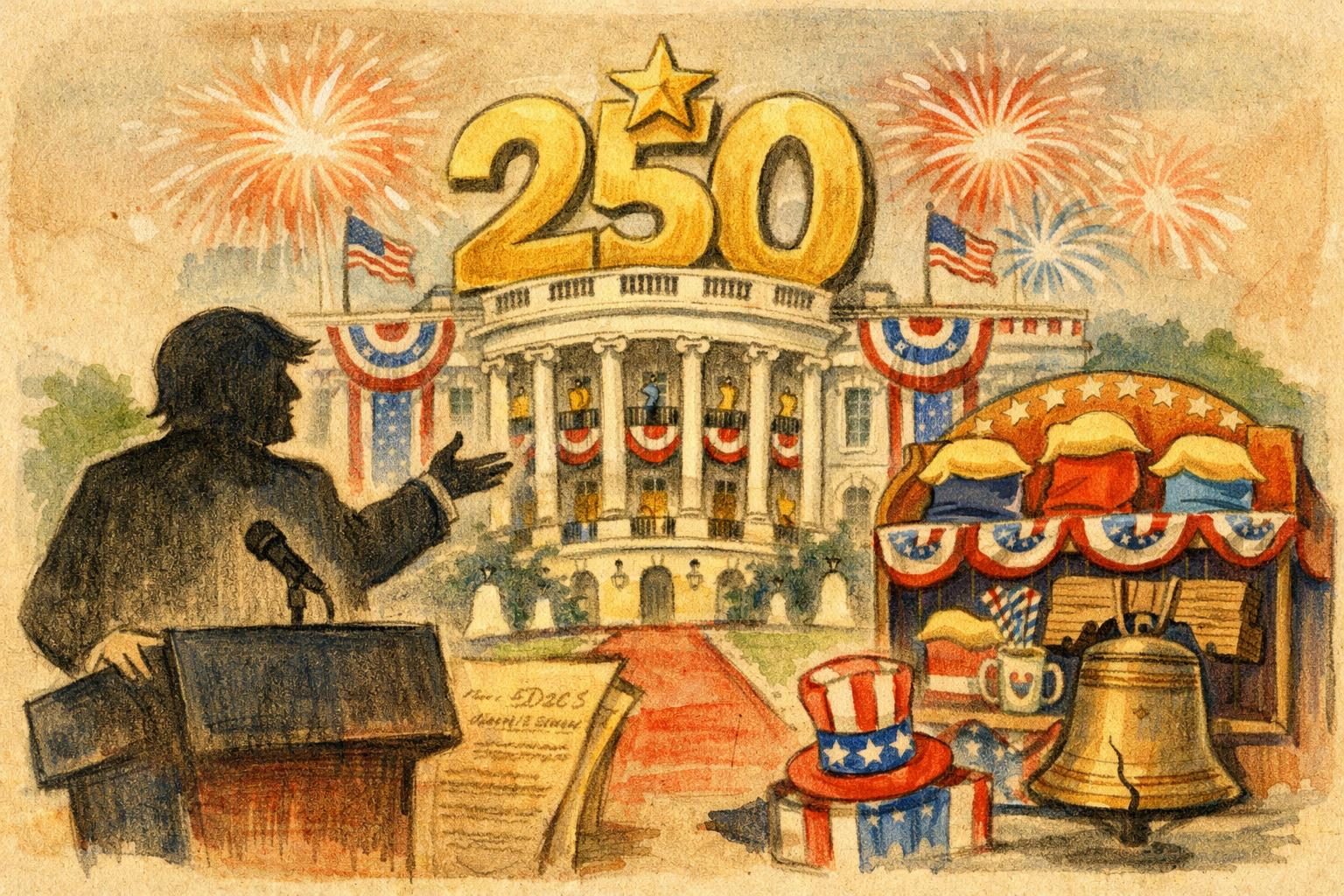
The White House’s July 3 proclamation marking the 250th anniversary of the adoption of the Declaration of Independence did what holiday proclamations usually do: it nodded to the founders, recognized the nation’s birthday, and urged Americans to mark the occasion. But it also did a lot more than that. The language folds the semiquincentennial into the administration’s familiar register of destiny, providence, national strength, and restoration, ending on the promise of an “American Golden Age” that sounds less like a civic commemoration than a campaign slogan with better stationery. That is not necessarily surprising in this White House, but it is revealing. A document that could have stood as a broad, ceremonial salute to a landmark anniversary instead reads like an extension of Trump-era political branding, with the holiday serving as a backdrop for a larger argument about the country’s future and the president’s role in it.
The administration has been building toward this approach for months. Earlier this year, the White House declared 2026 a “Year of Celebration and Rededication,” a framing that effectively stretches the 250th anniversary into a yearlong narrative instead of a single day of observance. The Freedom 250 initiative reinforces the same idea by bundling July 4 and related commemorations into a broader campaign of patriotic messaging and public events. That structure matters because it turns a historical milestone into a sustained political environment. Rather than treating the semiquincentennial as a moment for shared reflection, the White House appears to be using it as a vehicle for a larger story about national reclaiming and renewal. In practical terms, that means the anniversary is not just being celebrated; it is being curated. And in a presidency that tends to prefer symbols that can be personalized, the anniversary is being narrated in a way that keeps Trump at the center whether or not the text names him directly.
The proclamation itself leans hard into grand themes. It casts the founders as patriots acting under a God-given purpose, describes the republic as born in providence, and frames the nation’s survival as the product of sacrifice and endurance. The effect is ceremonial, but only up to a point. The closing promise that the administration will not rest until America is made “stronger, prouder, richer, and greater than ever before” pushes the text beyond standard holiday prose and into something closer to a governing manifesto. It is not unusual for a White House proclamation to be aspirational, but this one uses the anniversary to merge the mythology of the founding with the administration’s preferred language of revival and ascent. That merger tells its own story. The semiquincentennial becomes not just a celebration of the Declaration of Independence but a stage on which the administration can present its political instincts as patriotic common sense.
That is why the proclamation lands as more than ceremonial filler. These kinds of statements are often read quickly, if at all, but in this case the wording helps set the tone for how the White House wants the anniversary year to feel. Supporters will likely view the document as appropriately forceful for a 250th birthday, a declaration that the country should celebrate its origins without apology and look ahead with confidence. Critics are more likely to see a familiar pattern: a public tradition transformed into a branding exercise, with national symbolism pressed into service for personal and political glorification. Both reactions make sense, but the tension exists because the administration keeps making the same stylistic choice. It could have used the moment to emphasize civic pluralism, historical continuity, or even the imperfect but ongoing work of self-government. Instead, it chose a voice that sounds like Trump-world rhetoric translated into proclamation form, all triumph and no humility. That choice narrows the space for a less self-congratulatory reading of the anniversary and makes the White House look less interested in shared memory than in owning the narrative of the moment.
The immediate consequences are limited, and this is not the sort of proclamation that triggers a legal or institutional fight. The broader effect is cultural and political, which may be the point. By wrapping the Declaration’s 250th anniversary in the administration’s vocabulary of victory, destiny, and restoration, the White House is signaling how it wants this historic year remembered. The goal appears to be a national story in which the founding of the republic, the present administration, and the president’s personal brand all collapse into one seamless arc of redemption and renewal. That is a potent message for a political movement built on spectacle and symbolic dominance, even if it leaves less room for complexity, historical sobriety, or bipartisan celebration. In the end, the proclamation does not just mark an anniversary. It frames the anniversary as an occasion for political self-regard, offering a patriotic script that is unmistakably on message and unmistakably tailored to Trump’s style. For a White House that likes to treat every milestone as a reflection of its own strength, that may feel natural. For everyone else, it looks a lot like the country’s birthday getting drafted into the administration’s ongoing branding campaign.
Comments
Threaded replies, voting, and reports are live. New users still go through screening on their first approved comments.
Log in to comment
No comments yet. Be the first reasonably on-topic person here.