
Trump’s Statecraft Theater Still Can’t Hide the Policy Mess
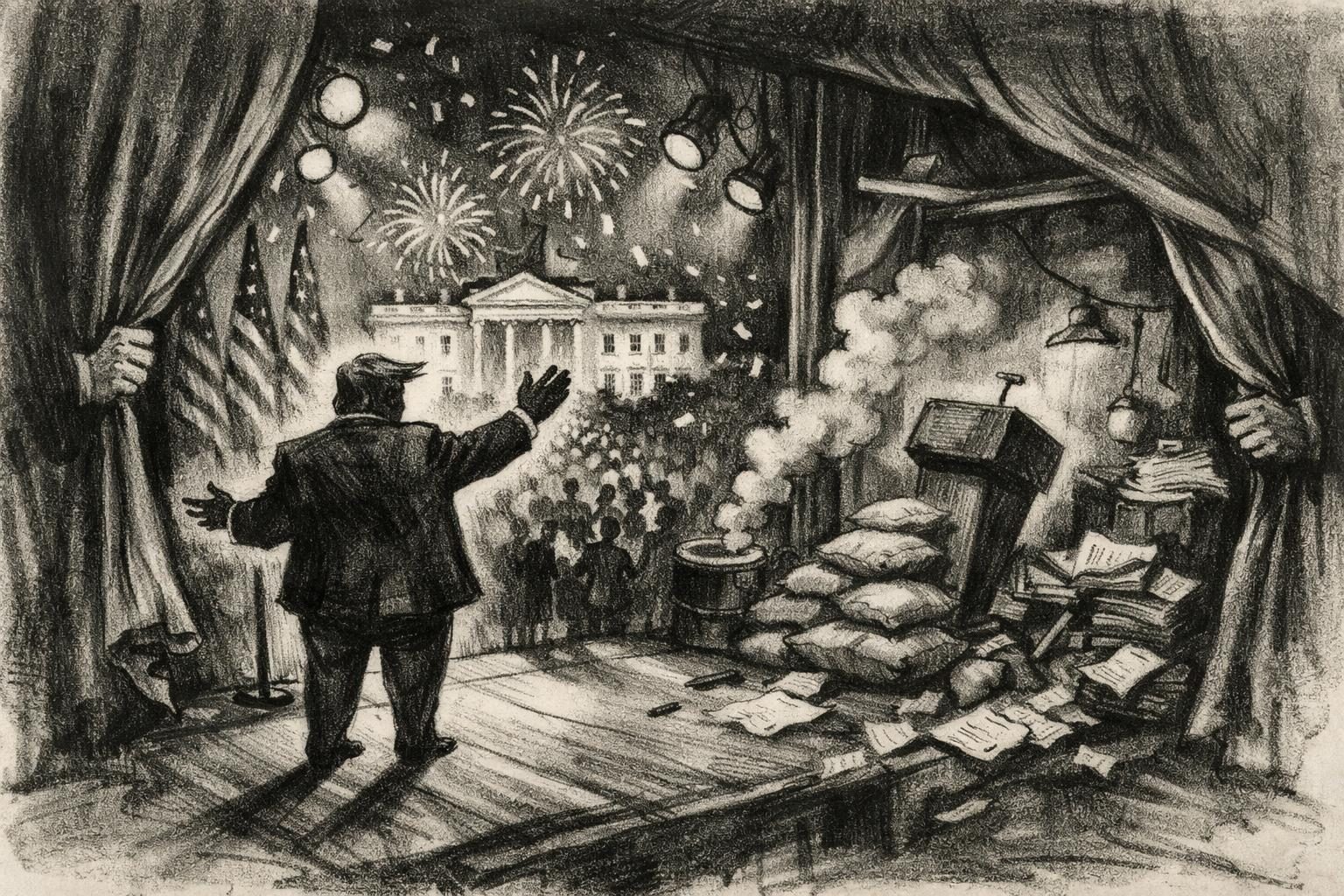
On July 7, the White House put on one of those carefully composed Trump-era displays that can make the presidency look, from a respectful distance, almost immaculate. A state arrival ceremony, an honor guard review, and holiday-week messaging tied to the 250th anniversary of the Declaration of Independence gave the day a polished ceremonial frame. The setting was meant to communicate continuity, discipline, and command, the sort of visual language presidents have long used to mark important occasions and reinforce the gravity of the office. In ordinary hands, that kind of pageantry is just part of the job, a familiar mixture of tradition and symbolism that helps the public feel the state at work. Under Trump, though, the symbolism rarely stays in its lane. It tends to operate at once as decoration, political messaging, and a defensive barrier against criticism.
That is why the day’s pageantry mattered less as an event than as a window into a broader governing style. The Trump White House has always understood the value of a strong image, especially when the policy side of the operation is messy, incomplete, or under strain. A stately ceremony can project stability even when the administration is fighting to keep a legal or political agenda on track. A tight visual presentation can suggest unity even when internal tensions, external objections, and procedural complications are still very much alive. The public is shown a controlled scene, and the hope is that the scene itself will do some of the work that policy has not yet finished. But imagery does not settle disputes, and it does not make deadlines disappear. It does not persuade skeptical state officials, erase court challenges, or smooth over bureaucratic friction that can slow an administration’s plans.
That gap between presentation and performance is not new in Trump’s political world. It has been one of its defining features. Spectacle has long been treated as a stand-in for legitimacy, and patriotic imagery as a substitute for administrative coherence. The president can generate forceful slogans, choreographed appearances, and a steady stream of visual cues designed to make authority feel undeniable. What remains harder is turning those cues into durable policy wins that survive scrutiny and hold together after the cameras move on. That weakness shows up wherever the administration keeps running into resistance, especially in the courts and among state-level actors who can force the White House to defend its choices instead of simply declaring them. On July 7, the ceremony and the official holiday messaging created an image of confidence, but the surrounding political reality still reflected unresolved fights and the familiar grind of governing. The celebration was genuine enough as a matter of ritual, but it also landed as a reminder that the administration’s habits continue to produce their own complications.
Critics of this approach are not objecting because a president should never host ceremonies or recognize national milestones. Those things are part of the office, and presidents routinely use them to connect their administrations to the country’s broader story. The concern is that, in Trump’s hands, the line between governing and branding gets blurred until the distinction is almost meaningless. Every formal event becomes a messaging opportunity. Every patriotic backdrop becomes a claim about personal destiny. Every official occasion risks being absorbed into a larger performance of power, one that makes the state look less like a neutral institution and more like an extension of the president’s political identity. That critique becomes harder to dismiss when the policy picture underneath is unsettled, controversial, or entangled in litigation. The White House can mark the 250th anniversary of the Declaration of Independence and still leave behind the impression that it is using national symbolism to cover practical confusion. The staging may be strong. The underlying case for success may still be thin.
None of that means the day’s events were politically disastrous, or that a ceremony and a proclamation can tell us everything about the presidency’s trajectory. They cannot. But they do illustrate a recurring Trump-world problem: the set design is often better than the script. The administration knows how to make power look dramatic, purposeful, and historically resonant. It knows how to wrap itself in patriotism and insist that the president stands at the center of a national moment. What it does not always do, at least not convincingly, is convert that theater into governance that feels coherent, durable, and broadly accepted. That is where the trouble tends to accumulate, in the legal challenges that do not go away, in the state-level resistance that hardens, and in the cleanup that follows each ambitious push. Trump remains effective at making authority look like a performance of inevitability. He remains far less convincing when the question shifts from appearance to results, from ceremony to administration, from visual command to actual policy settlement.
Comments
Threaded replies, voting, and reports are live. New users still go through screening on their first approved comments.
Log in to comment
No comments yet. Be the first reasonably on-topic person here.