
Trump Aircraft Action Holds Off New Duties, Leaves Later Moves on the Table
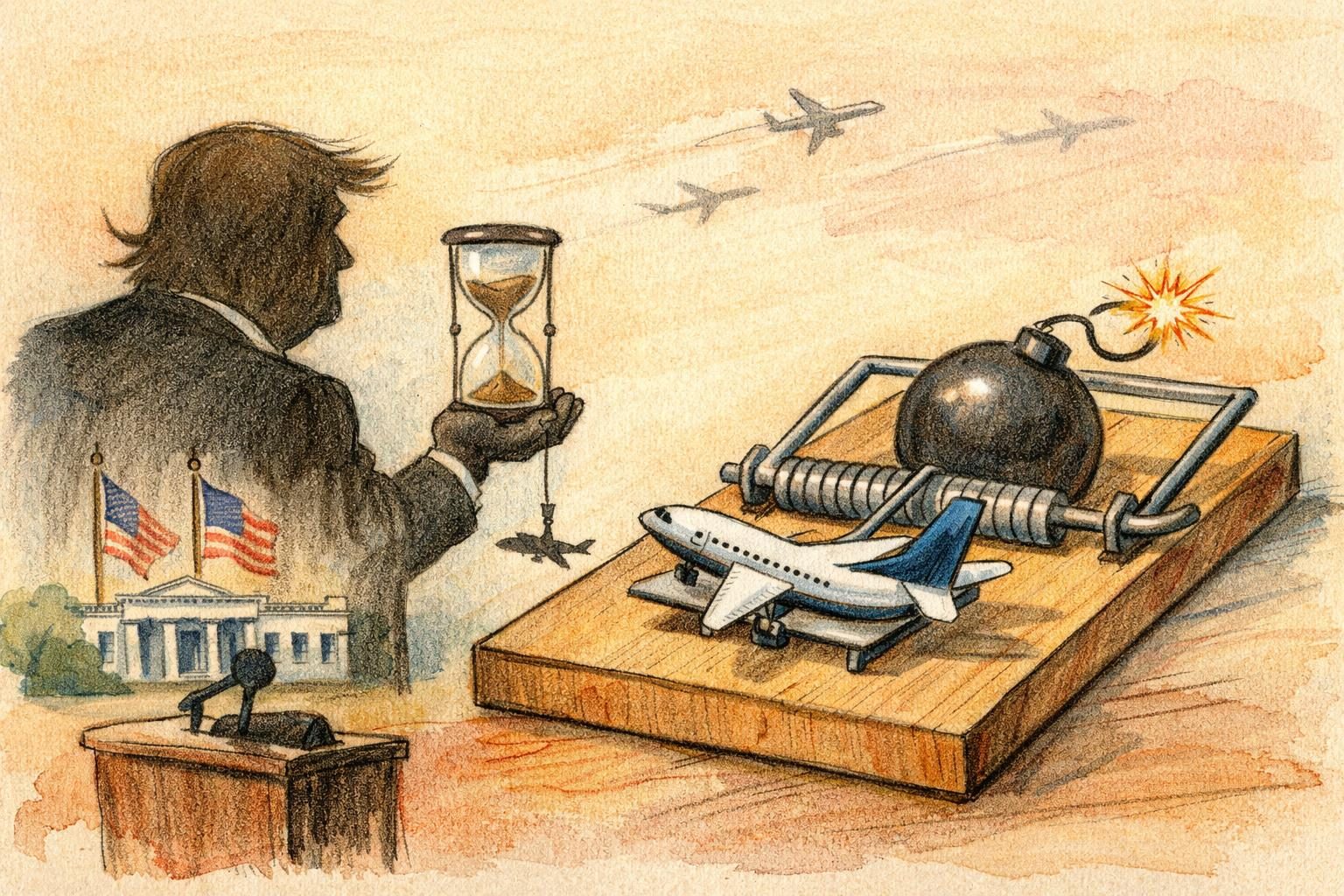
The White House’s July 9 proclamation on commercial aircraft, jet engines, and aircraft and engine parts is a threat more than an immediate blow. The action invokes Section 232 of the Trade Expansion Act of 1962, the national security tool presidents can use when imports are said to endanger domestic industry. But the document does not slap new duties on the sector right away. Instead, it sets up a process: the Commerce secretary and the U.S. trade representative are directed to pursue negotiations and to come back to the president with an update within 180 days. The proclamation also leaves the door open for additional steps later, depending on how those talks unfold. In practical terms, that means the administration has created leverage without yet imposing the actual costs that leverage is meant to extract.
That distinction matters because in trade policy, the difference between an announced action and an implemented one can be large. The paperwork itself can move markets, rattle supply chains, and force companies to revise assumptions, but it does not automatically create a new tariff bill. Airlines, engine makers, and suppliers are not, at least for now, facing a fresh duty at the border because of this proclamation. They are facing uncertainty, which can be almost as disruptive in an industry that depends on long planning horizons, multi-year contracts, and global sourcing. Aircraft production is not a business where firms can easily switch suppliers or absorb new costs overnight. When a government signals that tariffs may still arrive later, companies have to decide whether to delay investment, hedge with stockpiles, renegotiate terms, or simply wait and hope the next move is softer than the last. The administration’s choice to hold off on immediate duties makes the policy less severe today, but it does not make it benign. It turns a tariff threat into a hanging question, and that alone has value as leverage.
The White House frames the move as a defense of a strategically important industry, and that is the central argument behind the proclamation. Commercial aviation is not just another line of manufactured goods; it is a sector tied to defense readiness, advanced manufacturing capacity, export strength, and a sprawling network of high-value jobs. The administration’s position is that the United States should not be overly dependent on foreign suppliers for aircraft, engines, and critical parts that are central to both commercial and national security interests. That case is not implausible on its face, especially in a sector where supply interruptions can cascade quickly and where domestic capabilities are treated as strategically important in Washington. But the proclamation is also deliberately open-ended. It does not present a clean final answer to the trade problem it identifies. It preserves the possibility of escalation while postponing the moment when the administration must decide whether tariffs are actually the right remedy. That makes the action less about settling the issue than about keeping pressure on everyone else while the government tests how much it can extract through negotiation.
Politically, that approach gives the president room to claim progress no matter what happens next. If trading partners make concessions or industry groups land a negotiated off-ramp, the White House can say the threat worked and that the proclamation delivered leverage without needing to reach for immediate punishment. If talks stall or fail, officials can point to the 180-day review period and argue that they gave negotiations a chance before considering additional measures. Either way, the administration keeps control of the timeline. The sector, by contrast, gets no such comfort. Companies do not know whether the next step will be tariffs, a narrower remedy, a broader trade deal, or some other policy adjustment after the required update. That uncertainty is not an accident. It is part of how the pressure is supposed to function. In the Trump trade playbook, an unfinished action can be the action itself, because it forces other players to respond before the government has committed to the final price. For now, the White House has chosen to hold off on the tariff itself while still signaling that it remains very much on the table, and that may be the most important part of the announcement.
Comments
Threaded replies, voting, and reports are live. New users still go through screening on their first approved comments.
Log in to comment
No comments yet. Be the first reasonably on-topic person here.