
Trump’s EPA relief push narrows the rules, not the debate
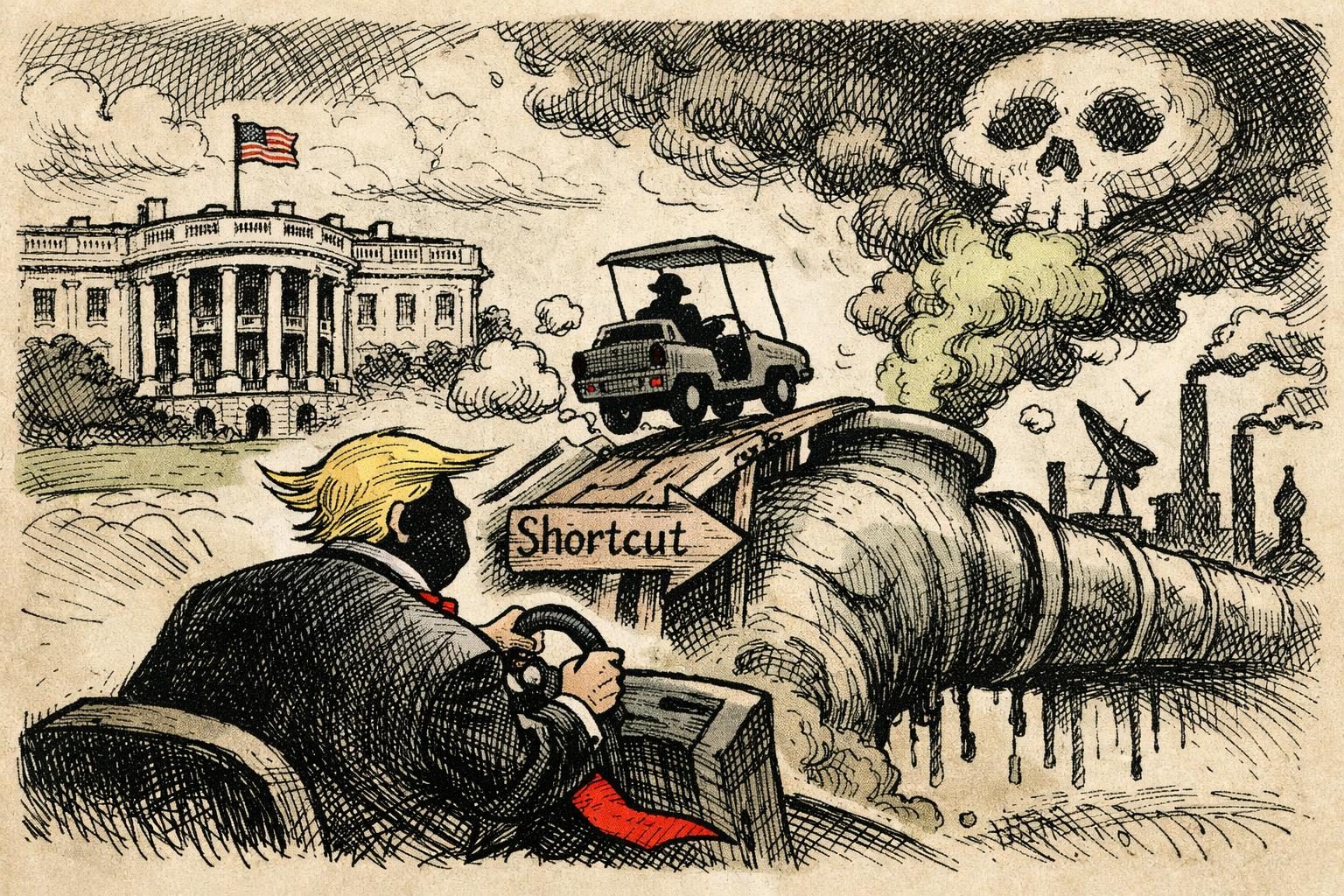
The White House on July 13 issued a presidential proclamation that gives certain chemical-manufacturing facilities a two-year exemption from compliance with specified deadlines under the HON rule, the air toxics standard governing hazardous emissions from major sources under Clean Air Act Section 112. The administration cast the move as a national-security safeguard, arguing that it is intended to keep key industrial plants operating and protect supply chains linked to semiconductors, medical sterilization, advanced manufacturing, agriculture, health care, and defense. That framing fits a familiar Trump-era pattern: regulation is presented as an obstacle, and the rollback is dressed up as a show of strength. But the legal effect of the order is much narrower than the public message around it. This is not a wholesale cancellation of environmental oversight, and it is not a blanket release from pollution controls. It is a targeted exemption for listed sources and only for the parts of the HON rule that fall under Section 112.
That distinction matters because the administration appears eager to turn a bounded regulatory delay into a larger political story about industrial rescue. The White House fact sheet describes the action as a defense of American manufacturing security, while the proclamation itself reads more like a formal and limited postponement with specific terms. According to the text, the covered sources receive a two-year exemption beyond their relevant compliance dates, but they do not escape every obligation attached to the facilities or the pollutants in question. The order also indicates that the sources remain subject to the emissions and compliance requirements that applied before the HON rule took effect, which makes the action less like a demolition and more like a pause button with patriotic branding. Environmental advocates are likely to see the delay as a meaningful concession, since any extension of compliance deadlines means more time under a looser regime. Industry, by contrast, gets breathing room and less immediate risk of disruption. Politically, the White House gains a cleaner line: it can say it is protecting national security without having to explain why the regulatory process itself did not produce a smoother answer.
The larger problem is not that the administration wants to support domestic chemical production. Most governments, at least in theory, try to balance industrial capacity against environmental safeguards, especially when supply chains touch sectors that are politically sensitive and economically essential. The problem is the way this White House keeps describing narrow administrative maneuvers as if they were sweeping acts of rescue. That tendency creates a credibility problem because it blurs the line between policy and branding. If the government says a sector faces an urgent constraint, the public should be able to tell whether the response reflects a real operational barrier or just another dose of deregulatory theater. The administration’s rationale here is that the technology needed to meet the new standard is not commercially viable at the scale or under the conditions the rule assumes, and that disruption in chemical output could ripple through important supply chains. That may be true in some cases and less true in others, but the government has not made the case in a way that resolves the tension between industrial policy and environmental protection. Instead, it has reached for a presidential exemption mechanism and leaned heavily on national-security language to carry the argument.
From a governance standpoint, that is the most revealing part of the move. The likely immediate fallout is limited, because this is a proclamation with a narrow scope rather than an all-out rewrite of the rulebook. Still, it shows how the Trump White House prefers to operate when business interests and environmental regulation collide: it wants the political upside of an energetic industrial-policy story without having to make a more direct case for the tradeoffs, the compliance burdens, or the impact on communities near the affected facilities. That creates a persistent question about whether the government is solving a real problem or simply sidestepping one with the right slogan attached. If the rule was genuinely unworkable, critics will say, the administration should have said so earlier and built a clearer alternative instead of invoking national security at the end of the process. If the rule was workable but inconvenient, then the exemption looks more like a reward than a remedy. Either way, the public record shows a targeted regulatory reprieve, not a grand industrial revival. Trump can claim he protected American manufacturing, but the practical result is a limited delay wrapped in the language of emergency, and the rest of the country is left with the usual question of whether this is policy or just another way to kick the can while pretending it is a truck.
Comments
Threaded replies, voting, and reports are live. New users still go through screening on their first approved comments.
Log in to comment
No comments yet. Be the first reasonably on-topic person here.