
Trump ties housing bill to voter-ID push, then lets it become law
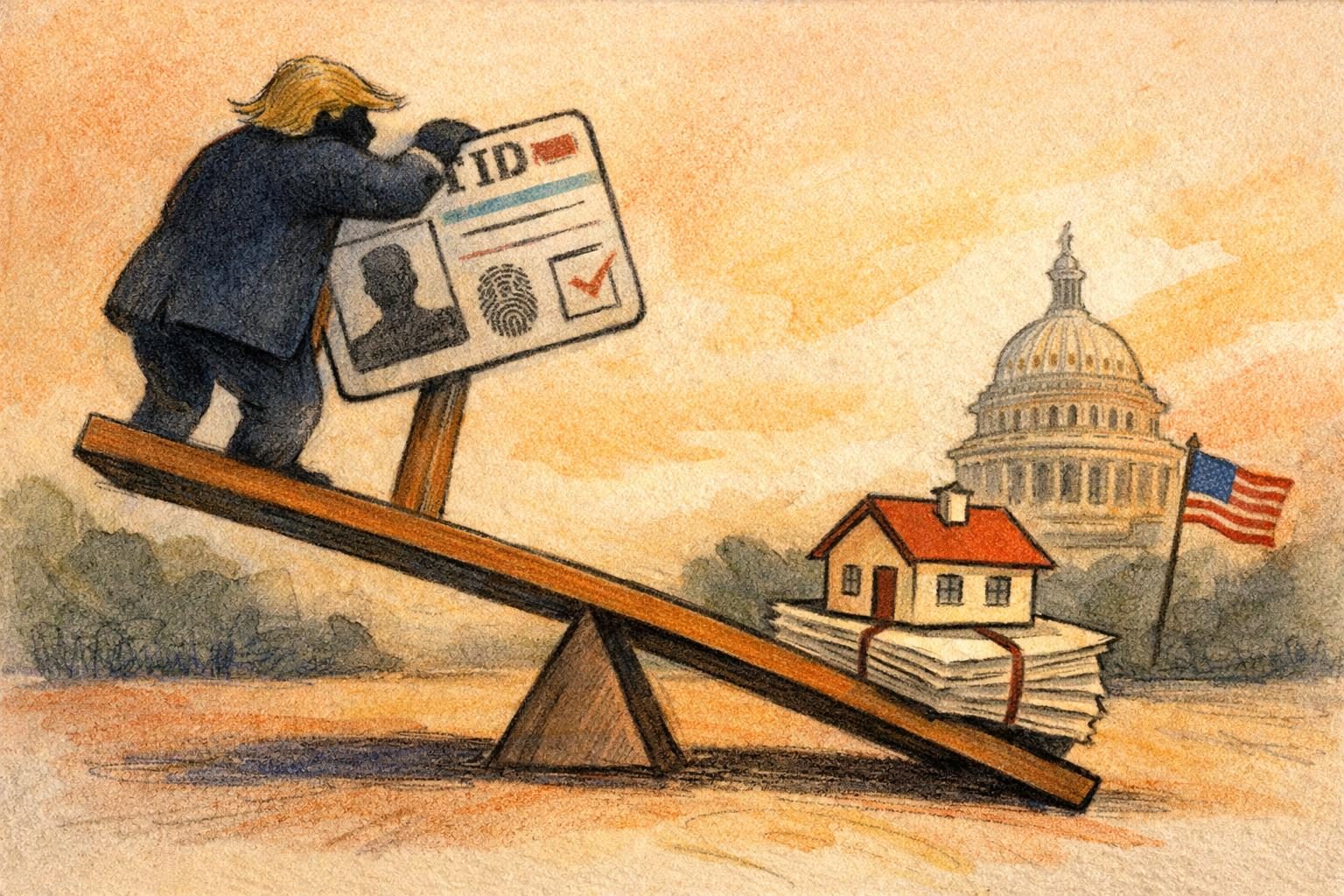
President Donald Trump used a bipartisan housing bill as a pressure point in his fight over election rules, then let the measure become law without his signature after saying he would not approve it until Congress acted on his voter-verification demands. The White House had already scheduled and then canceled a signing ceremony for the housing package, the 21st Century ROAD to Housing Act, on June 24, 2026. White House photos from that day place Trump at the Capitol after the cancellation, underscoring how quickly the housing bill had been folded into a separate political battle over voting rules. ([whitehouse.gov](https://www.whitehouse.gov/gallery/president-donald-j-trump-meets-with-gop-leadership-at-the-u-s-capitol-june-24-2026/?utm_source=openai))
The White House’s own public materials show the election fight was not an afterthought. In March, Trump issued a presidential action and fact sheet calling for citizenship verification and voter-eligibility controls in federal elections. Those documents framed the push as an integrity measure, and Trump then linked that agenda to the housing bill by refusing to sign the housing measure until lawmakers advanced the voting legislation. ([whitehouse.gov](https://www.whitehouse.gov/presidential-actions/2026/06/national-homeownership-month-2026/?utm_source=openai))
Once the bill was sent to the president, the constitutional clock started. Congress explains that a president has 10 days, excluding Sundays, to sign or veto a bill after presentment; if no action is taken, the bill becomes law without a signature. That is what happened here. The housing bill was allowed to take effect on its own after Trump declined to sign it. ([congress.gov](https://www.congress.gov/index.php/legislative-process/presidential-action?utm_source=openai))
The result gave Trump the symbolic fight he wanted without the veto. It also left the housing measure intact, which means the policy advances even though the president tried to make it part of a broader showdown over election rules. The episode shows how the White House has been willing to stitch together unrelated priorities when it thinks leverage is available. In this case, the leverage ran out when the deadline did. ([apnews.com](https://apnews.com/article/77ec340dcdd676c46c458813b461b1af?utm_source=openai))
Comments
Threaded replies, voting, and reports are live. New users still go through screening on their first approved comments.
Log in to comment
No comments yet. Be the first reasonably on-topic person here.