
Trump Reopens the National Monument Fight in the West
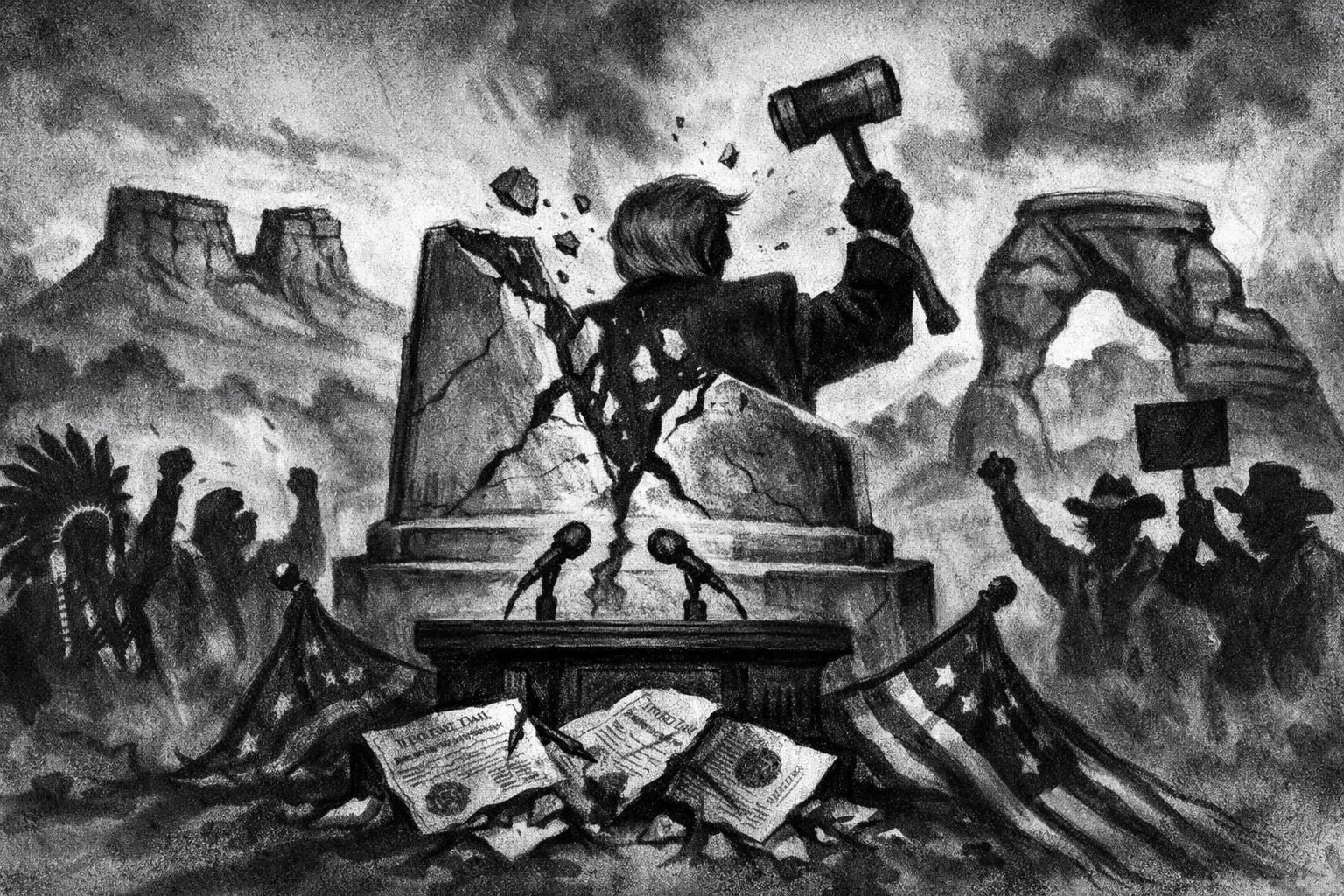
Donald Trump’s July 13 proclamations modifying Bears Ears National Monument and Grand Staircase-Escalante National Monument drag a familiar Western land fight back into the center of national politics. By placing both actions on the White House presidential-actions page, the administration signaled that this was not a stray technical correction or an obscure bureaucratic adjustment. It was a deliberate move with obvious symbolic weight, aimed at two monuments that have spent years at the intersection of conservation, tribal sovereignty, public access, and federal authority. The text of the proclamations matters most here because it is the legal vehicle for changing how these landscapes are defined and managed. That is enough, on its own, to make the move consequential. It also makes clear that Trump is once again using presidential power to reopen a dispute that never really disappeared.
Bears Ears is the more politically charged of the two monuments, and for good reason. It has long stood as a flashpoint in the broader conflict over how federal land should be governed in the West, particularly when tribal interests are directly involved. Supporters of the monument have argued that it protects irreplaceable cultural and archaeological resources and recognizes the deep ties of Native nations to the region. Critics have treated it as an example of Washington overreach, a federal designation that limits local control and constrains development or extraction. Grand Staircase-Escalante carries some of the same baggage, even if its politics are a little different, because it has long been a target for those who want fewer federal restrictions on land use. By modifying both monuments at once, Trump has effectively revived an old argument that has never lacked for intensity. His supporters are likely to frame the action as a rollback of excessive environmental bureaucracy. His opponents will see it as an attack on protections that were supposed to preserve the public interest.
The practical consequences are not abstract. Monument designations affect grazing, recreation, archaeology, tourism, conservation planning, and the responsibilities of the agencies that have to manage all of it. They also carry real implications for tribes that have asserted historical, cultural, and legal interests in these lands, as well as for neighboring communities that depend on stable rules to make long-term plans. When a president changes those rules, even if the administration insists it is merely restoring balance, the result is often a new round of uncertainty for everyone who has to live with the land as a legal and administrative reality rather than as a campaign talking point. That uncertainty invites litigation, and litigation slows everything down. It can also force agencies to revisit planning documents, public use policies, and resource management decisions that were built around a different monument footprint or a different set of restrictions. In that sense, the White House is not just drawing a new line on a map. It is telling land managers, local officials, tribal governments, and property users to prepare for another period of confusion while the courts and the political branches sort out who gets the final say.
That is what makes this a classic Trump land action: it is dramatic, blunt, and almost guaranteed to provoke a backlash that lasts longer than the news cycle. Supporters will call it a necessary correction, an overdue check on federal power, and a nod to local control. Opponents will describe it as vandalism by proclamation, a political stunt that treats monument policy like a prop in a larger power struggle. Both reactions are predictable because the underlying fight is so deeply embedded in Western politics that no president is likely to settle it cleanly from the Oval Office. A later court ruling could narrow or expand the effect of the proclamations, and a future administration could try to reverse them again, which is exactly why these battles keep returning. The end result is not stable land policy but recurring legal and political combat, with public lands caught in the middle. Trump may present the move as a restoration, but the more likely immediate effect is to make the conflict louder, costlier, and more uncertain for everyone involved.
Comments
Threaded replies, voting, and reports are live. New users still go through screening on their first approved comments.
Log in to comment
No comments yet. Be the first reasonably on-topic person here.