
Trump trims Bears Ears and Grand Staircase-Escalante again, likely inviting new lawsuits
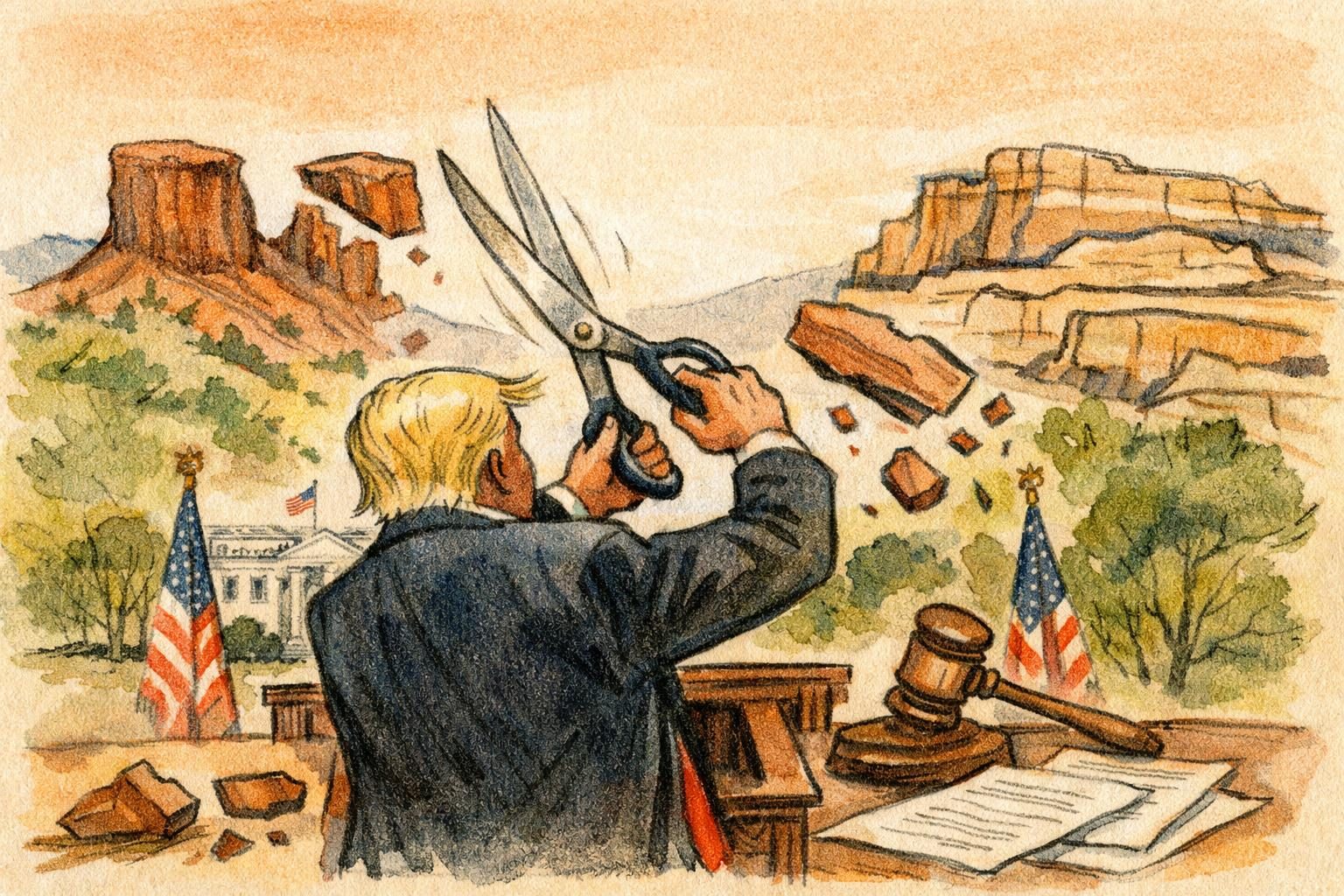
President Donald Trump signed proclamations on July 13, 2026, modifying Bears Ears National Monument and Grand Staircase-Escalante National Monument in Utah, cutting both protected areas back from the sizes restored under President Joe Biden. The White House says the Bears Ears monument is now about 121,100 acres, down from about 1.36 million acres, and Grand Staircase-Escalante is about 181,500 acres, down from about 1.87 million acres. In the proclamations, Trump argued the earlier boundaries were too broad under the Antiquities Act and said the new lines better fit the objects the monuments are supposed to protect. ([whitehouse.gov](https://www.whitehouse.gov/presidential-actions/2026/07/modifying-the-bears-ears-national-monument/))
Bears Ears remains the more politically charged of the two. The monument was first created in 2016, reduced in 2017, then restored in 2021. Trump’s new proclamation says the earlier expansion reserved land beyond what was needed to protect the historic and scientific objects identified in the monument. The White House fact sheet says the surrounding lands outside the revised boundary will be opened to multiple-use management, including grazing, timber harvest, infrastructure work, and resource development. Tribal leaders and conservation groups have long argued that the area contains sacred sites, archaeological resources, and cultural landscapes that deserve broader protection. ([whitehouse.gov](https://www.whitehouse.gov/presidential-actions/2026/07/modifying-the-bears-ears-national-monument/))
Grand Staircase-Escalante follows the same pattern. The monument was established in 1996, reduced in 2017, and enlarged again in 2021 before this latest cut. Trump’s proclamation says the new boundary is intended to leave only the acreage needed for proper care and management of the protected objects, while the fact sheet says the rest of the land can return to multiple-use, sustained-yield management. The practical effect is to reset land-use rules across a vast stretch of southern Utah and force federal managers, local governments, and other stakeholders to work from yet another map. ([whitehouse.gov](https://www.whitehouse.gov/presidential-actions/2026/07/modifying-the-grand-staircase-escalante-national-monument/))
The legal fight is not speculative. Trump invoked the Antiquities Act in both proclamations, and the law’s reach over monument reductions has already been contested in court before. Earlier Trump reductions to these same monuments were challenged and later reversed by Biden, leaving the underlying question of how far a president can go in shrinking a predecessor’s monument still unresolved. That means the new proclamations are likely to face fresh lawsuits even if the White House insists it is restoring a stricter reading of the statute. ([whitehouse.gov](https://www.whitehouse.gov/presidential-actions/2026/07/modifying-the-bears-ears-national-monument/))
For now, the fight is about acreage, authority, and who gets to decide what counts as protected federal land. Trump says the monuments were oversized and that the revised boundaries better match the law. Opponents are likely to argue that the reductions strip protections from places Congress and prior administrations treated as worthy of national monument status. Either way, the maps have changed again, and the next stop is probably a courtroom.
Comments
Threaded replies, voting, and reports are live. New users still go through screening on their first approved comments.
Log in to comment
No comments yet. Be the first reasonably on-topic person here.