
Trump’s July 17 Election Rollout Repeats Fraud Claims Without Proving Them
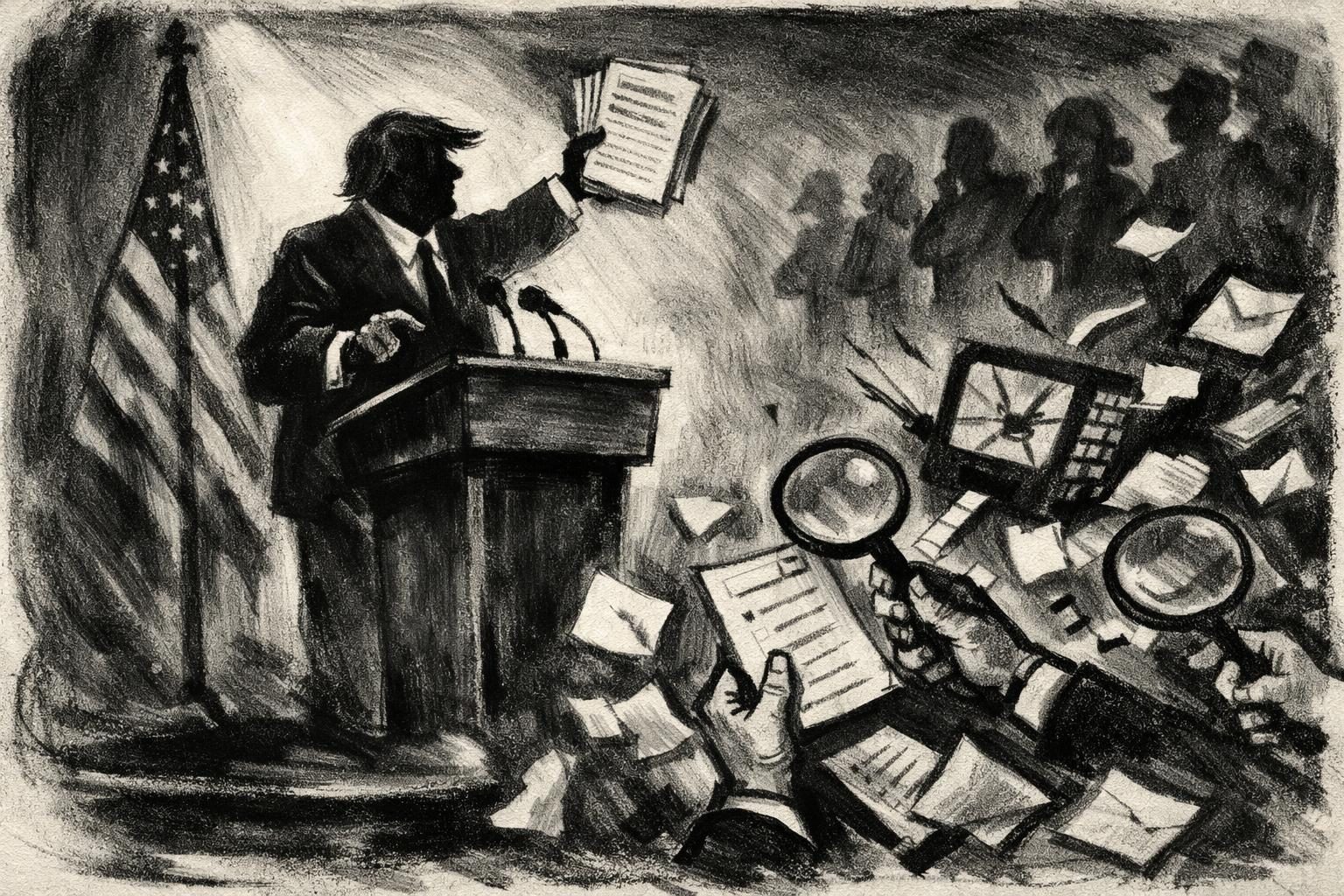
Donald Trump’s July 17 election-security rollout followed a familiar pattern: begin with a real concern, amplify it into a sweeping accusation, and leave the most important question unanswered. From the White House, Trump presented newly declassified material and a public message about the dangers facing American elections, casting foreign governments and internal failures as proof that the system is under siege. The administration described the release as a transparency move meant to expose election vulnerabilities and foreign interference, and the accompanying material pointed toward actors including China, Russia, Iran, North Korea and Venezuela. On its face, that is not an inherently implausible warning. Foreign governments have repeatedly sought to probe U.S. institutions, harvest information and exploit weaknesses wherever they can find them. But the July 17 rollout did not produce evidence that votes were changed, machines were hacked in a way that altered results, or the 2020 presidential contest was stolen. That gap matters, because Trump once again used evidence of risk to imply proof of outcome, and those are not interchangeable claims.
The White House framed the release as if it were opening a long-sealed record of misconduct and suppression. Its election-integrity materials mixed broad cybersecurity warnings with assertions that intelligence and other officials had withheld important information, that China obtained substantial voter data, and that a Venezuela-linked operation had targeted elections under Nicolás Maduro. The administration also said the release included findings spanning from January 2020 through June 2026, a framing that suggests a sweeping historical record rather than a single episode of interference. That presentation is politically useful because it lets Trump place old grievances inside a new official package. It also makes the rollout look broader and more conclusive than the public evidence supports. A threat archive is not the same thing as a case file proving that a particular election was reversed. A declassified document can show that bad actors tried to get in, that agencies identified vulnerabilities, or that officials believed there was reason for concern. It does not, by itself, establish that the 2020 result was illegitimate. The administration’s own materials appeared to invite people to move from one conclusion to the other, but the record released on July 17 did not bridge that distance.
A White House official, before the speech, made one point especially clear: the newly released information did not allege that votes were switched or that voting machines were hacked to alter results. Instead, the materials described vulnerabilities, foreign activity and potential risks to election infrastructure. That distinction is the center of the story, because Trump’s political style depends on collapsing it. He has long pointed to the existence of threats, the possibility of intrusion, and the fact that bureaucracies sometimes miss or mishandle information, then treated those realities as confirmation of his preferred explanation for 2020. But complexity is not confirmation. The existence of attack surfaces does not mean an attack succeeded in changing an election outcome. Suspicion is not evidence, and concern is not proof. The public documents and the White House’s own presentation may support the basic proposition that elections need constant defense and stronger safeguards. They do not, at least on the record presented July 17, establish that Trump’s most explosive claims are true. That matters not only because it keeps the factual line clear, but because repeated imprecision has a way of hardening into belief when it is wrapped in official language and delivered from the presidency.
What makes the rollout politically potent is also what makes it dangerous for the public conversation. By placing real cyber threats, foreign interference concerns and election-security vulnerabilities beside language about “suppression” and “coverup,” the administration invites supporters to read unresolved risk as settled betrayal. That is a powerful rhetorical move because it turns fear into certainty and grievance into evidence. It gives the appearance of technical seriousness while keeping the narrative anchored in the same basic premise Trump has pushed for years: that hidden forces are always working against him and his voters, and that any shortfall in the political system can be recast as proof of theft. The problem is that the public evidence released on July 17 does not support that leap. It may reinforce the need to guard election infrastructure, verify eligibility, and monitor foreign attempts to influence outcomes. It does not show that the 2020 election was stolen, and it does not show that votes were altered in a way that changed the result. In that sense, the rollout is less a revelation than a grievance delivery system, one that recycles old claims in the language of declassification and national security. The facts Trump highlighted may be real. The conclusion he wants people to draw remains unproven.
Comments
Threaded replies, voting, and reports are live. New users still go through screening on their first approved comments.
Log in to comment
No comments yet. Be the first reasonably on-topic person here.