
White House spending authority collides with Congress’s appropriations power
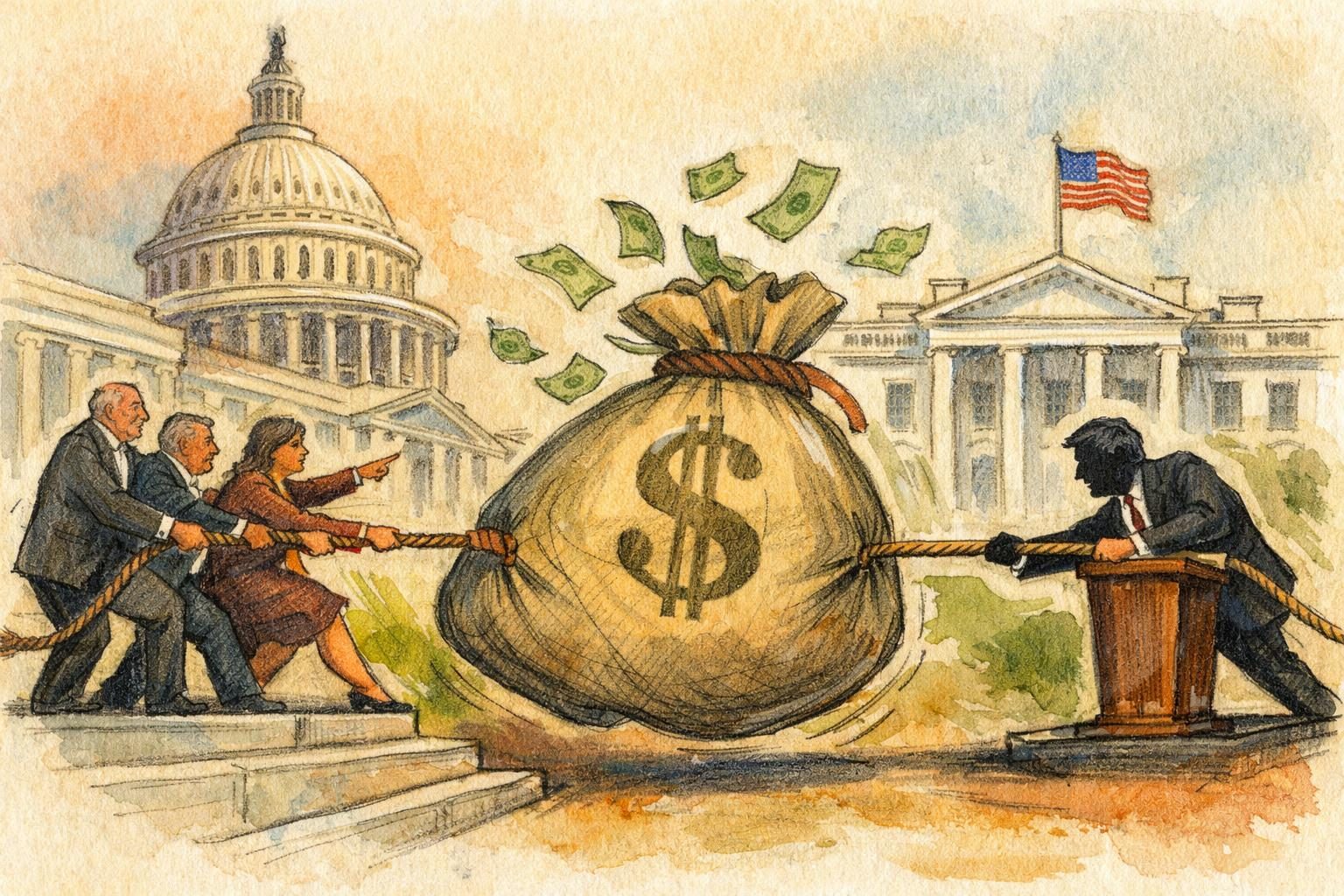
The legal fight over impoundment is not about a slogan. It is about whether the executive branch can hold back money after Congress has enacted it, or whether the White House has to follow the process Congress wrote into law. GAO says an impoundment is any action or inaction that blocks the obligation or expenditure of budget authority, and it says the Impoundment Control Act is the main mechanism for a president to seek a delay or cancellation of enacted funding. ([gao.gov](https://www.gao.gov/blog/what-impoundment-control-act-and-what-gaos-role))
That framework matters because the Constitution gives Congress the power of the purse. GAO has said the appropriations power remains with Congress, and that the executive branch cannot unilaterally make an impoundment permanent. If the president wants to withhold or cancel money, the ICA requires a special message and a formal review process. ([gao.gov](https://www.gao.gov/products/gao-21-538t))
The verified White House action in the record is not a July 2026 budget stunt. It is a May 30, 2025 sequestration order for fiscal year 2026. The order says direct spending budgetary resources for FY2026 in each non-exempt budget account will be reduced on October 1, 2025, in line with the Office of Management and Budget’s May 30, 2025 report. ([whitehouse.gov](https://www.whitehouse.gov/presidential-actions/2025/05/sequestration-order-for-fiscal-year-2026-pursuant-to-section-251a-of-the-balanced-budget-and-emergency-deficit-control-act-as-amended/))
That makes the chronology important. The issue here is a real White House spending action, but the documented event is dated May 30, 2025, not July 21, 2026. Read that way, the story is less about a fresh surprise than about an old and recurring struggle over how much room the president has to maneuver once Congress has already enacted the money. ([whitehouse.gov](https://www.whitehouse.gov/presidential-actions/2025/05/sequestration-order-for-fiscal-year-2026-pursuant-to-section-251a-of-the-balanced-budget-and-emergency-deficit-control-act-as-amended/))
GAO’s prior decisions sharpen the point. In one 2018 opinion, GAO said the ICA does not allow funds to be withheld through their date of expiration when a rescission proposal is pending. GAO said the statute permits only temporary withholding, and that amounts proposed for rescission must be made available for obligation before they expire. ([gao.gov](https://www.gao.gov/products/b-330330.1))
That is why these disputes keep resurfacing. Agencies, states, contractors, and grant recipients need to know when enacted money will actually move. When a White House tries to stretch the line between delay and cancellation, the political argument quickly turns into a legal one, and the legal one turns on Congress’s role in appropriations law. ([gao.gov](https://www.gao.gov/products/gao-21-538t))
So the clean version is this: the administration is operating inside a budget system Congress built, and the May 30, 2025 sequestration order shows the system in motion. The broader fight is still the same one that has defined impoundment debates for decades — whether the president can treat enacted funding as negotiable, or whether the law requires the money to be spent unless Congress says otherwise. ([whitehouse.gov](https://www.whitehouse.gov/presidential-actions/2025/05/sequestration-order-for-fiscal-year-2026-pursuant-to-section-251a-of-the-balanced-budget-and-emergency-deficit-control-act-as-amended/))
Comments
Threaded replies, voting, and reports are live. New users still go through screening on their first approved comments.
Log in to comment
No comments yet. Be the first reasonably on-topic person here.