
Trump’s fraud machine still has a proof problem
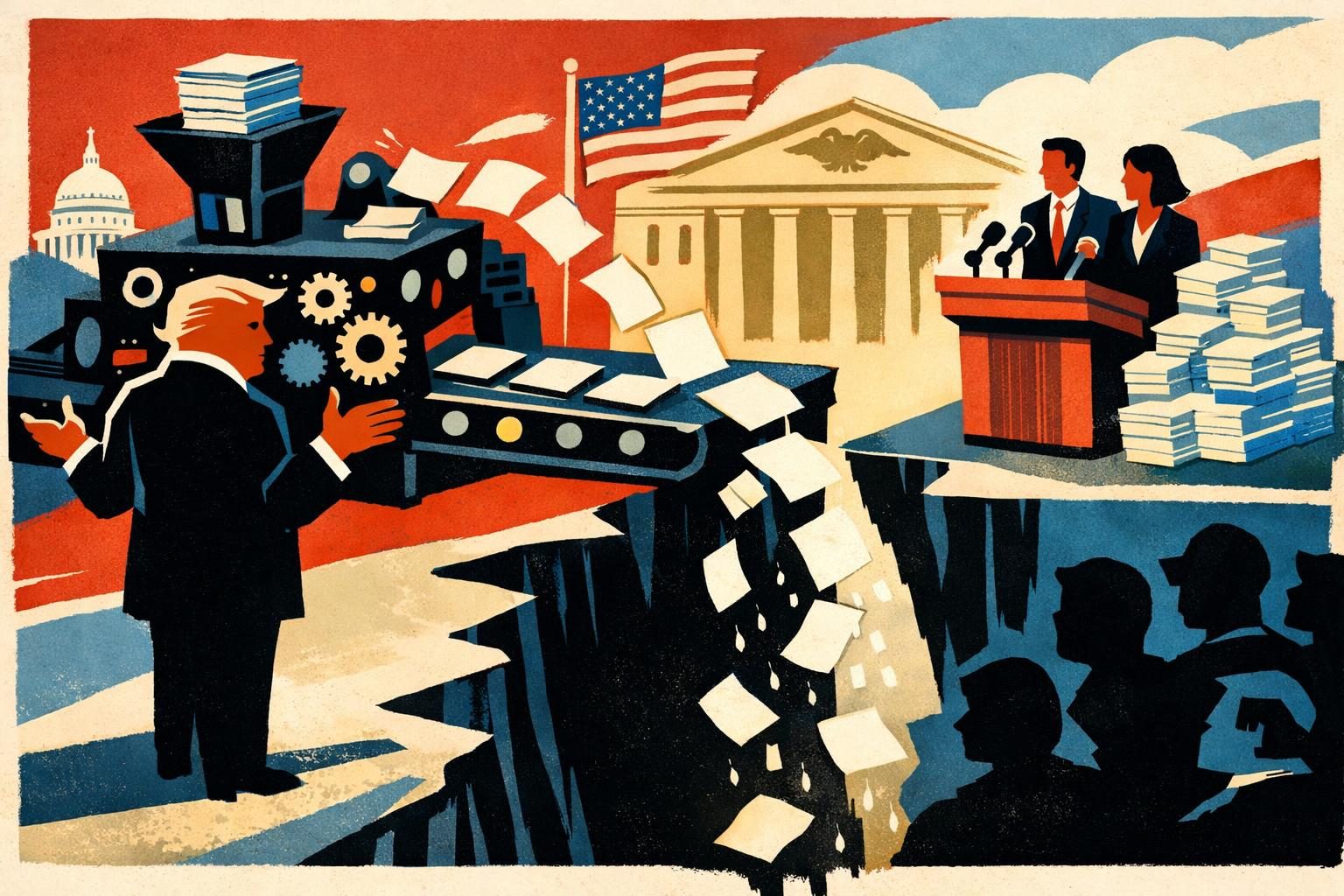
The Trump administration has tried to cast its latest anti-fraud campaign as a show of seriousness: a cleaner chain of command, sharper enforcement, and less tolerance for waste, abuse, and theft in federal programs. On paper, the message is easy to sell. Fraud is a political gift to any administration that wants to argue it is protecting taxpayers and restoring order to sprawling bureaucracies. It also gives the White House a chance to present itself as tougher and more competent than the government it inherited, especially in areas like healthcare billing and pandemic relief where the public already expects abuse. But the public record, so far, does not show that the new machinery is generating clearly better results than the older one it replaced. The administration has created a louder anti-fraud apparatus. It has not yet shown that the apparatus itself is the reason cases are being found, prosecutions are being brought, or money is being recovered.
The first major move came in mid-March, when the White House established the Task Force to Eliminate Fraud and put Vice President JD Vance in charge of it. The administration described the task force as a government-wide effort meant to coordinate action against fraud, waste, and abuse in federal benefit programs, with a central command structure that could keep agencies aligned and focused. Less than a month later, the Justice Department followed with the National Fraud Enforcement Division, a new internal hub intended to coordinate fraud prosecutions and related efforts across the department and with law-enforcement partners. Those steps are not trivial. Large bureaucracies often do work better when someone has clear responsibility, agencies share information more quickly, and attention is not scattered across overlapping offices. But Washington also has a long history of treating reorganization as accomplishment in itself. A new task force can improve communication, yet it can also serve as a fresh label for work that was already being done. The announcement of a structure is not the same thing as proof that the structure changes outcomes.
That distinction is especially important because the administration has already begun leaning on enforcement figures as if they automatically validate the new setup. The Justice Department has pointed to actions involving more than $500 million in alleged healthcare and COVID-related fraud, framing those cases as evidence that the anti-fraud push is working. But numbers like that do not tell a simple story. Fraud investigations often take months or years before they reach charges, settlements, or public announcement. Cases may originate in auditors’ findings, inspector general work, whistleblower complaints, tip lines, or investigative efforts that predate any new task force by a long stretch. A case announced after a reorganization is not necessarily a case caused by the reorganization. It may simply be a matter that matured at roughly the same time the new structure was unveiled. The administration has not shown a clean before-and-after comparison demonstrating that the task force or the new DOJ division is finding more fraud, moving faster, or recovering more taxpayer dollars than the previous system. Without that sort of benchmark, the enforcement announcements show that fraud cases exist and prosecutors can bring them. They do not show that the reorganization itself improved the pipeline.
That leaves the White House and Justice Department in a politically useful but analytically slippery position. The task force gives the president a public centerpiece for talking about fraud, and the Justice Department’s new division gives the department a formal banner under which to group prosecutions and investigations. Together, they make the anti-fraud effort look more disciplined than a scattered collection of agency actions, and they let officials argue that the federal government is finally approaching fraud with enough seriousness and coordination. That may be enough for a public-relations win, especially with voters who dislike the idea of money slipping away through fraud or abuse. But the case for institutional success still depends on evidence the administration has not yet supplied. There are no widely presented baseline figures showing how much fraud was being uncovered before the new structure, no public recovery targets that would allow outsiders to measure improvement, and no independent data demonstrating that the reorganized system is outperforming the old one. For now, the administration has built a more formal anti-fraud machine and has started rolling out enforcement examples to support it. What it has not yet done is prove that the machine itself is producing better results rather than simply repackaging work that was already in motion.
Comments
Threaded replies, voting, and reports are live. New users still go through screening on their first approved comments.
Log in to comment
No comments yet. Be the first reasonably on-topic person here.