
Trump’s Iran truce needed constant patching, which is not exactly a sign of command-and-control
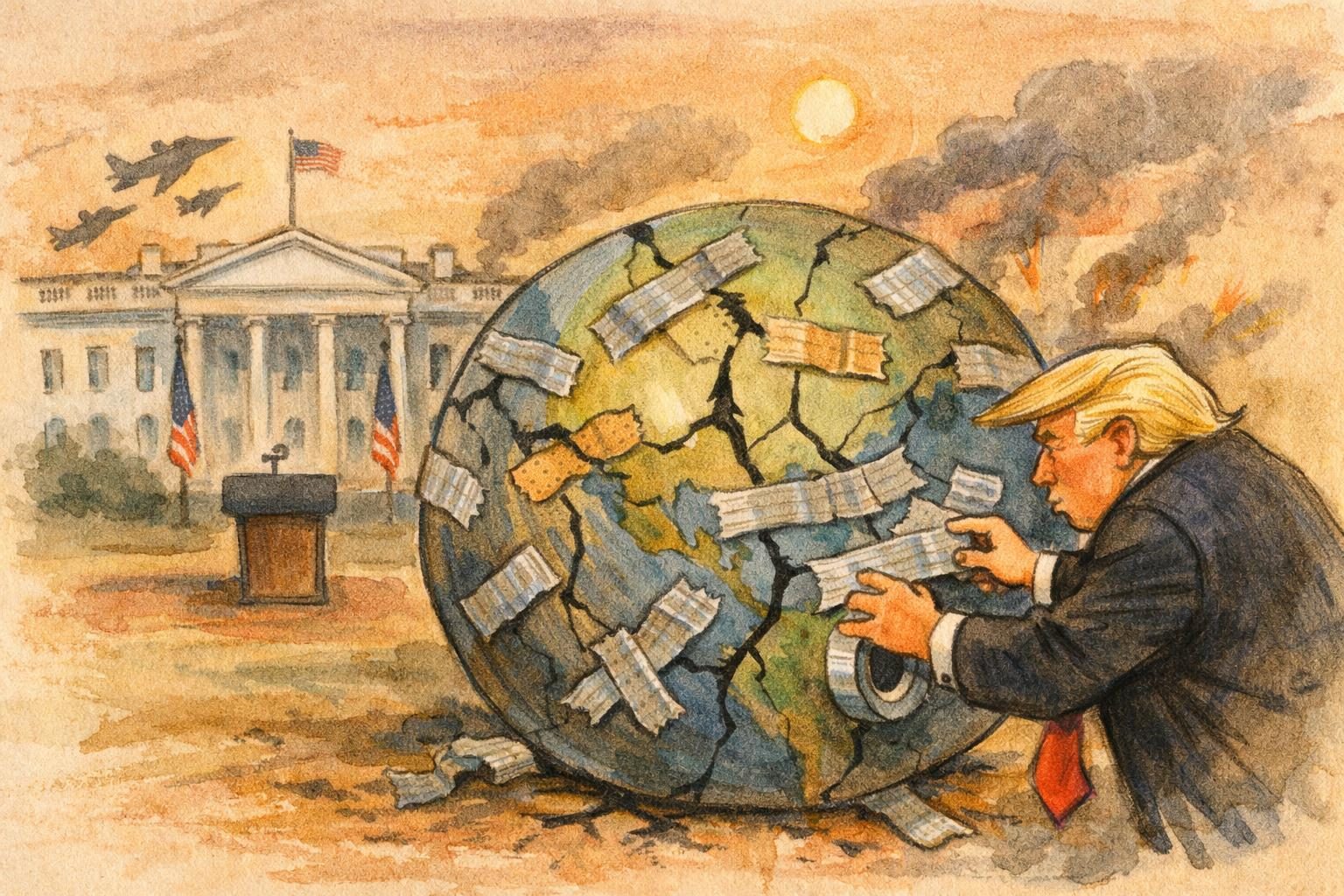
Donald Trump spent April 21 trying to project control over a crisis that still looked fragile from nearly every angle. What should have been the clean afterglow of a diplomatic breakthrough instead read like another day of patchwork crisis management, with the White House extending the Iran truce while the larger dispute remained unsettled and the danger of renewed escalation still hanging over everything. That is not the picture of a fully settled peace arrangement, no matter how hard the administration tried to frame it that way. It is the picture of an administration trying to keep its own announcement from outrunning reality. The president and his aides clearly wanted the pause to register as proof that pressure had worked and that order had been restored through force of will, but the sequence of events suggested something much more precarious: a ceasefire that required constant tending because the underlying conflict had not been resolved, only interrupted. When a truce needs repeated reminders, clarifications, and extensions while the public is told the situation is under control, the message is not stability. It is strain.
That distinction matters because ceasefires are only as durable as the confidence behind them, and confidence depends on whether both sides believe the pause is real, enforceable, and likely to last long enough to matter. When a White House has to keep revising the language around a truce, stretching the timeline, or reassuring the public that everything remains under control, it is signaling uncertainty even if it does not intend to. That uncertainty can invite probing from an adversary looking for weakness, and it can also rattle allies, regional partners, and markets that are trying to judge whether the crisis is genuinely cooling or merely entering a quieter phase before the next shock. In a confrontation involving Iran, where the margin for misunderstanding is tiny and the stakes are enormous, that kind of ambiguity is especially risky. A temporary lull may be useful, but it is not the same thing as a durable settlement. The White House can call the arrangement a success, but if it has to keep patching the message as it goes, then the administration is managing the optics of calm more than proving it has mastered the situation. That leaves everyone else trying to infer meaning from a timeline that seems to be changing in real time.
The political problem for Trump is that his foreign-policy style works best when certainty is the message right up until reality forces a change, at which point the change itself has to be sold as evidence of strength. His allies often describe episodes like this as proof that pressure-first tactics work because the other side backs down once confronted with force. But the more the administration has to explain its own sequence of events, the more it invites a less flattering reading: that the president is declaring victory before the outcome is secure and then rewriting the narrative as conditions shift. That is not unusual in politics, but it becomes especially visible in a standoff with Iran, where public communications matter almost as much as the substance because any gap between message and reality can affect how the other side behaves. If the White House says the truce is stable while simultaneously extending it and reworking the framing around it, critics will argue that the administration is improvising its way through a crisis it had hoped to dominate. Hawks may see bluster without a lasting end state. Doves may see escalation followed by hurried de-escalation. Supporters may see a president forcing leverage into a pause. Skeptics will see a leader more comfortable announcing closure than building it. And for all the language of command, the public record from the day suggested a team trying to keep pace with events rather than set them.
That leaves the truce in an awkward political and diplomatic position. It may still hold, and if it does, the White House will almost certainly present that as proof that Trump’s approach forced restraint on a dangerous adversary. If it frays again, the administration will have to explain why the pause needed repeated repair and why the confidence surrounding the original announcement was so much stronger than the durability of the arrangement itself. Either outcome carries a cost, because the events of April 21 already underscored the central weakness in the administration’s presentation: it spent the day insisting the situation was settled while acting like it was not. That does not automatically mean the ceasefire is doomed, but it does mean the command-and-control story is less convincing than the White House would like. For now, the truce looks less like a victory lap than a fragile intermission, one that can survive only if both sides keep agreeing not to spoil it and if the administration keeps adjusting its own account to match conditions on the ground. For a president who likes to sell himself as the ultimate dealmaker, that is a risky place to be. It suggests not a clean end to a crisis, but a provisional pause that still needs protecting from the very instability it was meant to calm. The White House may be able to claim that its pressure campaign produced a halt in the fighting, but April 21 made clear that a halt is not the same thing as resolution, and a pause is not the same thing as peace.
Comments
Threaded replies, voting, and reports are live. New users still go through screening on their first approved comments.
Log in to comment
No comments yet. Be the first reasonably on-topic person here.