
Three orders, three statutes, one habit: Trump keeps reaching for unilateral power
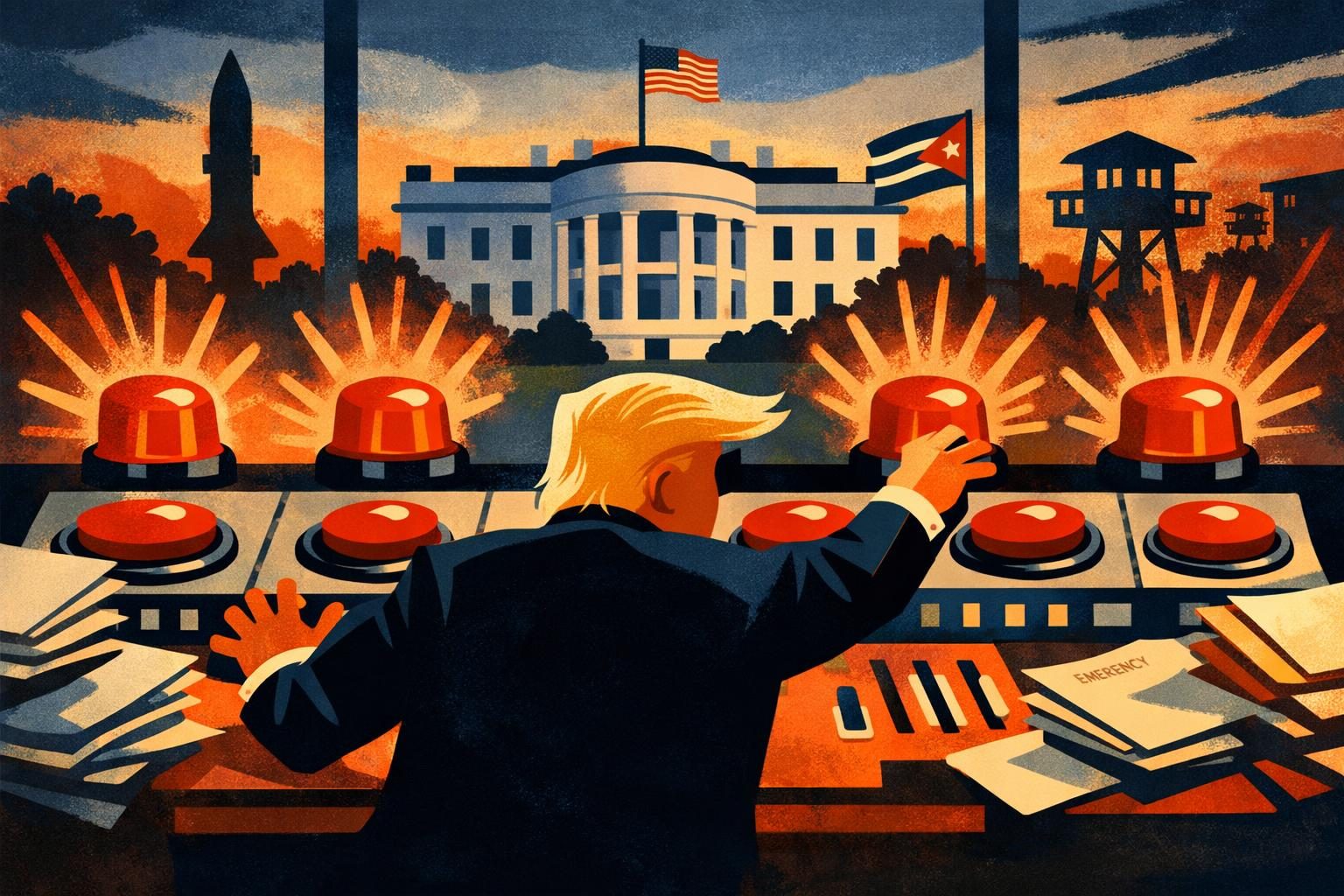
The White House is not leaning on one emergency switch. It is using several different ones, each tied to a separate statute and each aimed at a different problem. On Jan. 14, 2026, the president issued a Section 232 proclamation on semiconductors, semiconductor manufacturing equipment and derivative products. On April 2, 2026, he issued another Section 232 proclamation on aluminum, steel and copper. On May 1, 2026, he signed an executive order imposing sanctions on people the administration says are tied to repression in Cuba and broader threats to U.S. national security and foreign policy.
That May order matters because its legal scaffolding is broader than a simple sanctions citation. The White House says it rests on the International Emergency Economic Powers Act, the National Emergencies Act, section 212(f) of the Immigration and Nationality Act, and section 301 of title 3. It also says it is taking further steps under the Cuba national emergency declared in Executive Order 14380 on Jan. 29, 2026. In other words: the Cuba action is not a standalone burst of improvisation. It is a follow-on move inside an already declared emergency framework.
That distinction is the point. Section 232 is the trade tool the administration is using to justify import restrictions on strategic goods. IEEPA and the NEA are the sanctions authorities. INA 212(f) and 3 U.S.C. 301 add another layer, especially on entry restrictions and delegated presidential authority. The White House is not picking a single legal lane and staying in it. It is combining lanes when it wants speed, leverage and flexibility.
The pattern is easier to see than the policy logic behind each move. One week the White House is talking industrial capacity and national security risk from imports. Another month it is talking about Cuba and property blocks, sectoral sanctions and travel restrictions. The statutes are different, but the governing style is consistent: choose the authority that gets the result fastest, then argue that the law already contains enough room for the move.
That can work in the short term. It can also leave the administration in a familiar posture, defending not just the substance of each action but the habit of reaching for executive power first. The more often the White House does that, the less exceptional the maneuver starts to look. And once that happens, the legal fight is no longer only about any one order. It is about whether urgent language has become the default way the presidency does business.
Comments
Threaded replies, voting, and reports are live. New users still go through screening on their first approved comments.
Log in to comment
No comments yet. Be the first reasonably on-topic person here.