
Education Department’s Pell rule rewrite turns into another self-inflicted mess
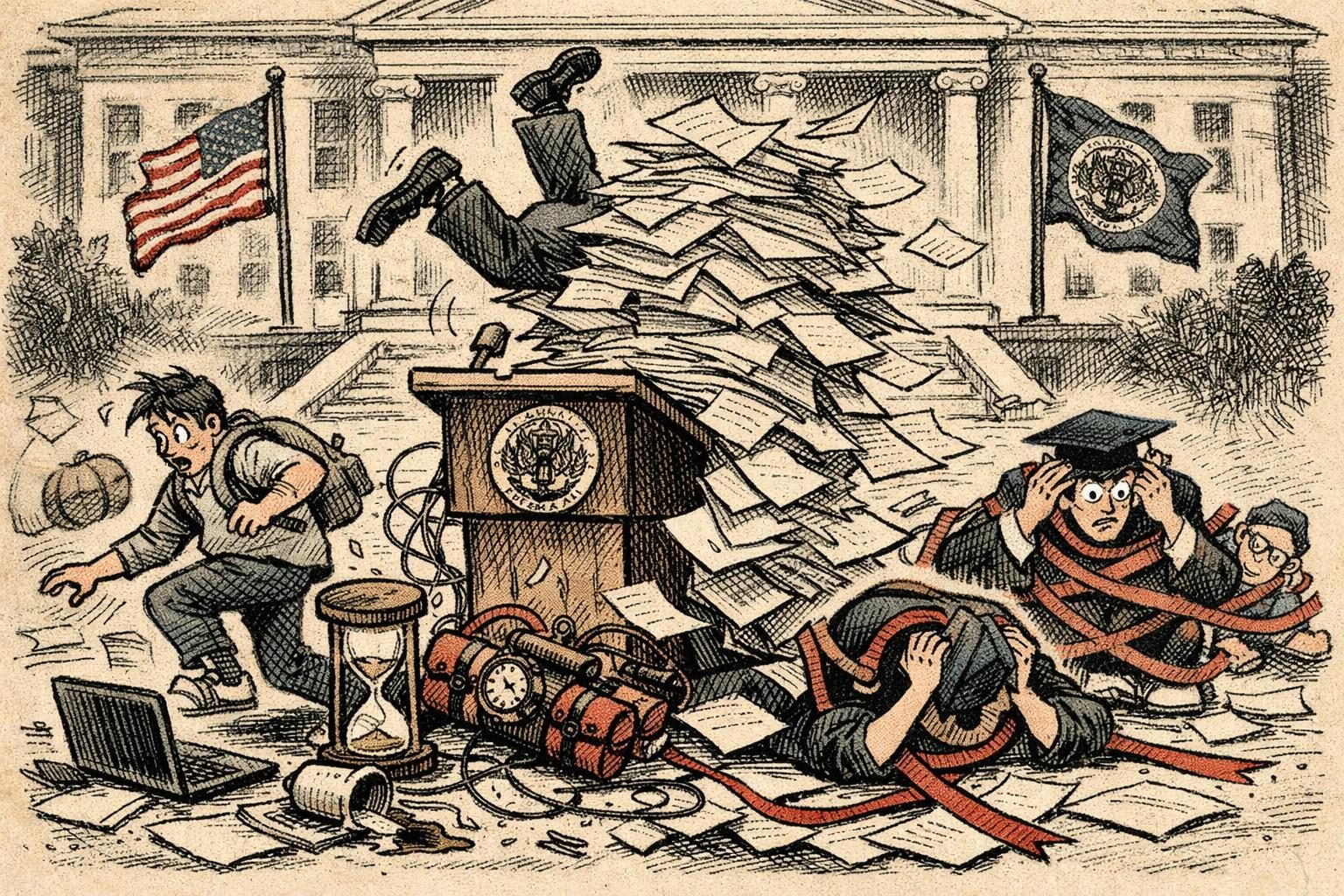
The Education Department’s rollout of its Workforce Pell changes and Pell ineligibility provisions has managed to turn a major higher-ed policy update into a small-scale lesson in how not to do implementation. What should have been a straightforward move from statute to administration has instead produced a trail of clarifications, corrections, and timeline questions that leave colleges and students trying to read the federal government’s mind. The latest materials suggest the department had to clean up effective-date language that did not line up neatly with the underlying statutory framework, which is exactly the kind of bureaucratic misfire that makes a rules-based aid program feel improvised. In Washington, this may look like a technical drafting issue. In financial aid offices, it looks like another thing to reconcile before the semester starts.
That matters because the Pell program is not a corner of higher education where uncertainty can be shrugged off. Schools build their enrollment calendars, aid packaging systems, and student communications around federal deadlines that are supposed to be dependable, not interpretive exercises. When the department’s own implementation text needs to be corrected after the fact, it does more than annoy compliance staff; it forces everyone downstream to stop and ask which version of the rule is actually controlling. That kind of confusion can spill into admissions, registration, and billing decisions, especially at institutions that serve large numbers of low-income students and already operate on thin margins. A messy date is not just a clerical annoyance in this setting. It can affect eligibility, timing, and whether students believe the aid they were promised will actually be there when they need it.
The larger issue is that this sort of mistake invites distrust at exactly the moment the department wants to be seen as decisive. Workforce Pell is one of the administration’s marquee higher-ed changes, and the ineligibility provisions are part of a broader effort to redraw the boundaries of who qualifies for aid and under what conditions. That kind of policy shift already invites scrutiny from schools, advocates, and critics who are looking for any sign that the rules were rushed or insufficiently thought through. When the department then has to clarify its own effective-date language, it hands opponents an easy talking point: if the government cannot cleanly explain when a rule starts, how confident should anyone be that the rule itself was carefully built? Even where the substance of the policy may be defensible, the execution risks making the whole initiative look more brittle than bold.
There is also a practical consequence that is easy to underestimate from the outside. Colleges do not have the luxury of waiting for Washington to get its act together, because their compliance obligations are immediate and their students cannot sit through months of uncertainty. Aid administrators need to know which rules apply, which students are affected, and how to update systems without creating avoidable errors of their own. Students and families, meanwhile, are trying to make financial plans based on information that is supposed to come from a stable federal framework, not a moving target with footnotes. Each correction may be defensible on its own, but together they create the sense that the department is discovering the plumbing after the water has already been turned on. That is not how confidence in a massive aid program gets built, and it is certainly not how you make schools feel like the federal government has a firm grip on its own policy.
Politically, the episode undercuts the administration’s preferred narrative that these changes represent disciplined reform rather than hurried improvisation. The White House and the department may want to frame the changes as a tough-minded reset of higher-ed aid policy, but the operational picture is giving critics room to argue that the rollout was handled with too much emphasis on announcement value and too little on execution. That is a familiar problem in federal rulemaking: a policy can be conceptually ambitious and administratively sloppy at the same time. Here, the sloppiness is especially visible because the stakes are easy to explain and the error itself is easy to understand. If the government cannot even keep its effective dates straight, the rest of the rule starts to look less like a carefully engineered reform and more like a spreadsheet mistake with a press release attached.
None of this turns the issue into some grand scandal, and it would be irresponsible to pretend a clarification on effective dates is the same thing as a policy collapse. But it is still the sort of failure that chips away at institutional trust in a steady, cumulative way. Students want to know whether their aid will hold. Colleges want to know what systems they need to change and when. Congress and the broader higher-education community want to know whether the department understands the rules it is asking everyone else to follow. When a major aid overhaul starts with confusion over timing and has to be patched in public, it sends a bad signal about competence even if the substantive policy survives intact. For an administration that wants to project control over higher-ed finance, this is the kind of self-inflicted mess that makes the government look less like it is setting the terms and more like it is still trying to figure them out.
Comments
Threaded replies, voting, and reports are live. New users still go through screening on their first approved comments.
Log in to comment
No comments yet. Be the first reasonably on-topic person here.