
DOJ Sues Four States Over Confidential Plates for Federal Agents
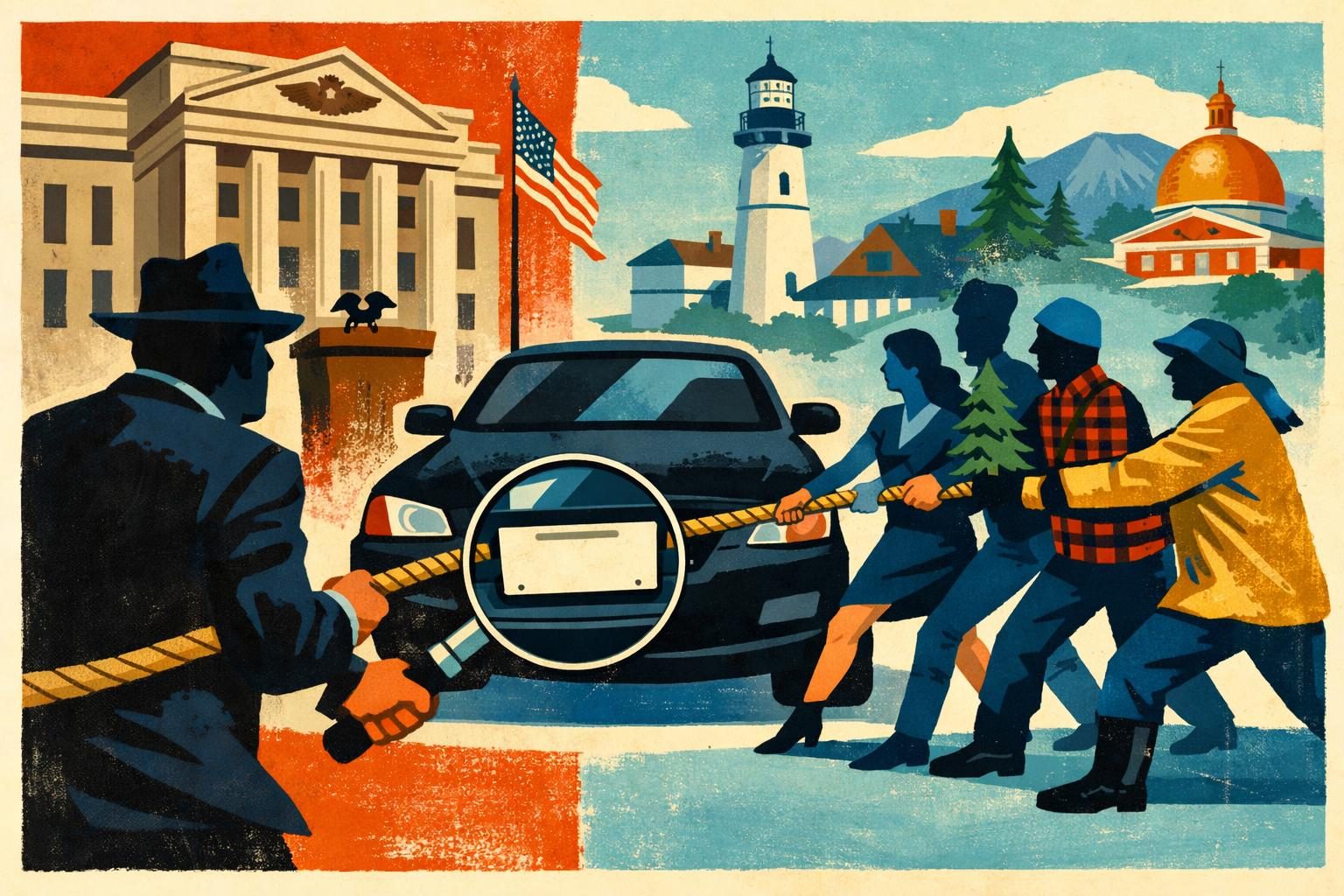
The Justice Department has opened yet another front in its fight with Democratic-led states, this time over something as mundane as license plates. In lawsuits filed Wednesday against Maine, Massachusetts, Oregon, and Washington, the department says those states are unlawfully restricting access to confidential or undercover-style plates for certain federal law enforcement vehicles. The issue reaches beyond a simple motor vehicle dispute because the federal government says the restrictions also apply to vehicles used by Immigration and Customs Enforcement and other federal agents who may need to operate without being easily identified. On Thursday, the department publicly framed the cases as a matter of officer safety, arguing that the states are making federal vehicles more visible and therefore more vulnerable to harassment or interference. The states, for their part, appear likely to treat this as a dispute over their own licensing systems and their authority to decide when secrecy measures should be available. What looks like a narrow bureaucratic fight is actually another example of the broader Trump-era clash over how far blue states are expected to go in supporting federal immigration enforcement.
The legal argument from the Justice Department is built around a familiar constitutional claim: that state policies cannot stand when they interfere with federal operations, especially under the Supremacy Clause. Acting Attorney General Todd Blanche has said the refusal to provide confidential plates puts federal agents at risk and makes it harder for them to do their jobs without being singled out. That framing is important because it casts the issue as a public safety matter rather than a political dispute, even though the underlying context is plainly political. The administration has repeatedly tried to turn fights over immigration enforcement into tests of whether states will accommodate federal priorities on Washington’s terms. In this case, the point of contention is not a raid, a detention center, or a courthouse arrest, but a set of plates that can help a vehicle blend in. Still, the stakes are not trivial for an administration trying to expand the tools available to federal officers and normalize more secretive forms of enforcement. The lawsuits suggest the White House and Justice Department are willing to spend real institutional energy on even the smallest operational obstacles.
The states named in the lawsuits are likely to argue that they are not required to provide special concealment benefits for federal immigration activity, particularly if those benefits can be used to shield operations from public oversight. That position could turn the cases into a broader debate about transparency, federalism, and the limits of state cooperation. If state officials can issue confidential plates selectively, they may ask why they should be compelled to help federal agents operate undercover when the states have their own standards for how such privileges are distributed. That tension gives the Justice Department a legal problem as well as a political one, because it has to defend the proposition that states must actively assist federal secrecy in the course of politically charged domestic enforcement. The administration may argue that the states are treating federal vehicles differently from their own, and that unequal treatment is exactly the kind of interference the Constitution forbids. But the states will almost certainly contend that they are not obstructing federal law enforcement so much as declining to extend a local administrative convenience to a federal operation they do not endorse. However the courts sort it out, the fight is likely to become another test case for how much resistance states can mount before the federal government invokes constitutional supremacy.
What makes the case politically awkward is that it underscores how expansive the administration’s immigration campaign has become. The fight is no longer limited to arrests, detention, deportation, or border policy; it has reached the question of whether federal cars should be harder to identify on the street. That may sound minor in isolation, but it fits a pattern in which even small operational disputes become national confrontations. The White House is treating friction with blue-state governments as something to be pressed, not negotiated away, and the Justice Department appears eager to back that approach in court. At the same time, the controversy opens the administration to criticism that it is more interested in secrecy and escalation than in convincing the public that its immigration policies are reasonable or effective. A case about confidential plates may not generate the same outrage as a raid or deportation, but it still contributes to the image of an administration expanding the reach of federal enforcement while asking states to stand aside. If the government wins, it could strengthen the argument that states cannot selectively withhold tools that federal agents believe are necessary. If it loses, the ruling could give state officials a firmer basis for resisting future demands for cooperation. Either way, the lawsuits show an administration willing to litigate a seemingly small administrative issue because it sees every point of resistance as part of a larger struggle over control, legitimacy, and the shape of immigration enforcement itself.
Comments
Threaded replies, voting, and reports are live. New users still go through screening on their first approved comments.
Log in to comment
No comments yet. Be the first reasonably on-topic person here.