
Trump’s tariff push now covers metals and patented drugs, with companies left to price the exceptions
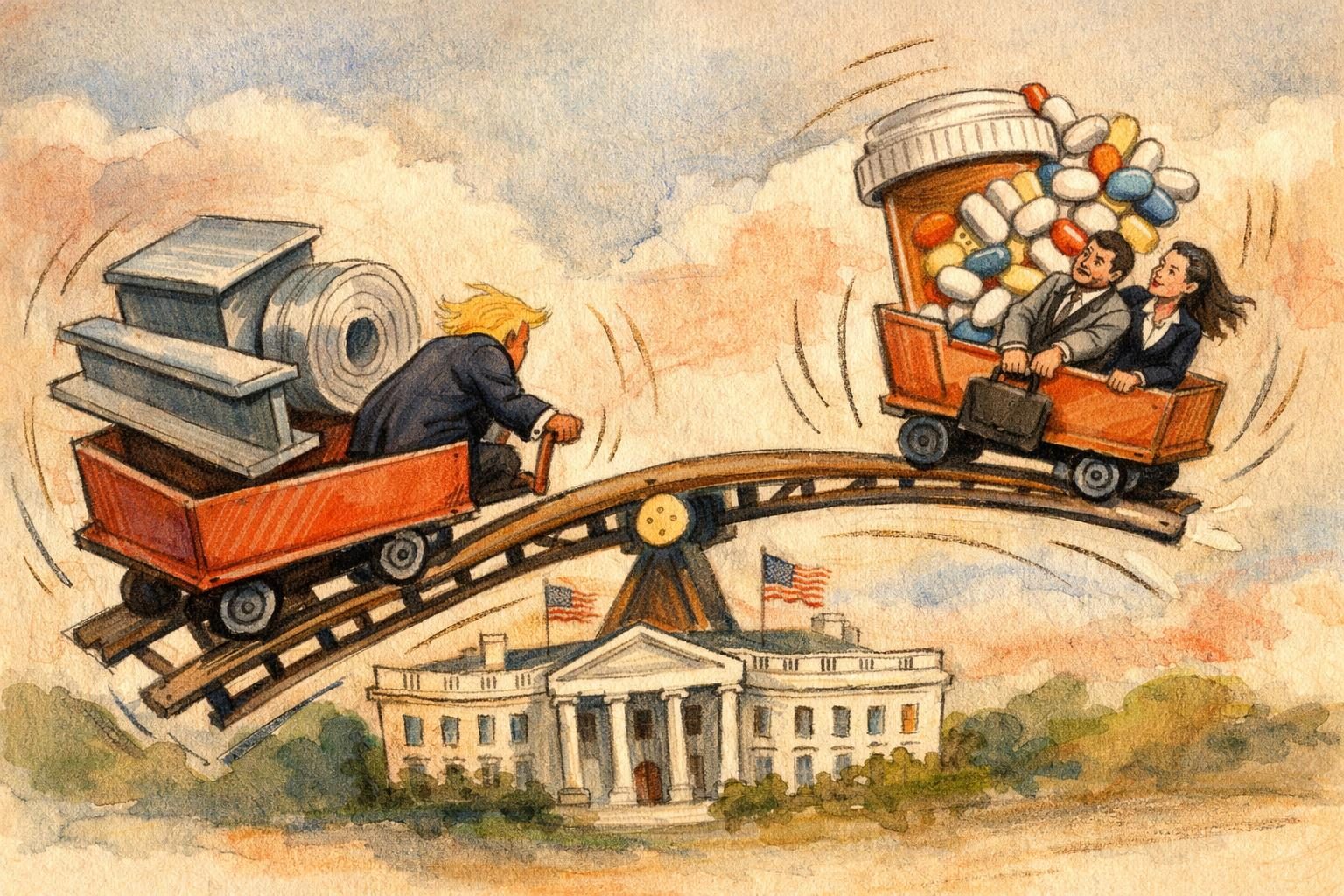
The White House is not applying tariffs here as a single blunt instrument. It is writing them as a series of product lists, country rules, and deadlines that shift what gets hit, when it gets hit, and at what rate.
On June 1, the administration signed a proclamation revising Section 232 metals tariffs. The White House says the changes take effect for goods entered for consumption, or withdrawn from warehouse for consumption, on or after 12:01 a.m. EDT on June 8, 2026. The update lowers the tariff on agricultural equipment such as combines and harvesters from 25% to 15%, adds certain HVAC systems and components for residential use to the 15% derivative category, and extends that same temporarily reduced rate to mobile industrial equipment and machinery when imported from eligible trade-deal countries. It also brings aluminum lithographic plates and steel racks into the derivative tariff coverage, while setting a 10% duty path for some capital equipment that meets the White House’s U.S.-content threshold. Those temporary changes run through Dec. 31, 2027. ([whitehouse.gov](https://www.whitehouse.gov/fact-sheets/2026/06/fact-sheet-president-donald-j-trump-updates-tariffs-on-steel-aluminum-and-copper-imports/))
That is a narrower and more technical move than a blanket metals tariff hike. The proclamation carves out specific product groups and ties some rates to whether a shipment comes from a country covered by a trade deal and to how the goods are classified under the tariff schedule. The result is a system that still leans on tariffs, but does so with enough fine print to make the real cost depend on what is being imported, where it comes from, and whether it clears customs before or after the June 8 cutoff. ([whitehouse.gov](https://www.whitehouse.gov/presidential-actions/2026/06/further-adjusting-the-tariff-regimes-for-imports-of-aluminum-steel-and-copper-into-the-united-states/))
The pharmaceutical action, issued in April, is even more conditional than the headline number suggests. The White House said it imposed a 100% tariff on patented pharmaceutical products and ingredients, but also said the tariffs do not start the same day for every company. The fact sheet says they begin after 120 days for certain large companies and after 180 days for smaller companies. It also says companies that enter both Most Favored Nation pricing agreements with HHS and onshoring agreements with Commerce can receive a 0% tariff through Jan. 20, 2029, while companies that only sign onshoring agreements face a 20% tariff. ([whitehouse.gov](https://www.whitehouse.gov/fact-sheets/2026/04/fact-sheet-president-donald-j-trump-bolsters-national-security-and-strengthens-u-s-supply-chains-by-imposing-tariffs-on-patented-pharmaceutical-products/))
The White House also excluded or exempted several categories. Generic pharmaceutical products, biosimilars, and associated ingredients are not subject to tariffs at this time, and specialty products including orphan drugs and animal-health drugs may be exempt if they come from trade-deal countries or meet an urgent public health need. ([whitehouse.gov](https://www.whitehouse.gov/fact-sheets/2026/04/fact-sheet-president-donald-j-trump-bolsters-national-security-and-strengthens-u-s-supply-chains-by-imposing-tariffs-on-patented-pharmaceutical-products/))
Put together, the two actions show a tariff regime that is less about one universal rate than about how a company, product, and shipment fit inside a shifting rulebook. A manufacturer importing steel or aluminum-derived equipment may face one schedule. A drug company importing a patented product may face another. Some firms can lower their exposure through government agreements; others will be waiting on the calendar, the customs code, or both. The policy may be sold as national security, supply-chain resilience, and domestic investment. In practice, it leaves businesses doing the same thing the White House is doing: reading the fine print before the next adjustment lands. ([whitehouse.gov](https://www.whitehouse.gov/fact-sheets/2026/06/fact-sheet-president-donald-j-trump-updates-tariffs-on-steel-aluminum-and-copper-imports/))
Comments
Threaded replies, voting, and reports are live. New users still go through screening on their first approved comments.
Log in to comment
No comments yet. Be the first reasonably on-topic person here.