
Trump’s Tariff Whiplash Keeps Hitting His Own Trade Pitch
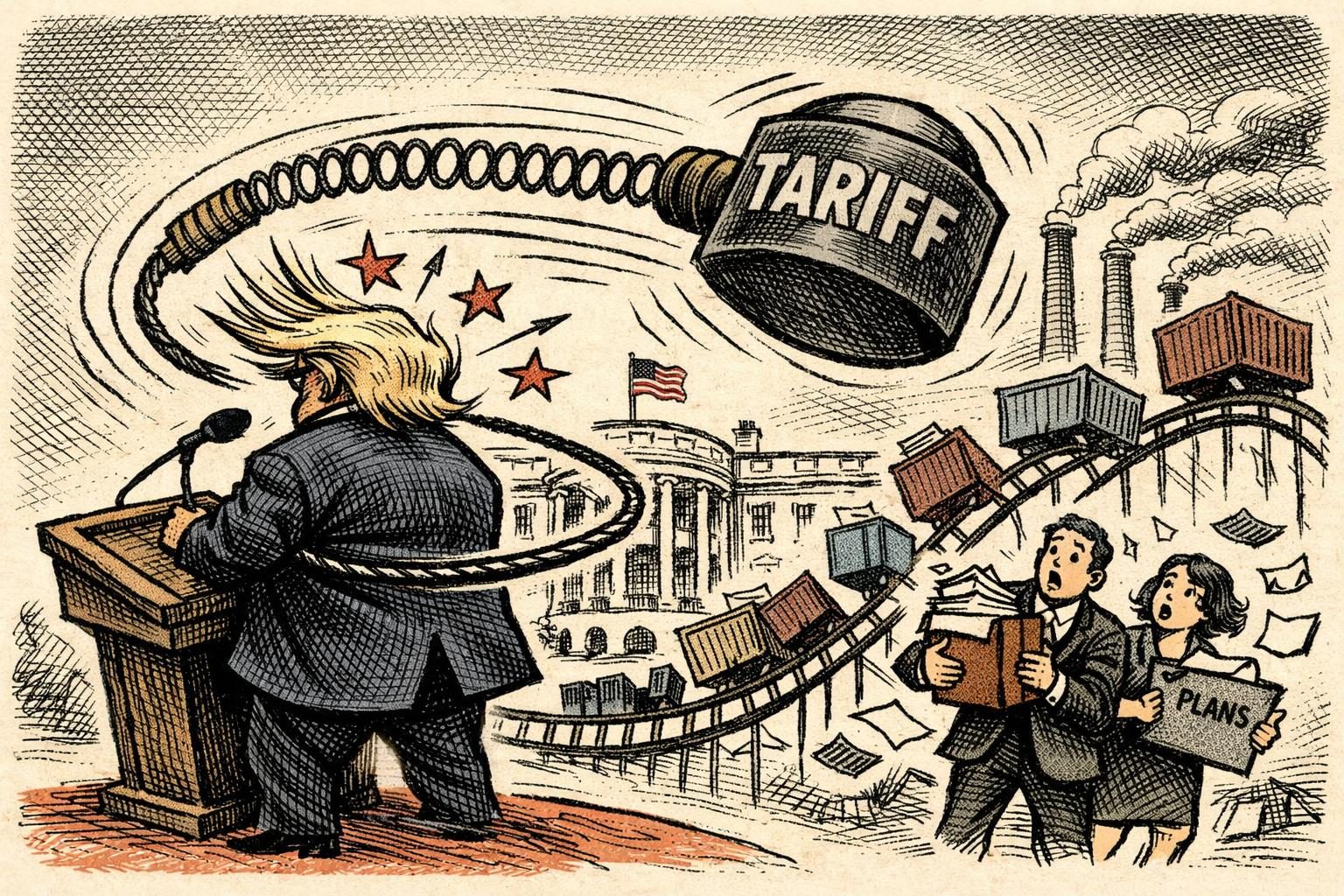
President Donald Trump has once again put tariffs at the center of his economic pitch, but the latest round of White House and U.S. Trade Representative actions shows how easily that message turns into whiplash for everyone trying to plan around it. On June 1 and June 2, the administration unveiled a fresh set of metals and trade-related steps, including a proclamation and fact sheet adjusting duties on steel, aluminum, copper, and related goods, along with new trade actions tied to China and additional Section 301 activity. The White House says the moves are meant to protect domestic manufacturing, strengthen supply chains, and push back on foreign trade practices that officials view as unfair. That is the theory, at least. In the real world, companies do not order raw materials, book freight, or set contract prices on a slogan cycle. They need rules that stay put long enough for them to understand what a shipment will cost, how a product will be classified, and whether a future revision will change the math again before the goods even arrive.
That mismatch is the political and economic problem Trump keeps creating for himself. He has made tariffs so central to his identity as a dealmaker that every cost, delay, and compliance headache ends up reflecting on him and his administration. The latest actions are being sold as tools of industrial policy and national strength, with the government arguing that higher or adjusted duties can help rebuild American production and reward firms that make goods in the United States. But the businesses actually living under the policy are importers, manufacturers, contractors, farmers, retailers, and logistics firms that have to operate with a much more practical question in mind: what will this cost next week, next quarter, and next year? Tariffs can sometimes function as leverage in a specific negotiation, or as a pressure point in a narrow sector. Repeated tariff changes, however, together with carve-outs, consultation windows, product lists, and duty-rate tweaks, start to look less like disciplined leverage and more like an ongoing state of improvisation. Some domestic producers may welcome the protection. Many other companies see something closer to a tax with shifting borders and no clear endpoint.
The deeper issue is that the administration’s own process seems built to produce uncertainty even when the stated goal is clarity. The recent actions rely on a patchwork of proclamations, public comment opportunities, updated duty structures, and rolling enforcement lists that are hard enough for trade lawyers to keep track of, much less ordinary businesses trying to make ordinary decisions. A firm that imports steel, aluminum, copper, or machinery tied to those materials has to figure out more than the headline rate. It has to know whether a product’s classification will change, whether a narrow exemption applies, whether a consultation process could alter the mechanism again, and whether a later agency notice will rewrite assumptions already baked into a purchase order or capital plan. That kind of environment makes long-term investment harder, not easier. Businesses prefer stable rules that can be priced into contracts and financing. When the policy landscape feels like it can be reset by the next presidential proclamation or agency release, companies tend to hedge, delay expansion, stockpile more cash, pass costs along to customers, or simply wait. The White House may see that uncertainty as a source of bargaining power. The people making and moving products see it as business risk.
Trump’s newest tariff moves also expose a familiar contradiction at the heart of his pitch. He wants tariffs to project strength, signal resolve, and show that Washington is willing to hit back against foreign competition. But the mechanics keep making the policy look like an administrative maze. One announcement updates duties on strategic metals. Another opens a comment process on how a China-related trade mechanism should work. Another proposes further action tied to Section 301 investigations. Each step may be defensible on its own terms, but together they create a landscape of temporary rates, exception categories, and consultation periods that keeps the trade apparatus busy while forcing the private sector to scramble just to stay current. That does not mean tariffs are going away. If anything, the opposite seems true: the administration appears committed to making them one of its main economic tools. The problem is that the more often Trump reaches for tariffs, the less they resemble a clean strategic instrument and the more they look like a rolling series of revisions, reversals, and exceptions. He may think he is forcing discipline on the global trading system. The immediate effect is to force American businesses to live with moving rules. In a trade policy built on unpredictability, the uncertainty is not an accidental side effect. It is the feature.
Comments
Threaded replies, voting, and reports are live. New users still go through screening on their first approved comments.
Log in to comment
No comments yet. Be the first reasonably on-topic person here.