
Iran war powers fight gets a sharper congressional rebuke
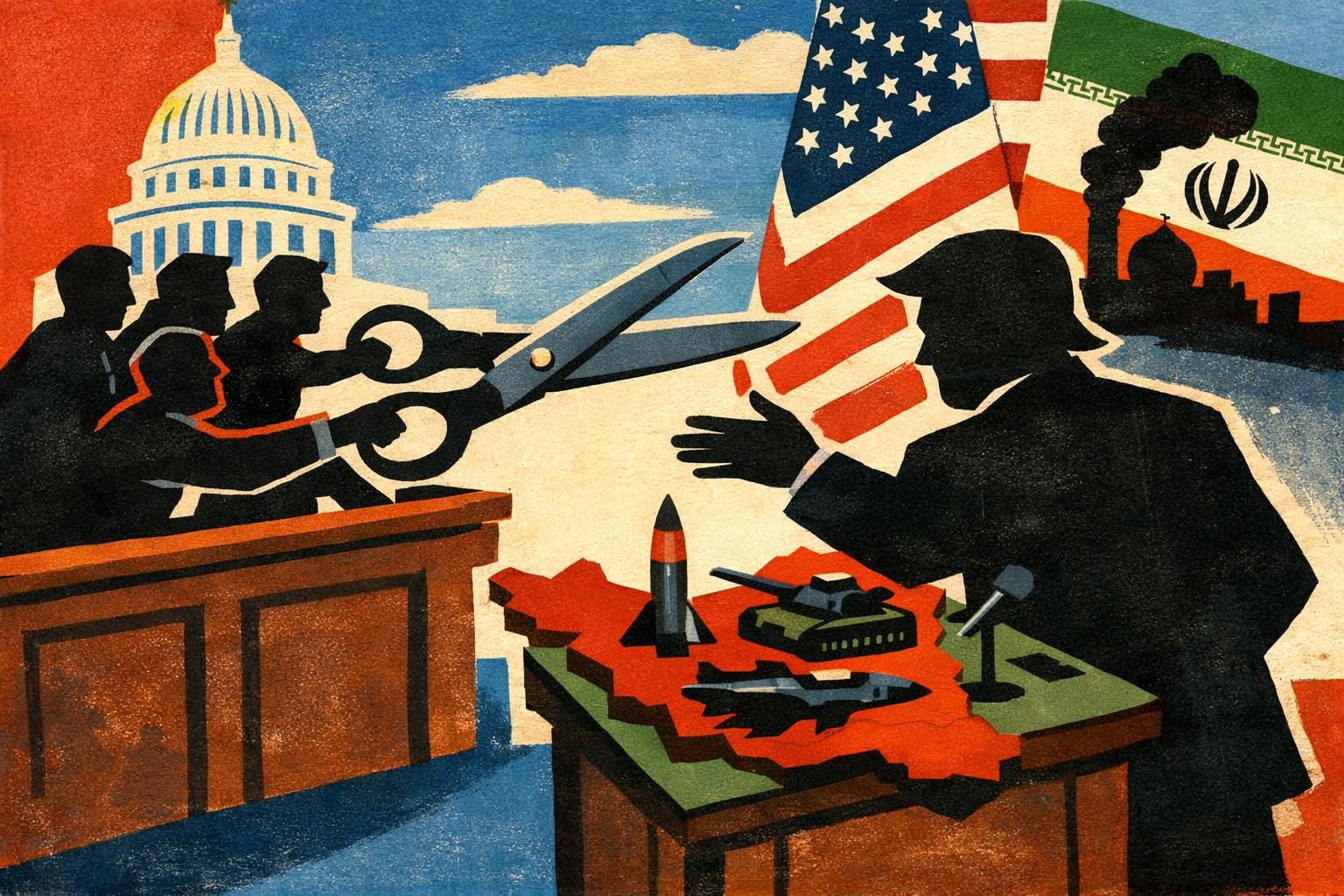
Congress is turning the Iran fight into something more uncomfortable for the White House than a battlefield dispute: a public argument over who gets to start, widen, or stop a war. That argument has become sharper in the days after the House took up a war powers resolution aimed at checking the administration’s use of military force, and the message from lawmakers is not subtle. They are saying the president does not get to treat escalation as a matter of private executive judgment while leaving Congress to clean up afterward. The administration has tried to frame its actions as firm, limited, and under control, but that case is losing some of its force as lawmakers insist the legal and political stakes are bigger than a single strike or response. The central problem is not just that Congress disagrees with the president’s handling of Iran. It is that more members now appear willing to say the Constitution requires a meaningful say before the country is pulled deeper into conflict.
The June 3 House vote already put members on record about that clash, and it did so in a way that makes the White House’s preferred story harder to sustain. The resolution did not force an end to military operations, and it did not magically strip the administration of the authority it is claiming. What it did do was create a formal record of dissatisfaction with open-ended escalation, giving critics a concrete legislative marker they can point to as the Iran situation continues to unfold. Four Republicans joined Democrats on the measure, which is politically awkward for a president who wants the issue treated as a united national-security posture rather than a partisan fight. That cross-party split matters because it suggests the concern is not limited to the usual opposition voices. It signals that some lawmakers who might normally be expected to give a Republican president the benefit of the doubt are still uneasy enough about the scope and speed of events to back a rebuke. In practical terms, that is not the same as ending the conflict. In political terms, it is a warning shot.
The administration’s trouble is that war powers fights rarely stay neatly confined to legal theory. Once Congress starts pushing back, the question becomes whether the president can be trusted to keep force bounded, or whether he is relying on the logic of momentum to do what lawmakers may never explicitly approve. That is especially sensitive here because Trump has spent years selling himself as the outsider who would avoid endless foreign commitments and restore discipline to American power. The Iran conflict, however, has forced him into exactly the kind of argument that makes that branding look thin: he says he has sufficient authority and the situation requires decisive action, while skeptics say that is the standard excuse presidents use when they want to move faster than Congress can react. If the White House argues that the threat is too urgent for a broader vote, critics will say urgency is precisely how war powers get swallowed by executive habit. If it argues existing authority is enough, opponents will say that is the constitutional problem in plain sight. There is no version of that argument that looks clean or politically easy.
That is why the congressional pushback carries weight beyond the immediate mechanics of the resolution. It gives opponents of the administration a simple line: the president is operating as if congressional approval is optional, or at least negotiable after the fact. That is a legal critique, but it is also a political one, because it frames Trump as someone who prefers to expand military commitments first and seek permission only when challenged. The latest public warnings suggest the White House does not have a stable political line on Iran because the underlying tension is built into its approach. If the administration says the conflict is contained, Congress can point to the very fact that lawmakers are feeling compelled to act. If the administration says the stakes are too serious for delay, Congress can point to the Constitution and ask why it is being sidelined. Either way, the president is left defending a posture that looks more like improvisation than strategy, and that is an especially dangerous place for any White House to be when the subject is war.
The deeper risk is that this becomes a referendum not only on Iran policy, but on whether Trump can be trusted to manage military force without overreach. If the conflict intensifies, lawmakers who backed the war powers resolution will be able to say they warned against drift and unchecked escalation. If the conflict cools, the administration will almost certainly try to claim vindication and portray the episode as a brief, successful show of force. But the congressional rebuke does not simply disappear in either scenario. It leaves behind a record of hesitation, disagreement, and institutional resistance that could shape future hearings, future votes, and future political attacks. For Democrats, and for the Republicans willing to join them on the measure, that record is useful because it shows the White House was not enjoying a blank check. For Trump, it is a reminder that military action does not automatically translate into authority, and that even in a crisis he still has to contend with lawmakers who believe they are being pushed aside. That is a bad look for any president. For one who has long wrapped himself in the language of strength, control, and anti-war authenticity, it is even worse.
Comments
Threaded replies, voting, and reports are live. New users still go through screening on their first approved comments.
Log in to comment
No comments yet. Be the first reasonably on-topic person here.