
Trump’s AI memo tells the government to move faster and stay in control
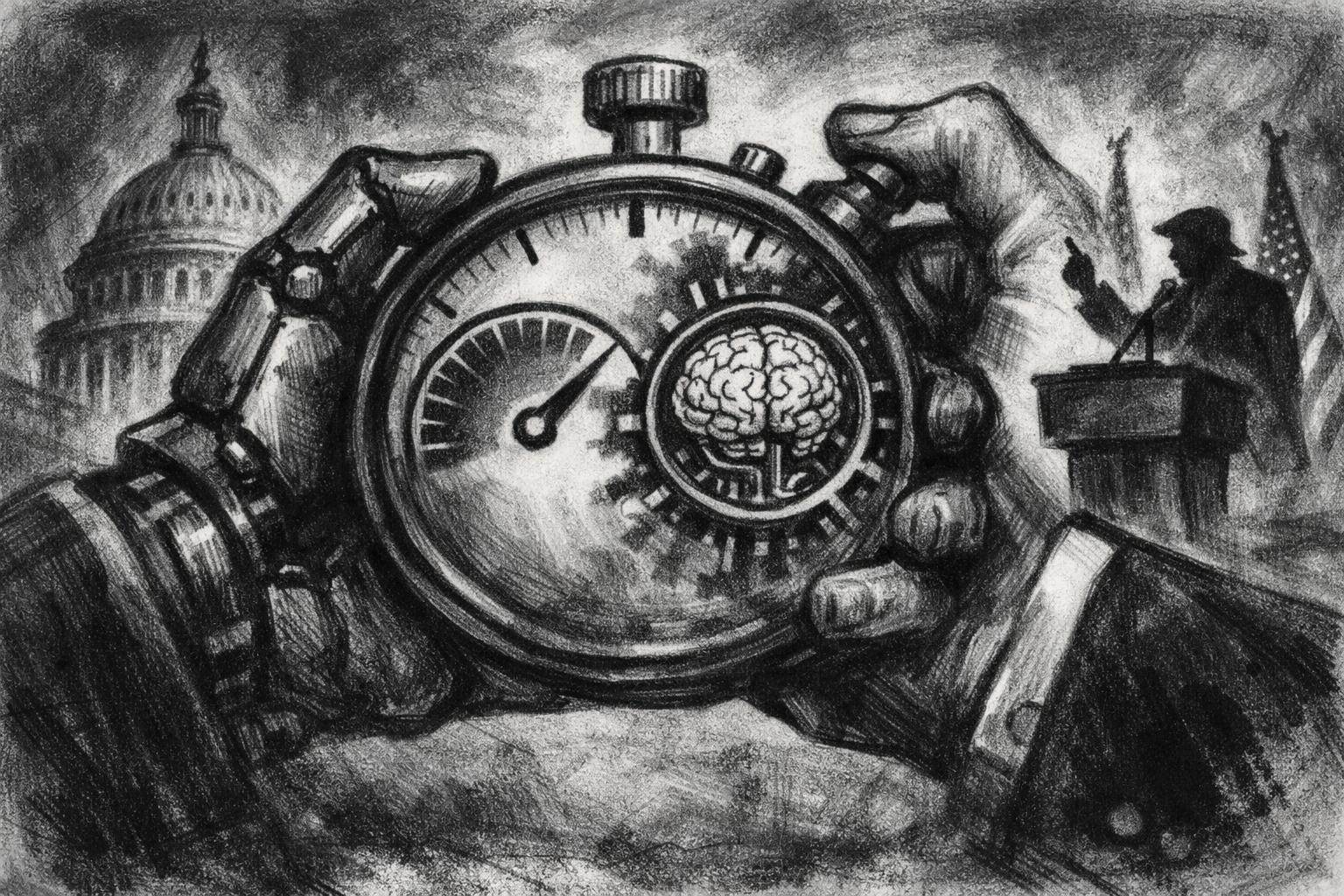
President Donald Trump’s June 5 national-security memorandum on artificial intelligence is built around a simple bet: the government can adopt AI faster without surrendering control of it. The memo says AI can help protect warfighters, improve precision, and preserve U.S. technical overmatch. It also says agencies need stronger oversight, secure supply chains, and clearer accountability before they lean harder on the technology. That is the core tension in the document. The administration wants AI pushed deeper into defense and intelligence work, but only under rules meant to keep the government in charge. ([whitehouse.gov](https://www.whitehouse.gov/presidential-actions/2026/06/national-security-presidential-memorandum-nspm-11/))
The memorandum is explicit about speed. It orders the national security enterprise to accelerate AI adoption, identify mission areas where AI can improve effectiveness, and remove barriers to rapid deployment. It also directs agencies to work with industry, adapt commercial and open-source tools, and make advanced frontier models more broadly available to national security professionals. The White House’s fact sheet adds that the administration wants a larger pool of outside expertise and more secure computing capacity to support the effort. ([whitehouse.gov](https://www.whitehouse.gov/presidential-actions/2026/06/national-security-presidential-memorandum-nspm-11/))
The control side is just as direct. The memo requires AI systems used in the national security enterprise to be reliable, robust, steerable, and controllable. It says agencies must use contractual clauses or other means to ensure no commercial entity or adversary can prevent use of, disable or degrade, or materially modify without federal approval an AI system that U.S. personnel depend on for missions. It also calls for testing, evaluation, validation, and verification so agencies are not treating sensitive systems like consumer software with a government seal on top. ([whitehouse.gov](https://www.whitehouse.gov/presidential-actions/2026/06/national-security-presidential-memorandum-nspm-11/))
The procurement piece is where the document gets teeth. Within 90 days, the Secretary of War is to issue an update to the Pentagon directive on autonomy in weapon systems. Also within 90 days, the Secretary of War, the director of national intelligence, and relevant agency heads are to direct termination for default or for convenience of contracts with companies that repeatedly act in ways inconsistent with the memo’s policy, subject to the law and any limited waiver process. Those waivers can last no more than a year, and any exception must be reported in writing within 30 days of the waiver being granted. That is not a blanket ban on vendors. It is leverage written into the contract system. ([whitehouse.gov](https://www.whitehouse.gov/presidential-actions/2026/06/national-security-presidential-memorandum-nspm-11/))
The memo also tries to avoid a single point of failure. It pushes the national security enterprise to use diverse suppliers, keep multiple missions supported across the system, and build partnerships across the private sector and academia. The underlying message is blunt: the government wants a deeper bench, more speed, and fewer choke points. What it does not want is a setup where a vendor can quietly become indispensable and then turn into a dependency. ([whitehouse.gov](https://www.whitehouse.gov/presidential-actions/2026/06/national-security-presidential-memorandum-nspm-11/))
The new memorandum sits on top of a June 2 executive order on advanced AI innovation and security. Read together, the two actions show the administration trying to fuse innovation, security, and procurement into one policy lane. The harder part is execution: proving that faster adoption, tighter controls, and broader access can all be true at once without burying the whole thing in process. ([whitehouse.gov](https://www.whitehouse.gov/presidential-actions/2026/06/promoting-advanced-artificial-intelligence-innovation-and-security/))
Comments
Threaded replies, voting, and reports are live. New users still go through screening on their first approved comments.
Log in to comment
No comments yet. Be the first reasonably on-topic person here.