
Trump’s AI push is moving fast on security, but the oversight still looks improvised
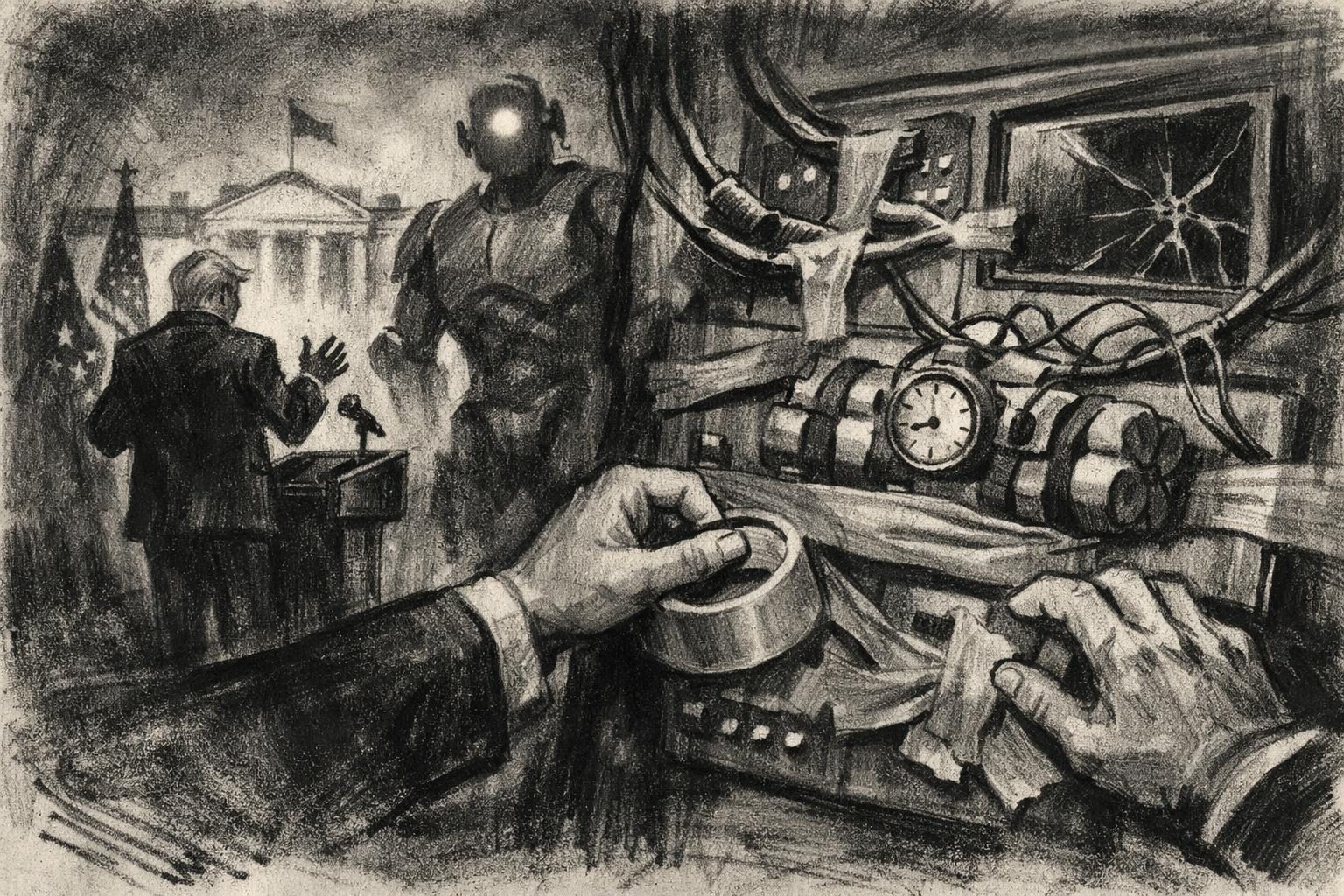
Donald Trump’s latest AI move is being sold as a clean answer to a messy strategic problem: if advanced models are coming anyway, then the federal government should harness them faster, tighten security around them, and keep U.S. agencies from lagging behind rivals. On June 2, the White House issued an executive order on promoting advanced artificial intelligence innovation and security. On June 5, it followed with a national-security memorandum pushing AI deeper into the defense and intelligence system. Together, the two actions amount to a broad acceleration plan. Together, they also raise the same uncomfortable question: can the government really scale up use of opaque systems across sensitive operations before it has shown it can inspect, explain, and unwind them when they fail?
The national-security memorandum is the clearer of the two documents about what the administration wants. It directs the national-security enterprise to speed AI adoption, make use of commercial and open-source tools, bring in advanced models from multiple vendors, and stand up supporting infrastructure such as high-security computing capacity and outside technical expertise. The White House pairs that with language about robustness, steerability, control, and accountability. Those are the right requirements on paper. They are not, by themselves, a verification system. A model can be described as controllable in a memo and still be difficult to interrogate in practice, especially once it is used in environments where secrecy, urgency, and mission pressure reward speed over careful review.
The June 2 executive order pushes in a similar direction on cybersecurity. It tells agencies to prioritize the cyber defense of national-security systems, Defense Department information systems, and civilian federal systems. It also directs the administration to make AI-enabled cyber tools easier for federal agencies, state and local governments, and critical-infrastructure operators to use. That universe includes places like rural hospitals, community banks, and local utilities — institutions that often have limited room for error if a new system produces a bad recommendation or misses a real threat. Modernizing defensive tools is a legitimate goal. But once AI is in live operational use, the risks are no longer abstract. A false alert, a missed vulnerability, or a confident but wrong recommendation can turn into a service disruption or a security breach before anyone has time to explain what happened.
That is the core problem with the administration’s approach: the rollout is moving ahead of the proof. Trump’s team wants AI treated as a national-strength multiplier, not a technology to be slowed by caution. There is political logic in that posture. It lets the White House frame speed as competence and skepticism as softness. But the faster these systems are folded into government workflows, the harder it becomes to recover the details that would matter most after a failure: how the model was tested, what it was allowed to touch, which vendor got access, what risks were identified, and who signed off anyway.
Maybe the White House’s confidence is justified. Maybe existing command structures are enough to keep the machines in line. Maybe the systems perform exactly as promised under pressure. But maybe they do not. And if this strategy goes sideways, the failure will not be some abstract indictment of artificial intelligence. It will be a very specific failure of governance: a political operation that moved first and planned the audit later.
Comments
Threaded replies, voting, and reports are live. New users still go through screening on their first approved comments.
Log in to comment
No comments yet. Be the first reasonably on-topic person here.