
Trump’s AI Security Push Risks Recreating the Centralized Control He Claims to Hate
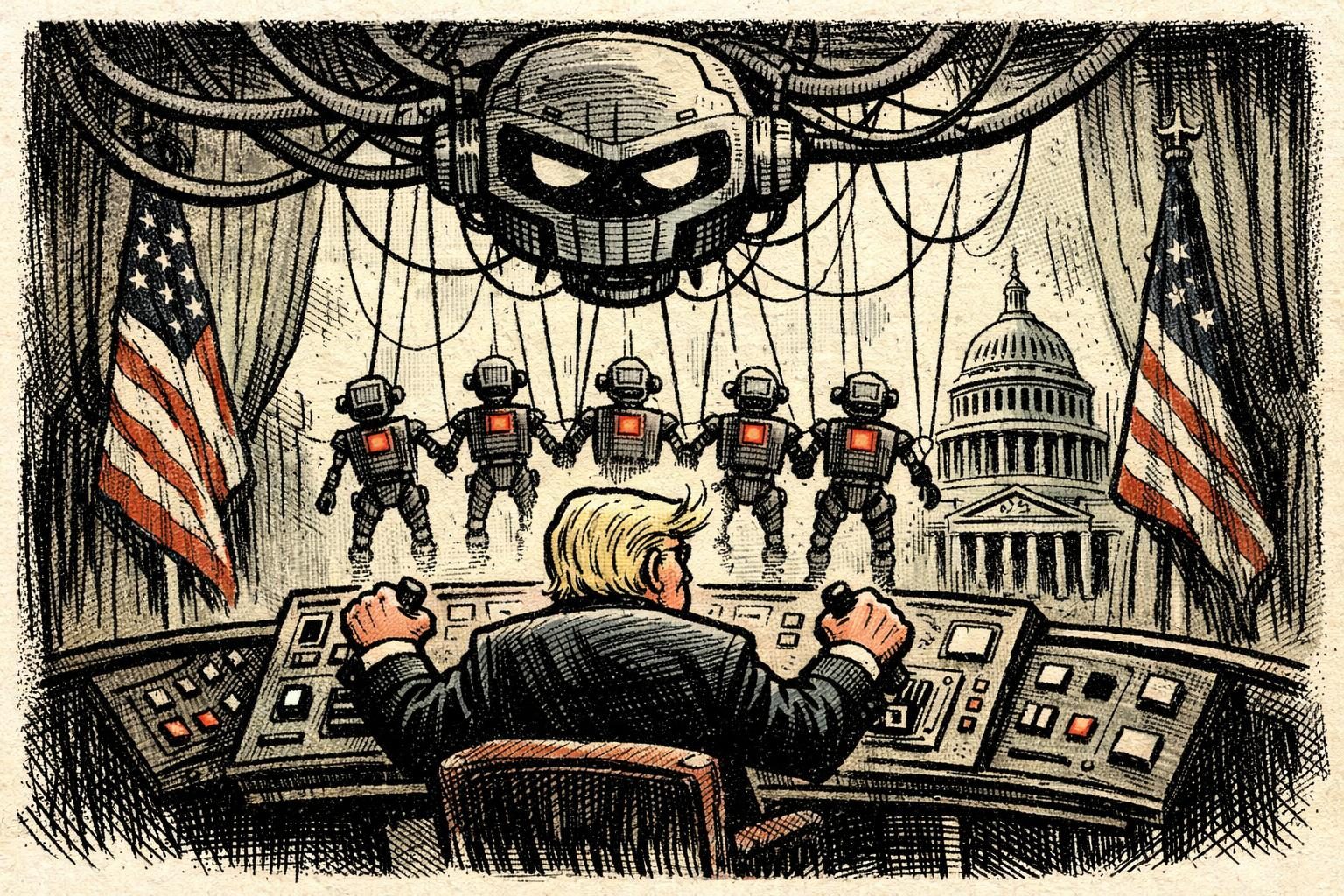
President Donald Trump’s latest push on artificial intelligence is being sold as a clean blend of speed, security, and American leadership, the kind of broad-brush modernization message that fits neatly into the administration’s larger pitch about national strength. According to White House materials, Trump signed a national security memorandum meant to accelerate AI adoption across the national security enterprise, improve accountability, and give warfighters and intelligence professionals more capable tools. That is the public-facing story, and in some respects it is a plausible one. Few policymakers would argue that the government should ignore a technology moving this quickly, especially when defense and intelligence agencies are already trying to figure out how to use it without creating new vulnerabilities. But the same directive that is framed as liberation from drag and delay also places Washington deeper inside the machinery that decides which systems are acceptable, which vendors can be trusted, and which models are suitable for mission use. That is where the politics get awkward for Trump, because the move looks less like a retreat from centralized power than a new and very deliberate version of it.
The contradiction is not subtle. Trump has spent years building a political identity around hostility to bureaucratic control, ideological gatekeeping, and broad federal dictates that apply from the top down. His supporters tend to hear that as a promise to break apart entrenched Washington habits and let private-sector dynamism do more of the work. Yet the administration’s AI posture is moving in the opposite direction whenever it touches areas Trump considers strategically important. The related fact sheets point to a government that is not merely loosening restrictions, but actively organizing priorities, shaping supply chains, building strategic reserves, and coordinating deployment decisions across agencies. That is not a trivial distinction. A federal government that simply sets a baseline and gets out of the way is very different from one that decides which technologies merit acceleration, which infrastructure needs protection, and which path to scale is the proper one for national security. Supporters can fairly argue that this is what serious governance looks like in a dangerous domain. Critics can just as fairly say it is central planning in a patriotic costume. Trump’s problem is that he has taught his base to distrust exactly this kind of federal steering, even when he is the one doing the steering.
There is also a practical reason this push matters beyond the symbolism. When the White House says it wants to accelerate adoption while preserving accountability, it is implicitly admitting that AI in the national security realm cannot be left entirely to market forces or agency improvisation. That may be true whether the issue is procurement, model reliability, data handling, or operational security. But it also means the government is putting itself in the middle of choices that will shape who gets contracts, which platforms get scaled, and what standards become the de facto route into federal use. Those decisions can quickly become political, especially when the administration is already framing its approach as a fight against ideological regulation and anti-innovation orthodoxy. If the White House favors one vendor over another, or one technical architecture over another, the process will invite scrutiny even if the underlying security rationale is sound. If it creates preferred pathways for certain systems while blocking others, the line between prudent oversight and centralized favoritism gets thinner still. And because AI policy moves through dense technical language that most voters will never fully see, the administration may be able to hide the machinery for a while, but not forever.
That is why this looks like a softer screwup than the kind of mess that ends in legal disaster or an economic crash, but still a meaningful one. Trump keeps promising to cut through red tape while repeatedly building new layers of presidential control whenever he wants to project competence, urgency, or authority. The result is a governing style that sells deregulation and delivers selective command-and-control, especially in areas where the White House wants to be seen as decisive rather than merely permissive. AI is a particularly revealing test case because it combines genuine national-security risk, fast-moving private innovation, and the temptation to centralize judgment in the name of safety. If the administration is serious about making the United States stronger in this space, it will need more than slogans about freedom from bureaucracy. It will need rules that are transparent enough to survive political scrutiny and flexible enough not to freeze innovation under federal preference. Right now, the White House seems to be arguing that it can have both open-ended innovation and heavier federal direction at the same time. Maybe that balance is possible. Maybe it is even necessary. But if the administration keeps pretending there is no tension between those goals, it is likely to run into the same credibility problem everywhere else: denouncing centralized control while quietly expanding it the moment power is within reach.
Comments
Threaded replies, voting, and reports are live. New users still go through screening on their first approved comments.
Log in to comment
No comments yet. Be the first reasonably on-topic person here.