
Trump’s ‘no new wars’ line runs straight into Iran
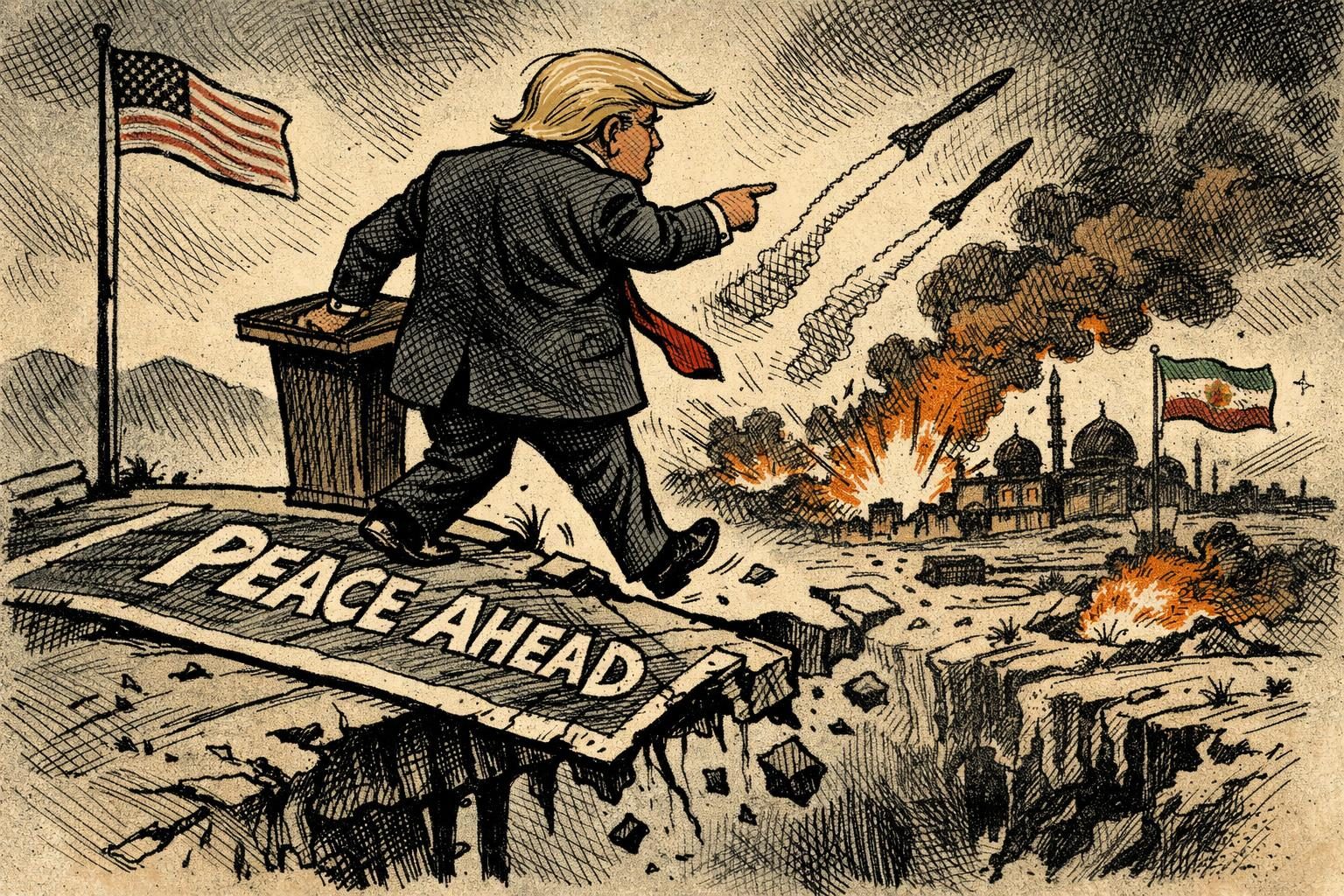
Donald Trump spent Sunday trying to talk his way around a contradiction that sits at the center of his political identity: the candidate who spent years selling himself as the president who would keep the country out of new foreign wars is now defending military action against Iran. In a televised interview, he pushed back on the idea that he had promised peace, saying he never guaranteed there would be no war. That may be true in the narrowest technical sense, but it is also a line that depends on a generous reading of a slogan that was plainly meant to reassure voters. On the campaign trail, “no new wars” was not delivered like a policy footnote. It was pitched as a simple pledge to people who were tired of Middle East conflict, skeptical of foreign interventions and deeply wary of another president stumbling into a long, costly mess. Trump is now asking those same voters to treat that message as a vague expression of preference rather than the promise it sounded like when he was trying to win their trust. That is a difficult argument to make after the fact, especially once the bombs have already fallen and the country is dealing with the consequences of a strike on Iran.
The problem is bigger than a semantic dispute over whether “no new wars” meant absolute peace or merely a general tendency toward restraint. Trump built a major part of his brand around the idea that he was the anti-war president, the outsider who would not repeat the mistakes of administrations that got trapped in open-ended conflicts abroad. He used that identity to set himself apart from both parties’ foreign policy establishments and to appeal to voters who felt betrayed by years of interventionist rhetoric. For them, the appeal was not subtle. He was the candidate who supposedly understood the cost of endless military commitments and would not drag the country into another disaster in the Middle East. Now he is trying to present the strike on Iran as evidence of strength rather than contradiction, arguing in effect that force and restraint can coexist if the president says the operation was necessary and successful. That may be a familiar political defense, but it does not erase the gap between the campaign’s central anti-war message and the reality of a war footing. The administration can insist the action was limited, strategic or meant to deter further escalation. It can say the strike sent a message and protected American interests. What it cannot do is pretend those explanations never collide with the plain meaning of the branding that helped put Trump back in the White House in the first place.
That collision creates a credibility problem, and Trump seems to understand it well enough to avoid meeting it head on. Rather than acknowledging that the slogan implied a promise he is now unable or unwilling to keep, he is trying to downgrade the phrase into something closer to a mood: a signal of toughness, caution and national self-confidence rather than a concrete commitment not to enter another war. That sort of reinterpretation is common in politics, but it works best when the audience has not already internalized the original claim. Here, the audience did internalize it. Supporters repeated it. Campaign surrogates leaned on it. Voters who did not want another Middle East war heard it as reassurance that Trump would keep the country out of exactly the kind of conflict he is now defending. Once the Iran strike is part of the story, the distance between the slogan and the policy becomes hard to miss. Critics have an easy opening to argue that the campaign was selling one thing and governing another. Even sympathetic observers are left with a more awkward question: if the slogan never meant what it sounded like, then what was the point of using it so aggressively? Trump’s answer, at least for now, appears to be that he never issued a guarantee. But a disclaimer like that can sound less like a principled clarification than a convenient escape hatch when the broader meaning of his own words is no longer useful.
The broader political fallout is that Trump is now spending time defending a contradiction he created instead of claiming a clean foreign policy victory. He can argue that the strike showed resolve and kept adversaries guessing, and in his political world strength is usually supposed to settle arguments before they begin. But strength is not the same thing as consistency, and it is certainly not the same thing as honoring a promise. For a politician who has long marketed himself as the rare leader willing to tell it straight, this episode is especially awkward because it relies on one of the oldest tricks in modern politics: say something simple enough to stick, then reinterpret it once the consequences arrive. That maneuver is familiar in Washington, but it is harder to sustain when the original message was about avoiding war altogether. The contradiction is not subtle, and it is not going away because Trump insists the words were always less literal than people thought. The more he tries to explain the slogan as a broad attitude instead of a pledge, the more attention he draws to the gap between what he said and what has happened. Whether his supporters accept that distinction may determine how much damage this does to him politically. But the contradiction itself is already obvious, and it sits uncomfortably beside any claim that he was the candidate who would keep America out of new wars.
Comments
Threaded replies, voting, and reports are live. New users still go through screening on their first approved comments.
Log in to comment
No comments yet. Be the first reasonably on-topic person here.