
Boston judge vacates Trump’s $100,000 H-1B fee, then pauses the ruling pending appeal
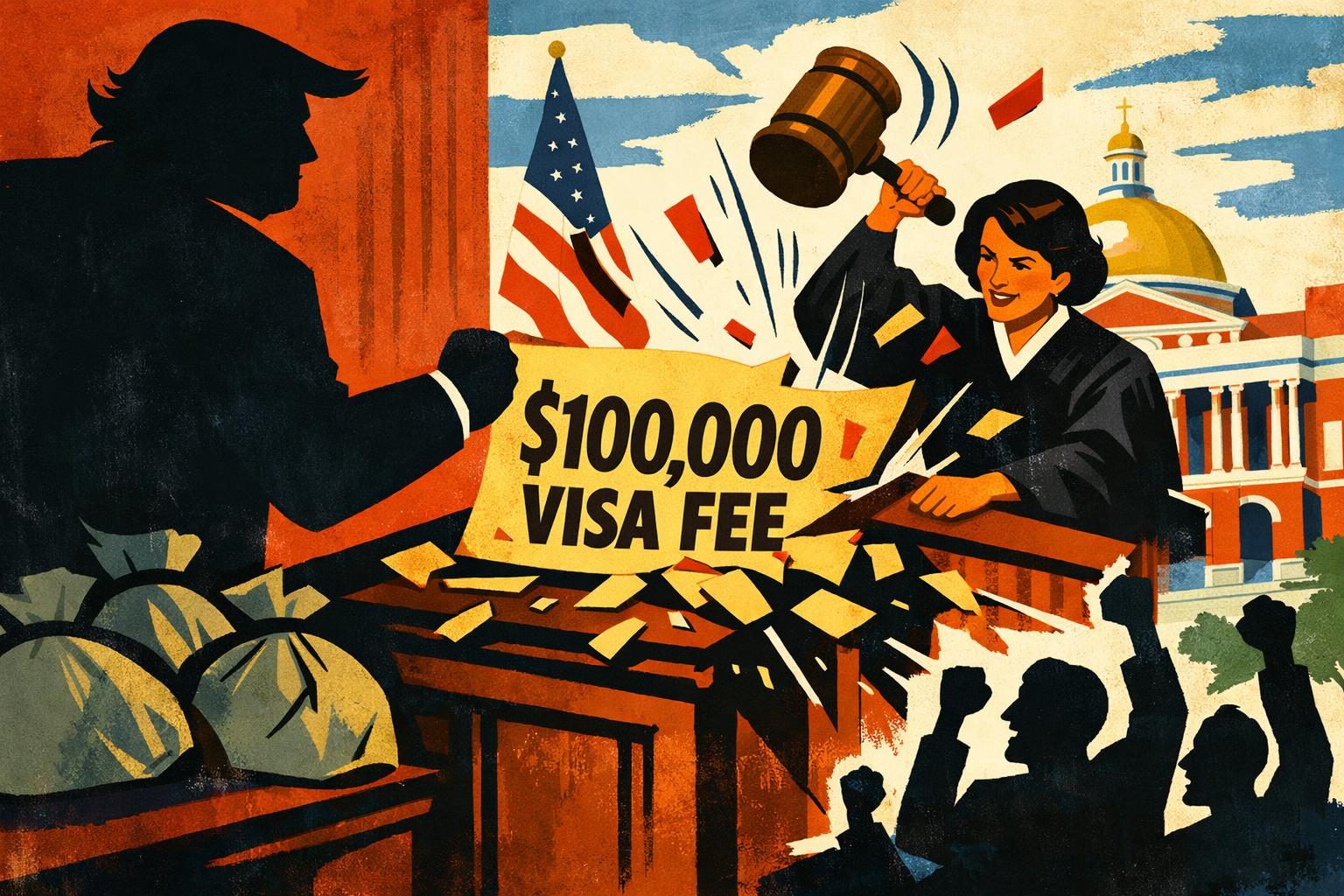
A federal judge in Boston has put Donald Trump’s $100,000 fee on certain H-1B visa petitions into legal limbo. On June 8, the court vacated the fee after finding it unlawful. On June 12, the judge temporarily paused that vacatur while the government pursues an appeal, leaving the fee in effect for now while the case moves to a higher court.
The dispute centers on a charge imposed on certain H-1B petitions, the visa category employers use to hire foreign workers for specialty occupations in fields such as engineering, medicine, science, education, and technology. Massachusetts officials, including the attorney general’s office, said the June 8 ruling was a victory against what they described as an unlawful tax dressed up as immigration policy. The court did not narrow the fee or rewrite it. It vacated the policy entirely, at least until the later stay paused that order.
That sequence matters. Vacatur and a later pause are not the same thing as a merits reversal. The June 12 order did not say the court had changed its mind about the legality of the fee. It kept the court’s earlier decision from taking full effect while the appeal is pending. For employers, universities, hospitals and research institutions that rely on H-1B hiring, that means the policy landscape is still unsettled, but the fee remains operative for the moment.
The practical problem is obvious. Organizations that recruit on long timelines do not get much value from a ruling that arrives one week and is put on hold the next. A fee at this scale would sharply raise the cost of using the H-1B program, which is one reason the litigation has attracted attention far beyond immigration law. The case is also a test of how far the executive branch can go in imposing large new costs through immigration policy without clearer authorization.
The next step is appellate review. If the higher court keeps the vacatur paused, the fee can remain in force while the appeal is argued. If the lower court’s ruling is restored, the fee could fall again. For now, the result is simple enough: the court struck down the charge, then temporarily froze its own ruling, and the fight over the policy is still going.
Comments
Threaded replies, voting, and reports are live. New users still go through screening on their first approved comments.
Log in to comment
No comments yet. Be the first reasonably on-topic person here.