Story · June 14, 2026

The Justice Department’s denaturalization surge is a due-process magnet

Citizenship crackdown Confidence 4/5
★★★★☆Fuckup rating 4/5
Serious fuckup Ranked from 1 to 5 stars based on the scale of the screwup and fallout.
Correction: A previous version overstated the denaturalization announcement as a new one-week drive; DOJ has been expanding denaturalization efforts for months, including earlier June 2026 and May 2026 actions.
The Justice Department’s denaturalization surge is a due-process magnet reader image
Reader image selected by automatic review and community voting.

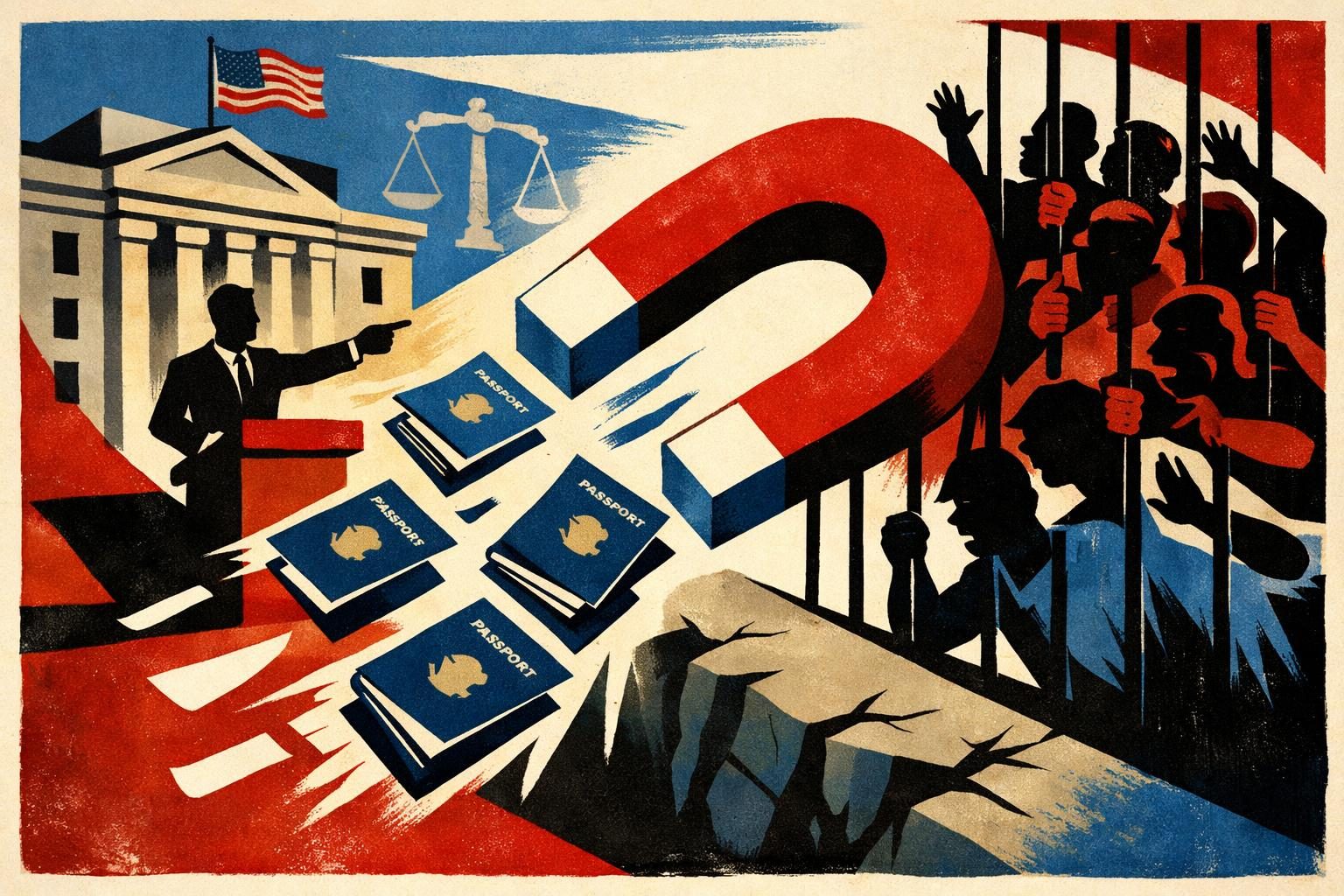
The Justice Department’s latest denaturalization drive is a familiar Trump-era maneuver in a much more loaded setting: citizenship itself. In the span of a week, the department filed actions against 17 naturalized citizens whom it says were involved in serious crimes, including sexual abuse of a minor, fraud, and drug offenses. The legal premise is not especially novel. If someone obtained citizenship illegally, or if citizenship was secured through concealment of a material fact or willful misrepresentation, the government can ask a court to take it away. But the political presentation around these cases is doing far more work than the doctrine requires. By advertising the campaign as part of a hard-edged crackdown, the administration is turning what should be a narrow set of individualized proceedings into a much broader argument about who gets to belong, how secure that belonging is, and how aggressively the government should be allowed to revisit it.

That distinction matters because denaturalization is not just another enforcement tool tucked into the immigration bureaucracy. It is one of the most serious powers the federal government can wield against a person who already holds citizenship, and it sits uncomfortably close to the deepest anxieties in American civic life. The government’s position is that it is simply cleaning up fraud, correcting past deception, and making sure the privileges of citizenship are not preserved for people who never qualified for them in the first place. That may be true in the cases the department selected, and the underlying allegations are not trivial ones. Still, the way the campaign is being rolled out suggests a desire to use the cases as public proof of resolve rather than as routine legal actions. The language surrounding the effort, including the broader emphasis on criminality and enforcement, creates a sense that citizenship is being treated less as a settled status and more as something that can be reexamined whenever the political climate demands a show of force.

That is exactly why the initiative is likely to attract a due-process fight even when the specific allegations are serious. Critics of the administration have already spent years arguing that Trump’s immigration machinery is built around speed, spectacle, and maximum pressure, often at the expense of procedural safeguards. The denaturalization campaign gives them an easy bridge from that broader critique to a more sensitive one: if the administration is accused of shortcutting basic protections in immigration matters, why should anyone assume it will be especially careful when the issue is citizenship revocation? The answer from the Justice Department is likely to be that each case will have to stand on its own facts and legal filings, and that courts will decide whether the government has met the standard. That is the right answer in principle. But in politics, the structure of the rollout matters too. When a government makes a point of publicizing such actions in sweeping, punitive language, it invites questions not only about whether the evidence is strong, but about whether the government is leaning too heavily on the symbolism of punishment to make a policy point.

There is also a broader strategic cost for the administration, even if it wins a few or many of these cases. Denaturalization is inherently a high-stakes remedy, and once it is framed as a major showcase, it stops looking like a narrowly tailored remedy for fraud and starts looking like a cultural signal about conditional belonging. That is where the White House and Justice Department are most exposed. Supporters may see the campaign as an overdue correction and a reminder that citizenship is not supposed to shield serious wrongdoing. Opponents, meanwhile, are likely to hear something darker: a government willing to wield the power of revocation as theater, using the spectacle of stripping citizenship to reinforce a political narrative about immigrants, crime, and national control. The harder the administration pushes that narrative, the more it risks blurring the difference between legitimate enforcement and symbolic intimidation. And if the public begins to think the government is not simply pursuing fraud but staging a warning about who can be cast out, the debate stops being about the specific cases and becomes a larger test of whether citizenship in Trump’s America feels permanent or provisional. That is a dangerous place for the administration to be, because it may well believe it is just signaling toughness, while critics are handed a much bigger argument about power, restraint, and the meaning of American membership.

Support the work

Help keep this site going

If this story was useful, help support The Daily Fuckup. Reader donations help pay for hosting, archives, publishing, email, and AI costs.

Donate

Reader action

What can you do about this?

Call or write your members of Congress and tell them the exact outcome you want. Ask for a written response and refer to the bill, hearing, committee fight, or vote tied to this story.

Timing: Before the next committee hearing or floor vote.

This card only appears on stories where there is a concrete, lawful, worthwhile step a reader can actually take.

Reader images

Upload a relevant meme, screenshot, or photo. Automatic review rejects spam, ads, and unrelated junk. The top-rated approved image becomes the story's main image.

Log in to upload and vote on story images.

The Justice Department’s denaturalization surge is a due-process magnet reader image 1
Score: 95 AI / 0 community
By: mike
Current main image

Comments

Threaded replies, voting, and reports are live. New users still go through screening on their first approved comments.

Log in to comment


No comments yet. Be the first reasonably on-topic person here.