
DOJ sues Virginia over mask, ID, and 287(g) rules for federal officers
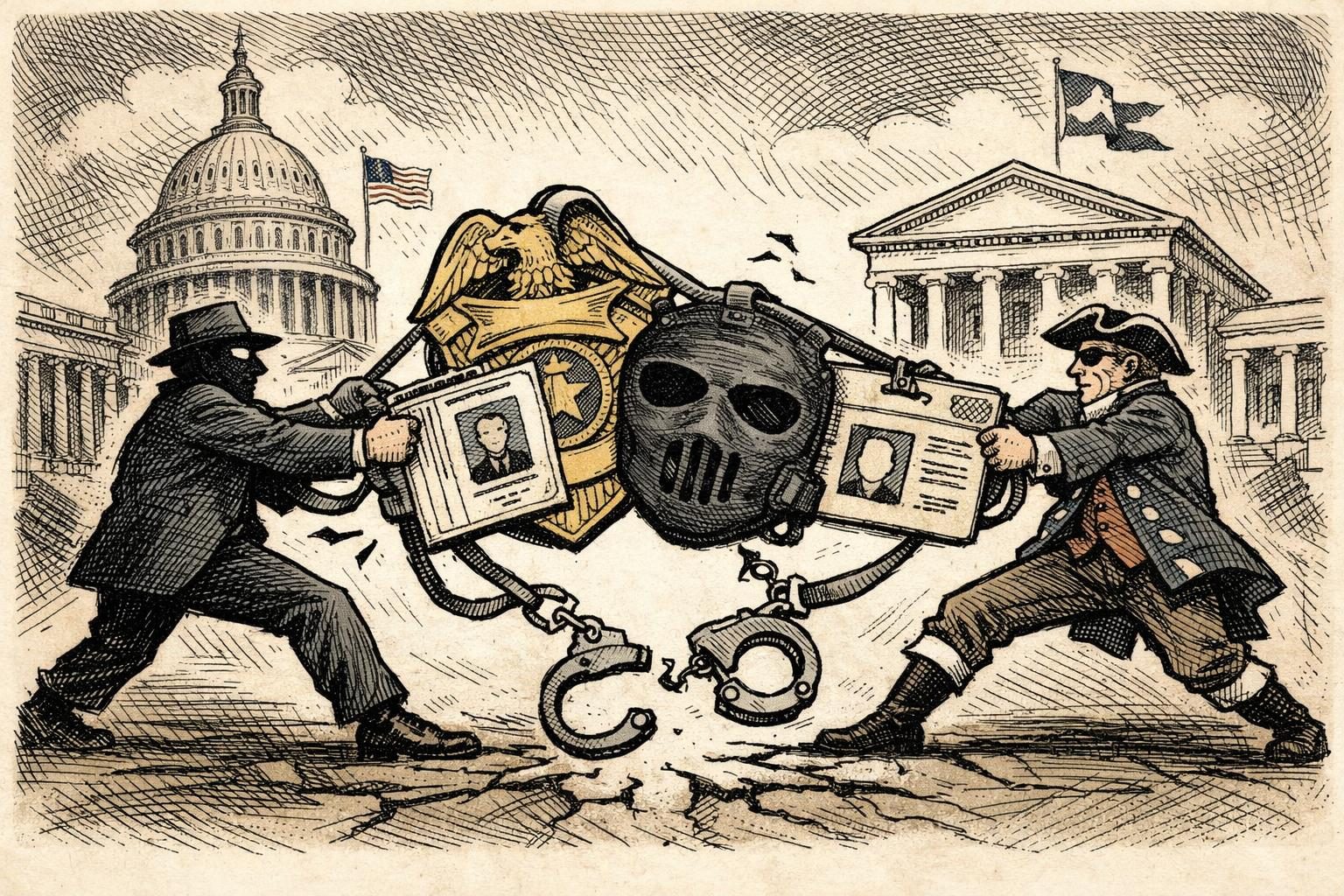
The Justice Department’s June 11 lawsuit against Virginia turns a state-level fight over masks, identification, and immigration cooperation into a straight-up supremacy test. At issue are Virginia provisions that the department says unlawfully restrict federal law enforcement officers by limiting when they can wear masks, requiring identifying information, and constraining cooperation tied to 287(g) agreements. The suit names the Commonwealth of Virginia, Attorney General Jay Jones, and Fairfax Commonwealth’s Attorney Steve Descano in their official capacities, and it treats the dispute as more than an argument over local policy preferences. In DOJ’s telling, Virginia is not merely trying to set standards for public accountability. It is allegedly reaching into the federal government’s own enforcement machinery and trying to rewrite the rules for officers acting under federal authority. Virginia, for its part, has been moving in the opposite direction on immigration enforcement by seeking to end 287(g) arrangements that allow state and local agencies to work with federal immigration authorities under certain conditions. The result is a case that is legally familiar but politically volatile, because it combines the dry doctrine of preemption with the highly combustible optics of masked officers, immigration crackdowns, and claims of state interference.
The department’s legal theory is straightforward enough. Under the Supremacy Clause, a state generally cannot regulate the internal operations of the federal government when federal law occupies the field or otherwise permits federal conduct. DOJ says Virginia has crossed that line by trying to tell federal officers whether they may conceal their faces, what identifying information they must display, and how they may coordinate with local police in the course of enforcement. The complaint frames those rules as a direct interference with federal operations rather than a neutral exercise of state oversight. That framing matters, because once the state’s rules are described as operational control instead of ordinary accountability, the constitutional argument becomes much harder for Virginia to defend. The state’s counterpoint is likely to emphasize that officers exercising extraordinary power inside Virginia should not be anonymous and that the public has a legitimate interest in knowing who is acting in its name. That argument resonates politically, especially in a climate where concerns about immigration enforcement and masked agents have become intertwined with broader anxieties about secretive policing. Still, DOJ is already pushing the opposite narrative, arguing that anonymity can be a safety tool, not a loophole, and that forcing visible identifiers could expose officers to harassment, doxxing, or violence. In other words, the case is not really about style or uniforms. It is about who gets to set the terms for coercive power when state and federal priorities collide.
Virginia’s recent move on 287(g) agreements gives the lawsuit even more political texture. Those agreements allow state and local law enforcement agencies to work with federal immigration authorities under specific conditions, and the governor’s office has been working to terminate them. That step fits cleanly into a broader Virginia strategy of tightening the state’s relationship with federal immigration enforcement rather than deepening it. The Justice Department’s complaint appears designed to blunt that approach before it spreads or hardens into a larger model for other states. From the administration’s perspective, state rules that limit face coverings, require identification, or narrow cooperation agreements may look like local accountability measures on paper, but in practice they can function as roadblocks to federal enforcement priorities. The White House is using the suit to reinforce a broader message that blue-state and blue-state-like policies are not neutral checks on power but active resistance to law enforcement. That is a politically useful message for a federal administration that wants to appear uncompromising on immigration and public safety. Yet it also invites the opposite critique: that the federal government wants broad discretion while resisting transparency obligations that states increasingly consider basic to public trust.
The outcome will matter far beyond the particulars of Virginia code. If DOJ prevails, it could strengthen the federal government’s ability to resist state attempts to impose transparency rules on federal officers or limit local cooperation in immigration enforcement. That would give federal agencies more room to decide when officers may be masked, how much identifying information must be shown, and how states can interact with federal operations. If Virginia wins, the result could embolden other states to adopt similar guardrails, particularly in places where distrust of immigration enforcement and concerns about unidentified officers are already strong. Either way, the lawsuit suggests the administration is not interested in a compromise position where states can set some standards and the federal government simply works around them. It wants a judicial blessing for federal discretion and a judicial rebuke for state attempts to police that discretion. That posture is consistent with a broader pattern in which law enforcement policy becomes a symbolic battleground rather than a narrow administrative issue. And while the immediate fallout is likely to be legal rather than operational, the politics are already doing their work: DOJ is casting Virginia as anti-law-enforcement and dangerous, while Virginia can point to the suit as proof that Washington treats accountability as obstruction. That is a sharp political fight, and because it goes to the basic question of who controls the appearance and conduct of federal power, it is the kind of conflict likely to echo well beyond one case in one state.
Comments
Threaded replies, voting, and reports are live. New users still go through screening on their first approved comments.
Log in to comment
No comments yet. Be the first reasonably on-topic person here.