
Justice Department keeps suing blue-state policy into the ground
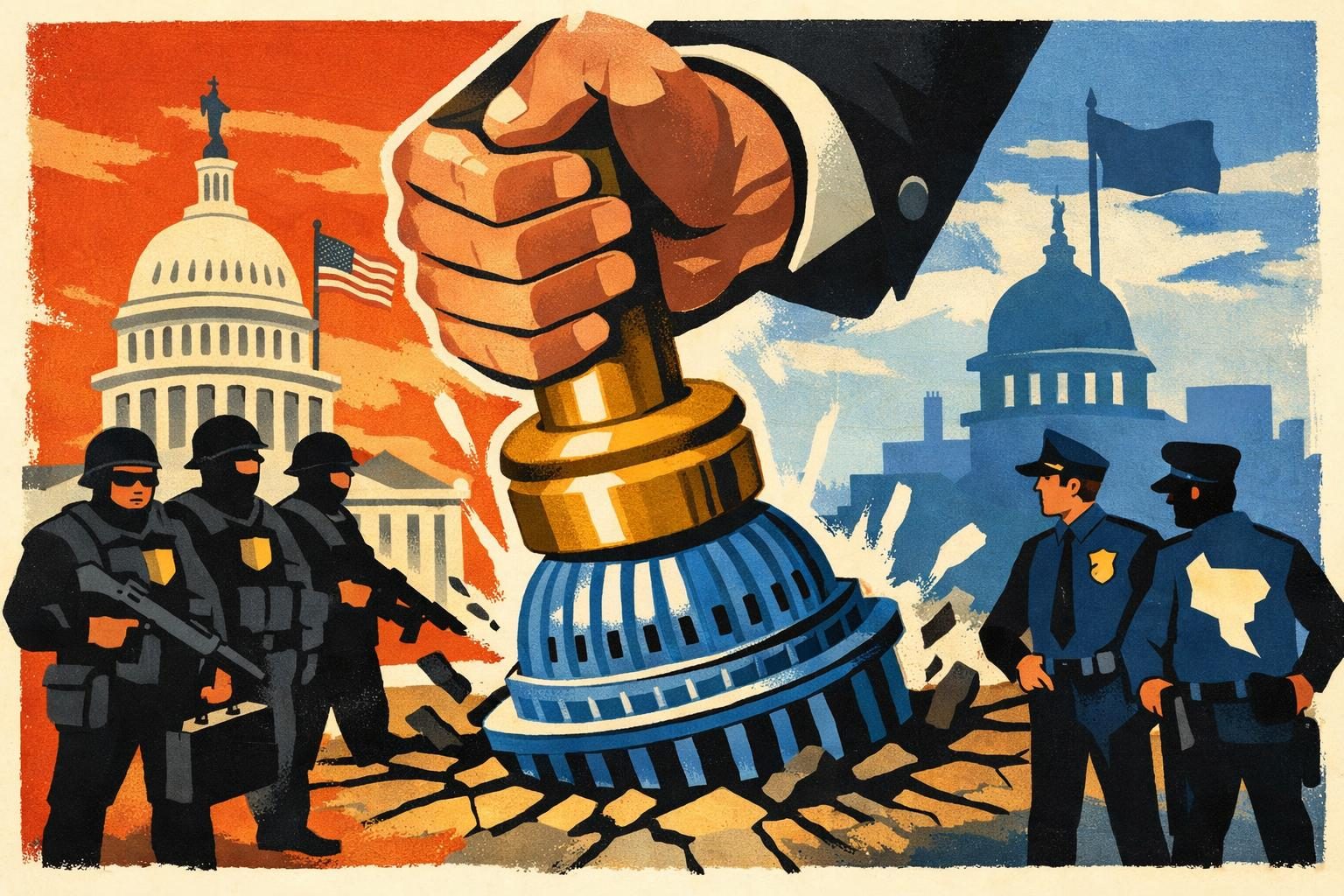
The Justice Department is once again leaning on the courts to swat down state and local rules that limit how federal officers operate, and the pattern is hard to miss. The latest round of legal action targets policies that restrict masking or require identification from federal personnel, a fight the department frames as a basic question of whether outside governments can interfere with law enforcement. In the department’s telling, the answer is no: local officials cannot impose their own conditions on federal enforcement activity when those conditions are said to hamper operations. That is the clean legal theory, at least on paper. The messier political reality is that Washington is using litigation as a blunt instrument to push federal supremacy into spaces where state and local leaders are trying to draw lines around conduct they consider too opaque, too aggressive, or too hard to oversee.
That tension sits at the center of the dispute. State and local officials backing these restrictions are not merely quibbling over procedural details or decorative rules that could be brushed aside as symbolic. They argue that requiring identification, limiting the use of masks, or otherwise constraining federal officers is a way to increase accountability when federal agents operate in communities that may not trust them. The Justice Department, by contrast, sees those same policies as obstacles that chill or obstruct enforcement. Both sides can claim a degree of legitimacy, depending on where one starts. Federal officers do need room to perform their jobs, especially in situations where safety or operational secrecy is genuinely at stake. But local governments also have a real interest in making sure people acting under color of authority can be identified and held responsible when necessary. The administration appears to be choosing confrontation over negotiation, which may be satisfying for a White House that likes to project strength, but it also means turning every disagreement into a courtroom contest with national stakes.
Civil-liberties advocates and local officials are likely to keep pressing the same broader critique: this is not just about one rule, one mask requirement, or one dispute over labels. It is about a style of federal enforcement that many communities see as detached from local accountability and designed to minimize scrutiny. When federal officers arrive wearing face coverings or operating under special protections from identification, critics say the public is expected to accept authority without being allowed to see who is exercising it. The Justice Department’s response is that such restrictions undermine enforcement and therefore must be struck down or prevented. That makes the issue larger than a policy disagreement and smaller than a constitutional revolution at the same time. It is larger because it taps deep mistrust between communities and federal power. It is smaller because it still turns on very specific operational rules. But the administration’s preference for litigation ensures the fight keeps expanding. Once the department decides the courtroom is the best venue for settling these disputes, every local safeguard becomes a test of whether Washington can compel compliance by force of law.
The result is a recurring federal-state collision that carries costs well beyond the parties in the case. For officers, the uncertainty can complicate how they present themselves in the field and how they interact with local authorities. For cities and states, the threat of preemption or invalidation can make it harder to enforce rules they believe are necessary to protect residents and preserve trust. For the public, the whole fight reinforces the sense that government is increasingly operating through mutual suspicion rather than shared standards. That dynamic is especially corrosive because it encourages both sides to act as though compromise itself is a concession. The Justice Department gets to present itself as defending the supremacy of federal law, which is a strong political message inside the administration and not without legal force. But the more it relies on that message, the more it looks like the federal government is demanding obedience first and explaining itself later. In plain English, if Washington insists everyone else must follow the rules while federal officers are shielded from the kind of oversight locals want to impose, people are likely to ask why the federal side gets to set the terms of the argument and still claim the moral high ground.
Comments
Threaded replies, voting, and reports are live. New users still go through screening on their first approved comments.
Log in to comment
No comments yet. Be the first reasonably on-topic person here.