
Judge keeps Trump’s $1.8 billion grievance fund frozen
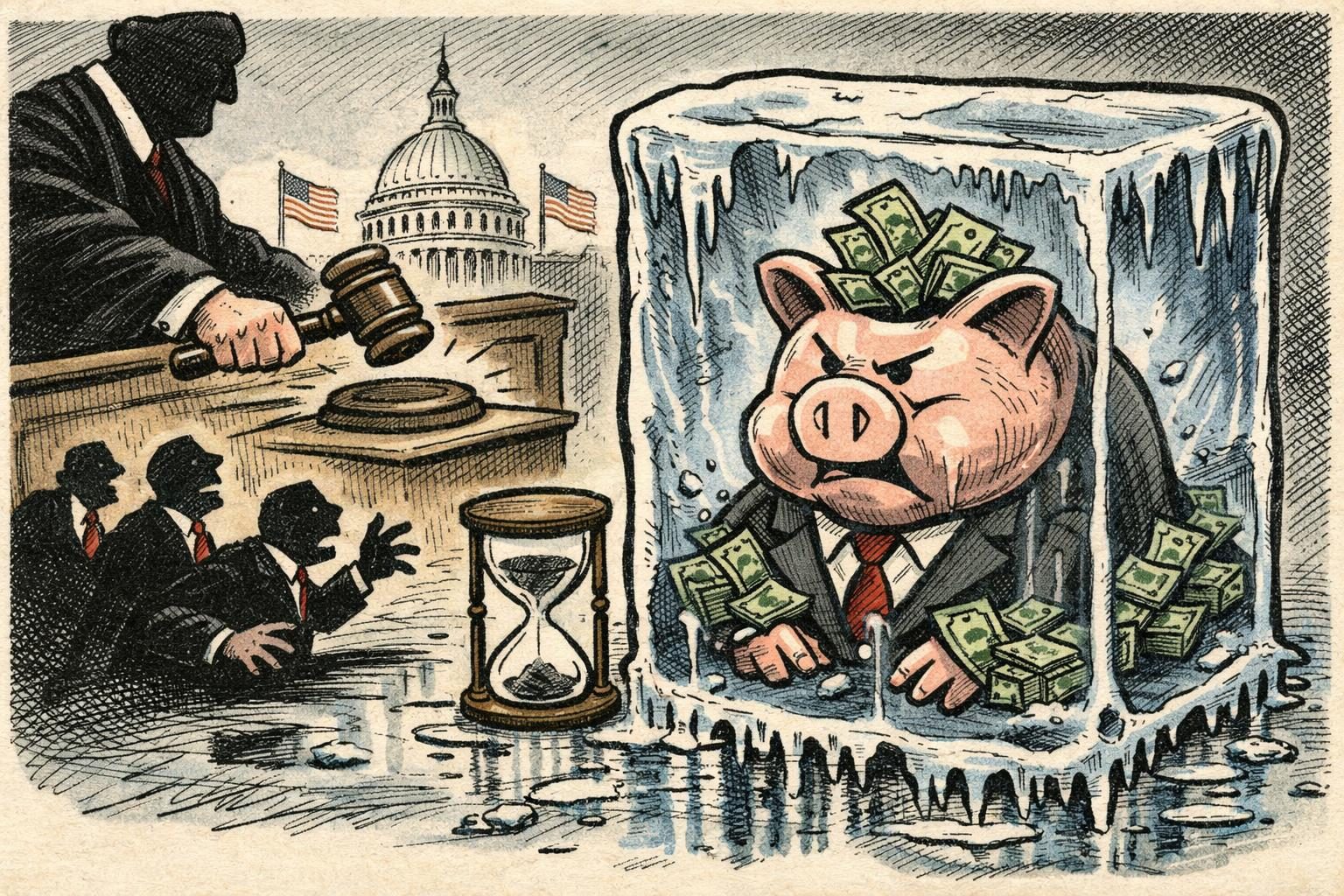
A federal judge in Virginia has put the Trump administration’s $1.8 billion “anti-weaponization” payout plan back in the freezer, rejecting the government’s latest attempt to treat the whole controversy as if it had already evaporated. The administration argued that the case should be dismissed because the fund was supposedly no longer moving forward, but the court was not interested in taking that on faith. In effect, the judge said the government could not simply announce the plan was dead and then ask the legal system to stop looking at it. That leaves the money frozen for now, and it keeps alive a lawsuit that has become a running referendum on whether the White House can invent a compensation program around Trump’s political grievances and then expect everyone else to nod along. The court also directed the administration to provide a sworn statement that the fund will not be revived, which is the sort of procedural demand that sounds dry until you realize it is a judge asking the government to stop waffling and put its story under oath.
The administration’s problem is not just that the fund drew criticism; it is that the thing never looked especially defensible in the first place. It was pitched as a way to compensate people who claim they were harmed by government “weaponization,” a term that in Trump-era usage tends to mean anyone who investigated, prosecuted, audited, or otherwise annoyed the president and his allies. That framing immediately raised alarms because it suggested federal money could be used to reward people on the basis of political sympathy rather than any ordinary, objective compensation scheme. Todd Blanche, the acting attorney general, had already told lawmakers earlier this month that the administration was scrapping the plan, but the court was clearly unwilling to treat that public statement as a binding burial certificate. The judge’s view that the government’s mootness argument “doesn’t go anywhere” was legal shorthand for saying the administration had not done nearly enough to convince the court the controversy was over. In plain English, the government tried to walk away from a fight it started, and the court made it clear that a half-step back is not the same thing as surrender. That matters because if the executive branch wants to spend billions in response to political resentment, it is going to have to explain itself in a way that survives more than a hallway conversation with Congress.
The deeper political damage is that this fund has always looked less like a neutral policy fix than a taxpayer-financed revenge vehicle with an official letterhead. Critics from both parties latched onto that problem, though for slightly different reasons, because even people who are usually happy to cheer Trump’s instincts could see the hazards of a compensation pool that seemed tailor-made for the president’s own sense of injury. Democrats called it corruption by another name, which is not a subtle critique but also not an especially hard one to make when the government is floating a giant payout scheme with flimsy guardrails. Republicans, meanwhile, were forced to reckon with the possibility that the money might flow toward Jan. 6 defendants or other politically favored figures with questionable claims, and some of them clearly wanted no part of that fight. That kind of bipartisan discomfort is not a minor footnote; it is a warning label attached to the whole enterprise. If a program is so radioactive that it makes allies nervous before it even gets off the ground, the odds that it was built on solid legal and moral footing were probably not great to begin with. The administration’s decision to retreat earlier in the week looked like an admission that it had wandered into a mess, but Friday’s ruling showed that even an attempted retreat does not erase the paper trail or the underlying suspicion.
There is also the awkward fact that the fund’s origin story is already tangled up with Trump’s personal grievances. The concept traces back to his lawsuit against the IRS over the leak of his tax returns, which helps explain why so many observers saw the proposal as a vendetta disguised as governance. That history matters because courts are often skeptical when executive branch programs appear to spring from one person’s injuries rather than a broader policy judgment. If the administration’s goal was to present itself as correcting past abuses, the fund did the opposite by making the whole thing look private, selective, and suspiciously emotional. The court’s order now forces the White House into a position it clearly wanted to avoid: either stand behind the idea in sworn filings or concede that it never had a stable legal foundation. Either way, the administration loses some measure of control over the story. What should have been a forceful statement about accountability has instead become another example of the Trump era’s favorite trick, which is to wrap personal grievance in government language and then act shocked when a judge notices the seam. The longer the administration insists this was all a serious policy effort, the more it invites the obvious follow-up: serious in service of what, exactly? For now, the answer appears to be that the money stays locked up, the legal fight continues, and the administration gets to explain why a supposedly dead project still needs to be formally buried by a federal court before anyone believes it is gone.
Comments
Threaded replies, voting, and reports are live. New users still go through screening on their first approved comments.
Log in to comment
No comments yet. Be the first reasonably on-topic person here.